6 Bathroom Remodel Ideas: Stunning Upgrades in a Snap
Not every bathroom needs to be stripped to the studs to feel new. Most of the bathroom remodel ideas that actually move the needle — a better shower enclosure, a floating vanity, layered lighting — can be done in phases, over a few weekends, without tearing out plumbing. If your bathroom is on the smaller side, our bathroom remodel ideas for small spaces covers the layout-specific version of this same approach.
Below are six upgrades, ranked roughly by how much disruption they cause versus how much they change the room. Pick one or two rather than trying all six at once — that’s usually where a “quick refresh” turns into an accidental full renovation.
Quick Takeaways
- A frameless glass shower enclosure changes how a bathroom looks more than almost any other single swap — and it’s a contained job, not a full remodel.
- A floating vanity opens up floor space in a small bathroom, but it needs real blocking in the wall, which means it’s not a weekend DIY unless that structure already exists.
- Layered lighting (ambient, task, accent) matters more than picking the “right” fixture — a single overhead light will make almost any bathroom feel flat and shadowy.
- Tile changes the room fastest per square foot of effort — even one accent wall or a swapped floor pattern reads as a real remodel.
- Smart storage (niche shelving, pull-out organizers, hidden hampers) is the upgrade most likely to actually improve your daily routine, not just the photos.
1. Splash-Worthy Shower Upgrades
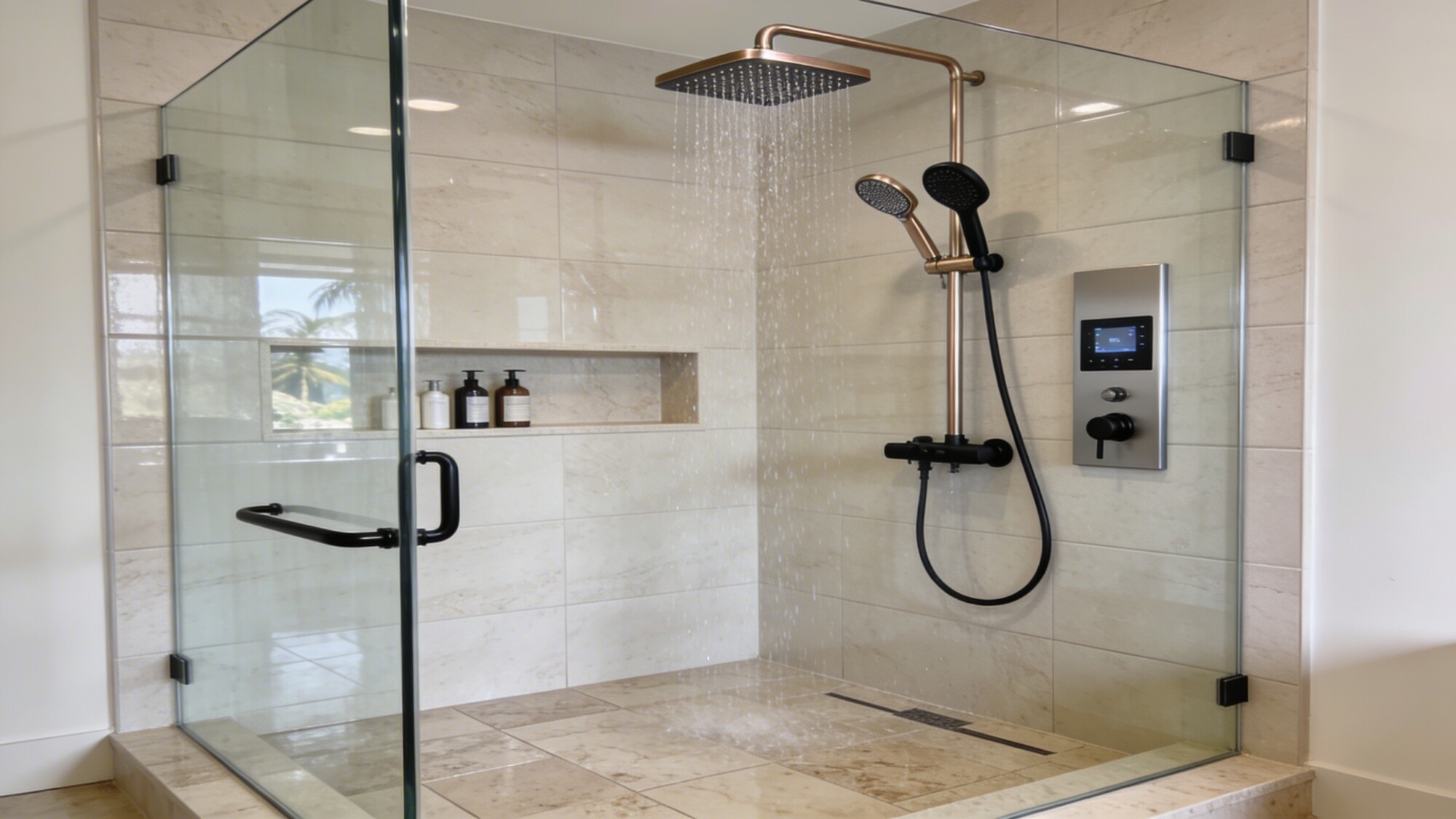
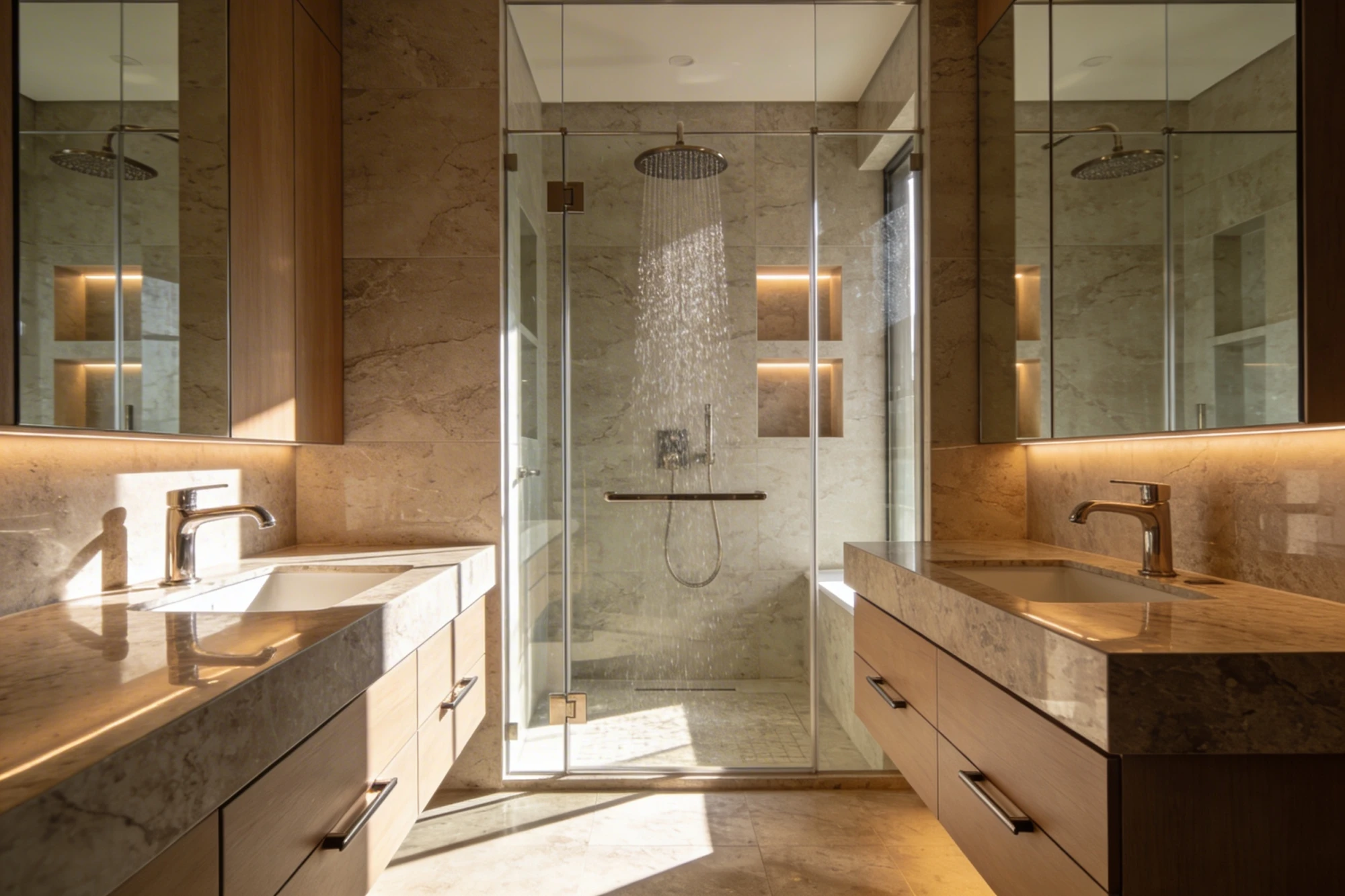
A frameless glass enclosure is the single upgrade most likely to make a bathroom look remodeled even if nothing else changes. Pair it with a rainfall showerhead and a secondary handheld unit on a slide bar — the rainfall head covers the everyday rinse, the handheld covers everything else, from washing a dog to rinsing off a tub surround. Brushed nickel or matte black hardware reads more current than the polished chrome that shows up in a lot of older bathrooms.
💡 Pro Tip: Budget for a squeegee habit before you budget for the glass. Frameless enclosures show water spots faster than framed ones with a curtain, and a 30-second daily squeegee is the difference between it looking showroom-fresh and looking permanently hazy within a few months.
2. Vanities That Elevate the Whole Room
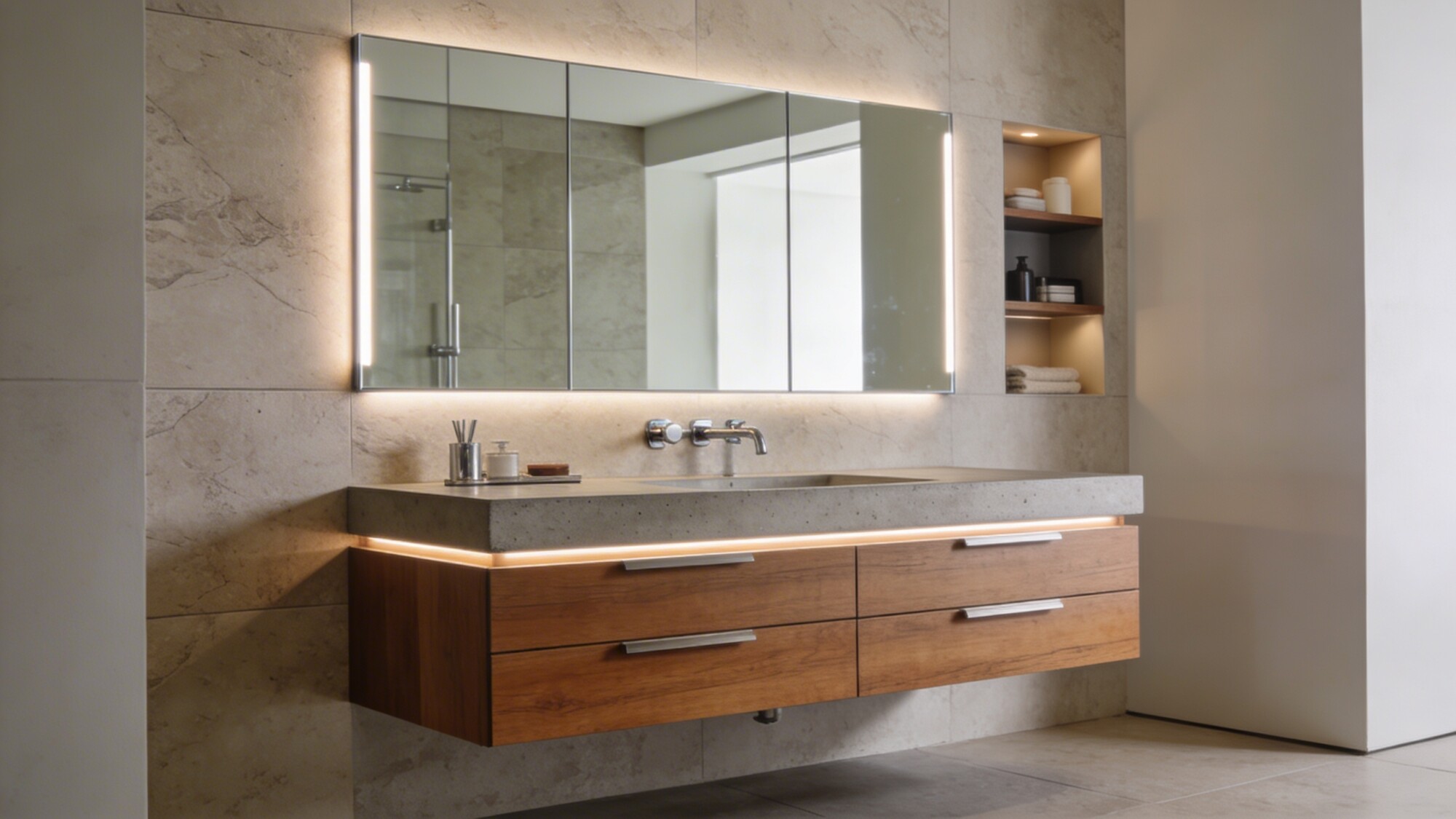
A floating vanity opens up visible floor space, which matters more in a small bathroom than almost any color or tile choice will. Soft-close drawers keep the room quiet, and integrated LED lighting around the mirror solves a lot of the visibility problems a single overhead fixture can’t. The trade-off worth knowing up front: floating vanities need solid blocking inside the wall to carry the weight, so if that structure isn’t already there, this becomes a job for a contractor rather than a solo weekend project.
Mixing materials — a stone top with a wood base, or concrete with metal hardware — is what makes a vanity read as a centerpiece instead of just a sink. For more layout-specific vanity ideas, our budget bathroom remodel ideas covers where a floating vanity fits into a tighter overall spend.
3. Tile Tales: Playful Floors, Polished Walls
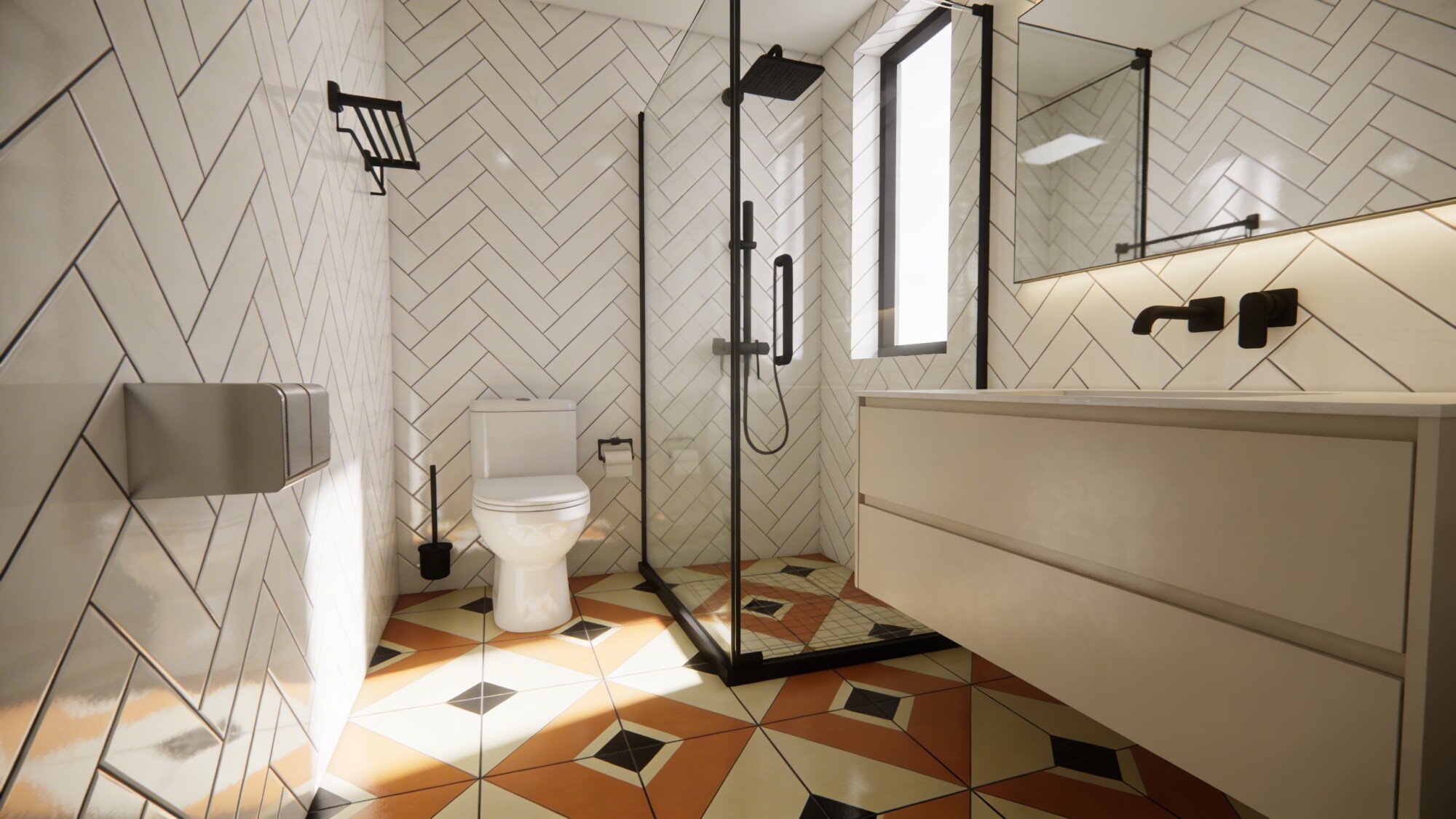
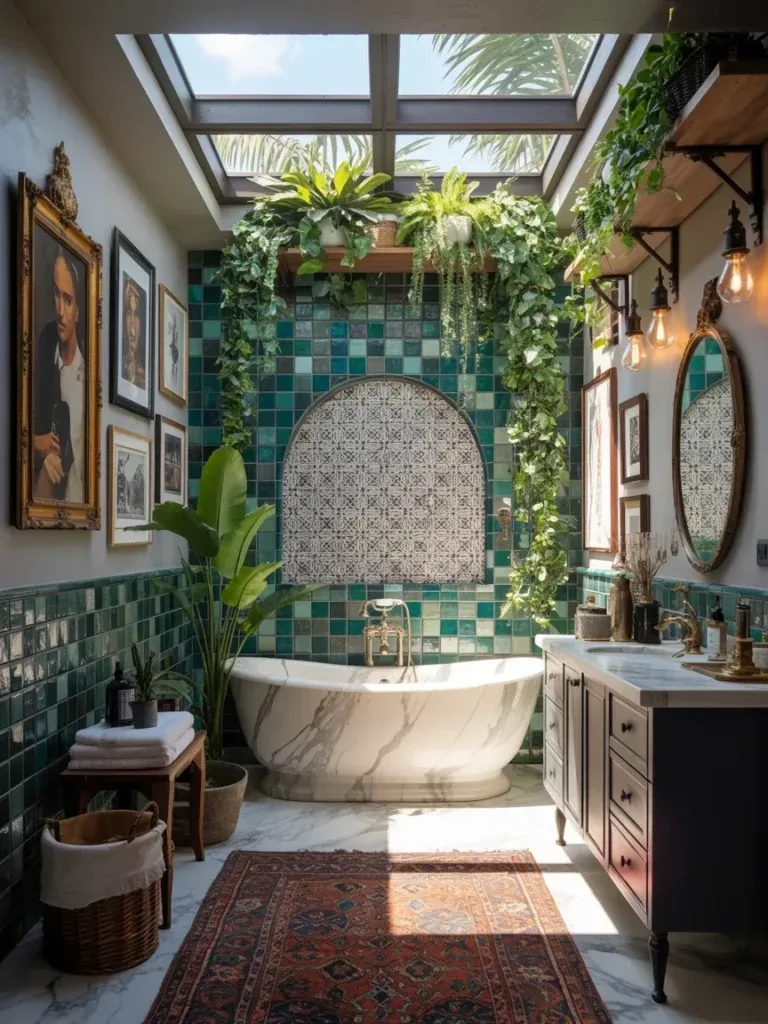
Tile changes the character of a bathroom faster, per square foot, than almost any other material decision. A herringbone pattern in a neutral glossy tone on the walls, paired with an oversized or punchy patterned floor tile, gives the room texture without needing a full retile. Porcelain and ceramic in a polished finish handle moisture well, though a polished floor finish trades some slip resistance for shine — worth weighing if the bathroom gets a lot of bare feet.
Grout color matters more than most people expect: a contrasting grout makes the tile pattern read bolder, while a matched grout makes the same tile look more seamless and calm. If you’re planning a full retile, our bathroom interior design ideas covers how tile choices fit into the room’s overall style.
4. Lighting That Sparks Joy
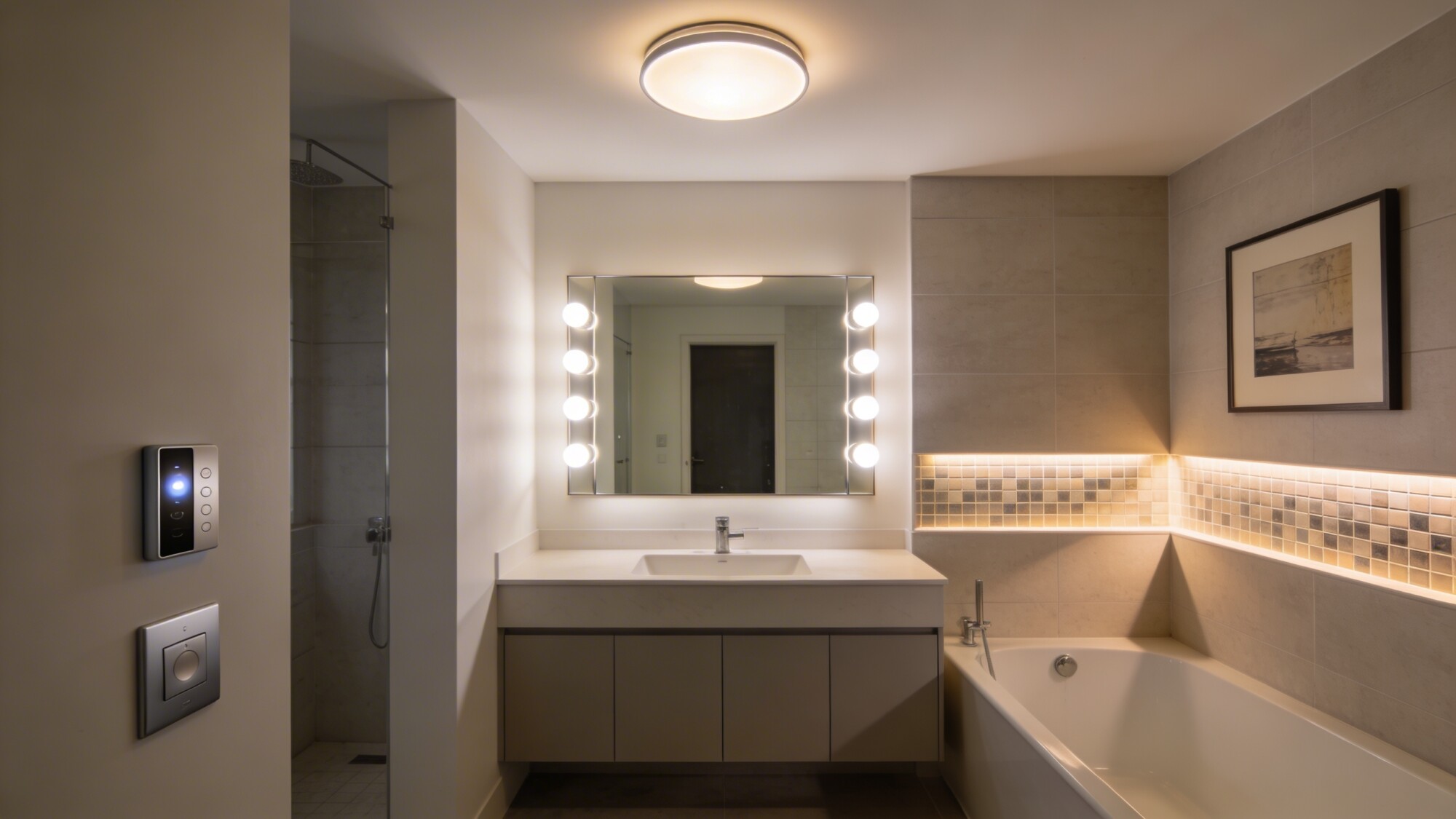
A single overhead fixture is the most common lighting mistake in bathroom remodels — it casts flat, unflattering shadows and does nothing to highlight a nice tile choice or new hardware. Layering three types of light fixes this: an overhead for general brightness, vanity lighting with even glow on either side of the mirror (not just above it), and accent lighting on a feature wall or piece of art.
💡 Pro Tip: Put dimmers on the ambient and accent circuits, but leave vanity task lighting on a regular switch at full brightness. You still need real light for shaving or applying makeup — dimming everything uniformly undercuts the one lighting layer that needs to stay bright.
5. Smart Storage Solutions You’ll Actually Use
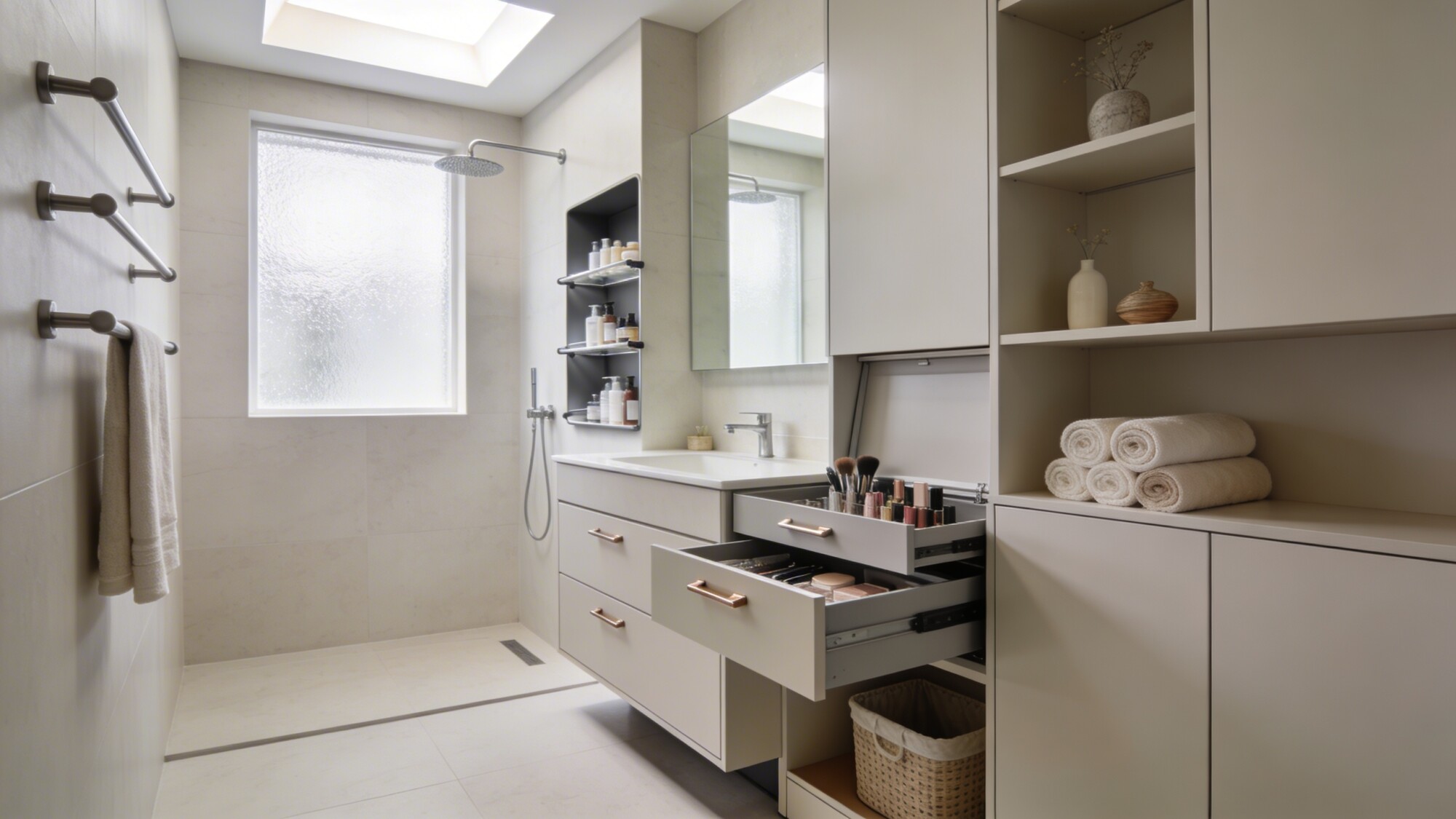
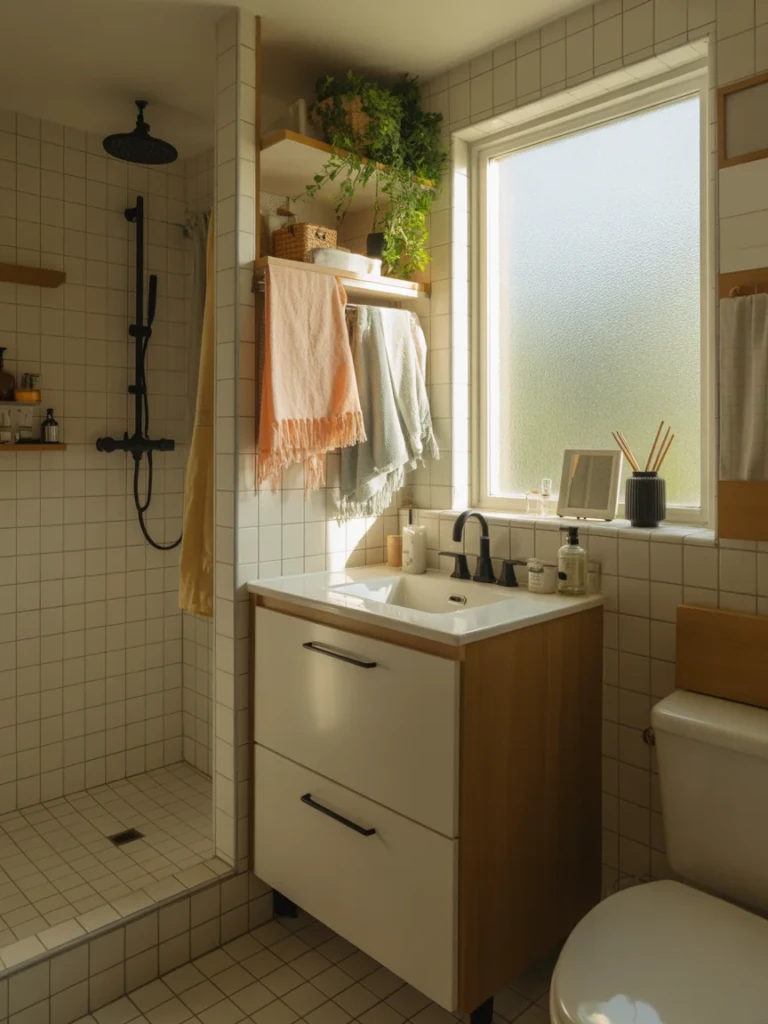
This is the upgrade most likely to change your actual daily routine rather than just the photos. Extendable shelving in the shower niche, pull-out drawer organizers for cosmetics and grooming tools, and a hidden hamper built into a toe-kick cabinet all remove the small daily frictions that make a bathroom feel cluttered even when it’s objectively clean. Balance closed storage (drawers, cabinets) for a tidy countertop with a bit of open shelving for rolled towels or a plant — an entirely closed bathroom can feel sterile, and an entirely open one clutters fast.
6. Soothing Color Palettes and Finishes
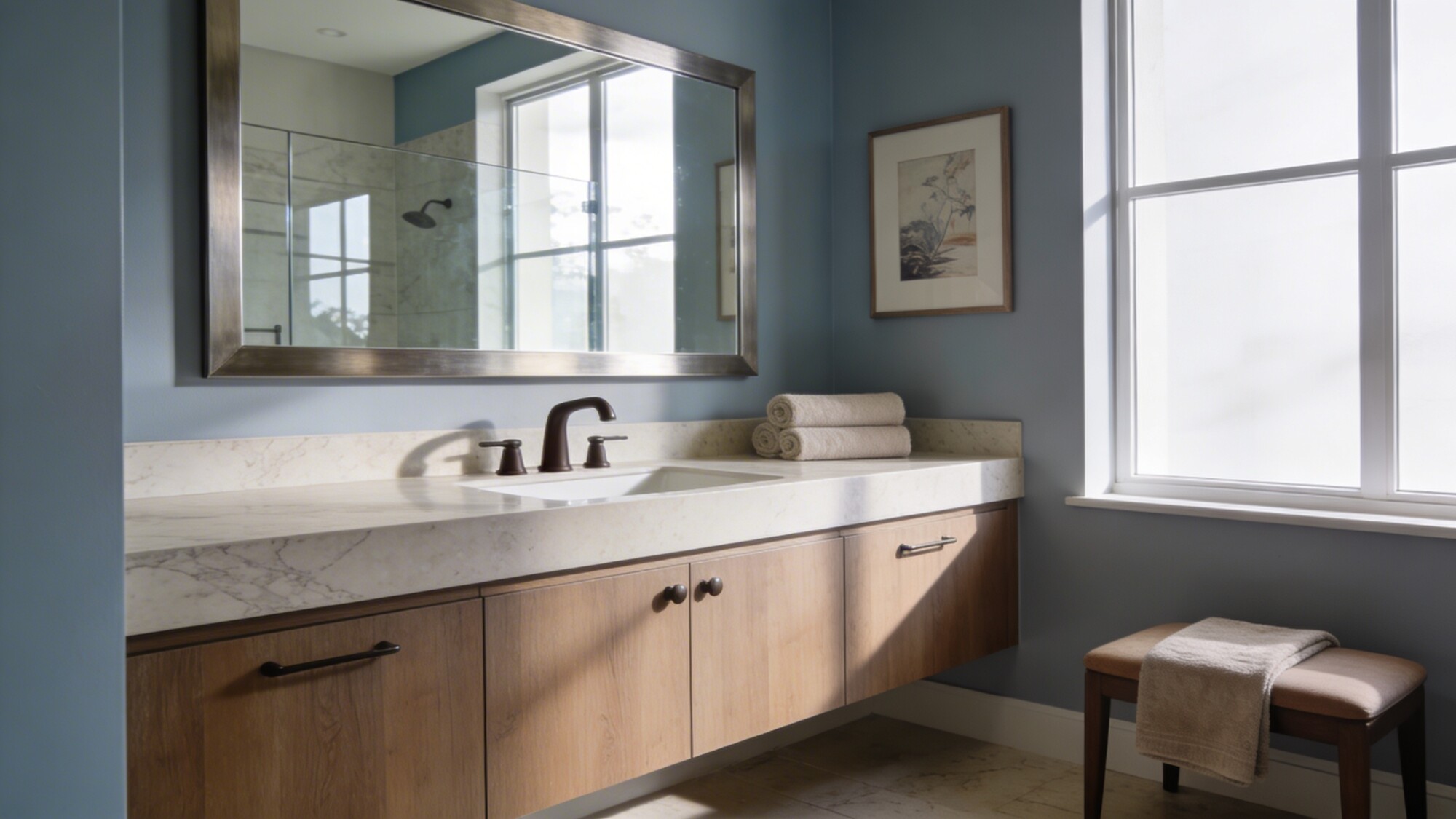
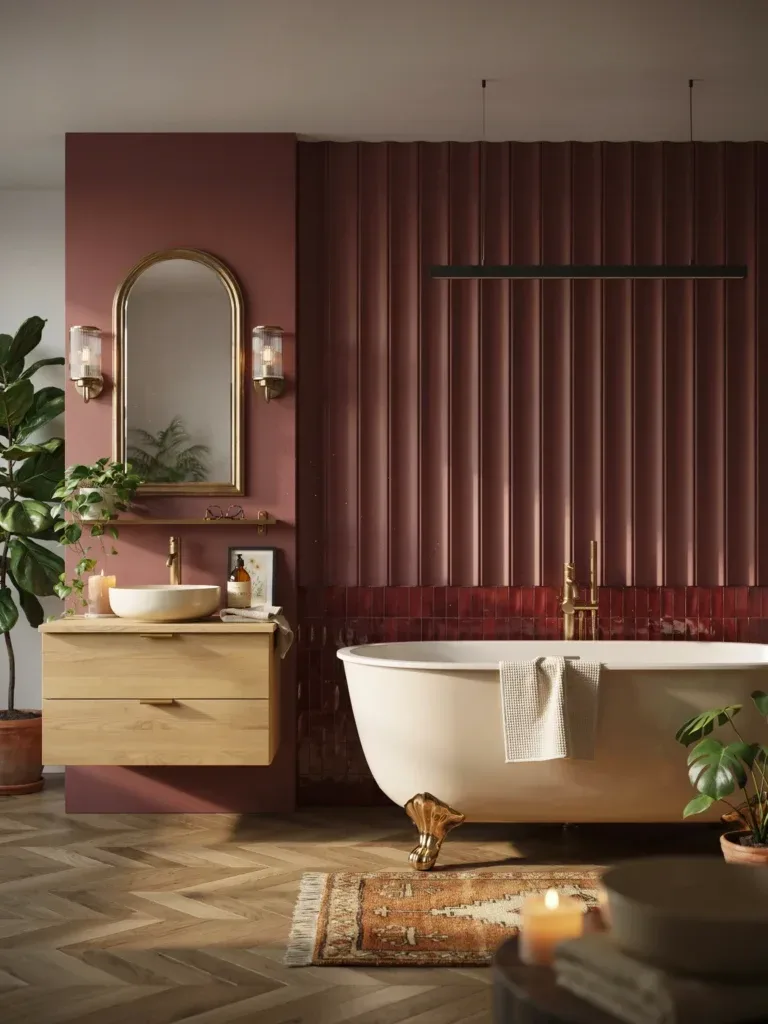
Color and finish choices are what make a remodel feel intentional instead of like a pile of separate upgrades. Soft neutrals with warm wood accents lean cozy; cool grays or blues lean airy and calm. Whichever direction you pick, let the vanity top and wall tone contrast subtly rather than matching exactly — a lighter marble or quartz top against a cooler wall reads as depth, not mismatch.
Matte fixtures read more modern; brushed metal reads more timeless. Neither is objectively better — it comes down to whether you want the bathroom to look current now or age more neutrally over the next decade.
Which Upgrade to Start With
| Upgrade | Disruption | Impact |
|---|---|---|
| Shower Enclosure & Fixtures | Medium — contained to shower area | High |
| Floating Vanity | Medium-High — needs wall blocking | High |
| Tile (accent wall or floor) | Medium — depends on scope | High |
| Lighting Layers | Low-Medium — mostly electrical | Medium-High |
| Smart Storage | Low — mostly retrofit | Medium |
| Color & Finish Refresh | Low | Medium |
Things to Consider Before You Start
- Confirm whether a floating vanity’s wall already has blocking — if not, that’s a contractor job, not a DIY swap.
- Check your bathroom’s actual ventilation before adding more glass or tile — a frameless shower enclosure with poor airflow behind it invites mold faster than a curtained one.
- Decide tile scope before buying grout — matching versus contrasting grout changes the tile’s whole visual weight, and it’s not an easy fix after the fact.
- Budget separately for lighting electrical work if you’re adding new fixtures rather than swapping existing ones — that’s often a bigger cost than the fixtures themselves.
- Pick one or two upgrades to start, not all six — combining a full retile with a new vanity and shower enclosure at once is how a “quick refresh” becomes a full remodel timeline.
Our Verdict
If you’re only doing one upgrade this year, make it the shower enclosure and fixtures — it has the highest visual impact relative to how contained the work is. The floating vanity comes in a close second, but only if your wall can already support it; otherwise it jumps from a weekend project to a contractor job. For a full-scope plan once you’ve settled on priorities, our master bathroom design ideas guide covers how these upgrades come together in a complete remodel.