8 Bathroom Interior Design Ideas That Wow You
Most bathroom interior design ideas people search for aren’t asking for a full renovation — they’re asking what actually makes a bathroom feel finished versus just functional. The honest answer is usually texture, lighting, and storage, in that order, long before color or fixtures. If a full neutral palette is the direction you’re leaning, our neutral bathroom ideas guide goes deeper on that specific approach.
These eight ideas range from a weekend project to something you’d bring in a contractor for, and they’re built to work in stages — you don’t need to do all eight to notice a difference. A few, like warm neutral bathroom color schemes and better lighting around the mirror, tend to deliver the most visible change for the least disruption, which is why they’re worth tackling first if you’re easing into a bigger project.
Quick Takeaways
- Cap texture at two to three materials (stone, wood, fiber, metal) — more than that in a small room reads as cluttered instead of layered.
- A warm neutral base with one bold accent color is more versatile long-term than a fully saturated color scheme, since you can swap the accent without repainting.
- Layered lighting around the mirror — not a single overhead fixture — makes the biggest visible difference for grooming tasks and overall mood.
- Built-in seating and niches need to be planned before tile goes in, not added after — this is a design decision, not a decor one.
- Plants suited to bathroom humidity (snake plant, ZZ plant, pothos) genuinely thrive there in a way they won’t in a drier room.
1. Layer Textures Like a Pro
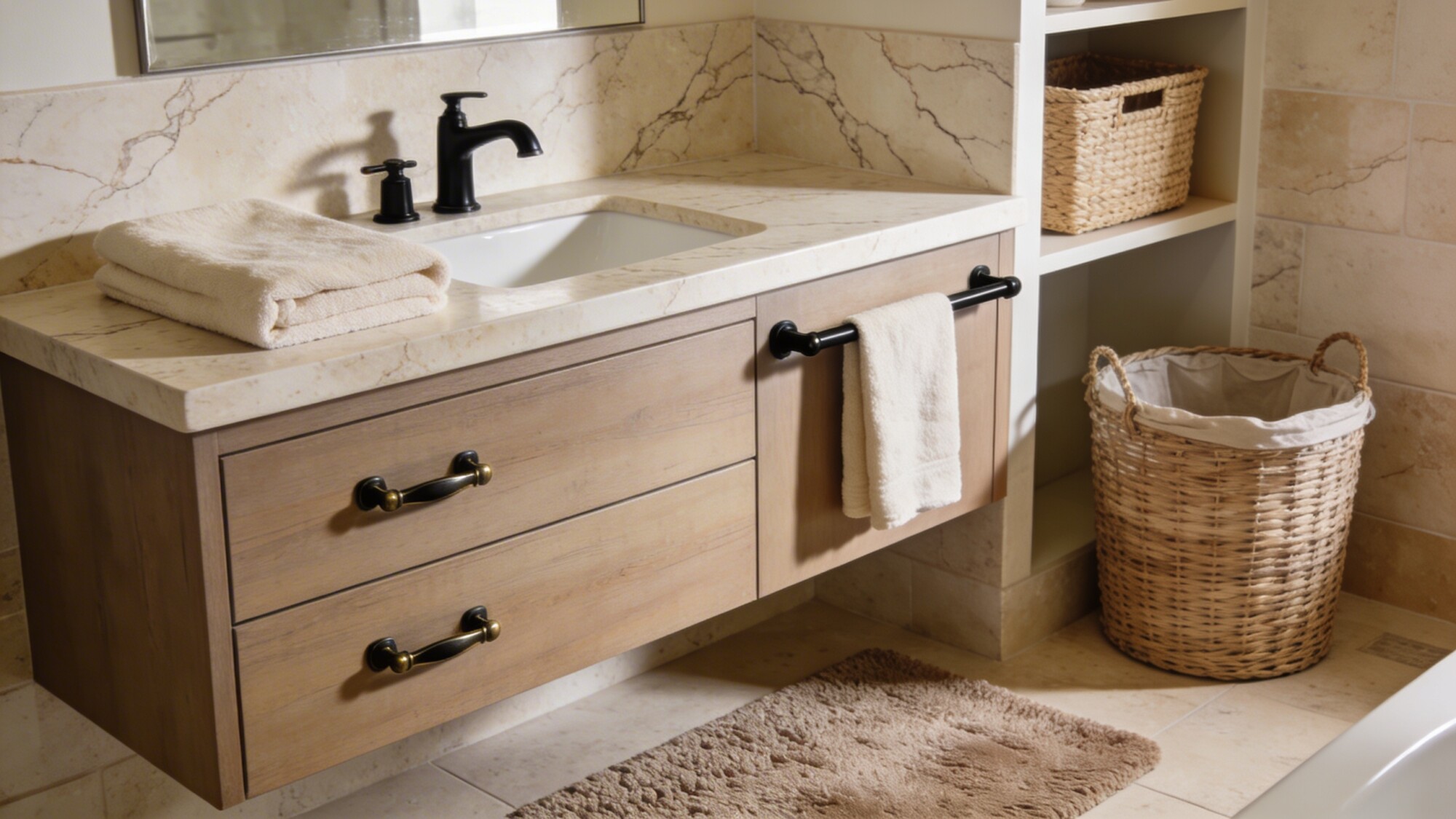
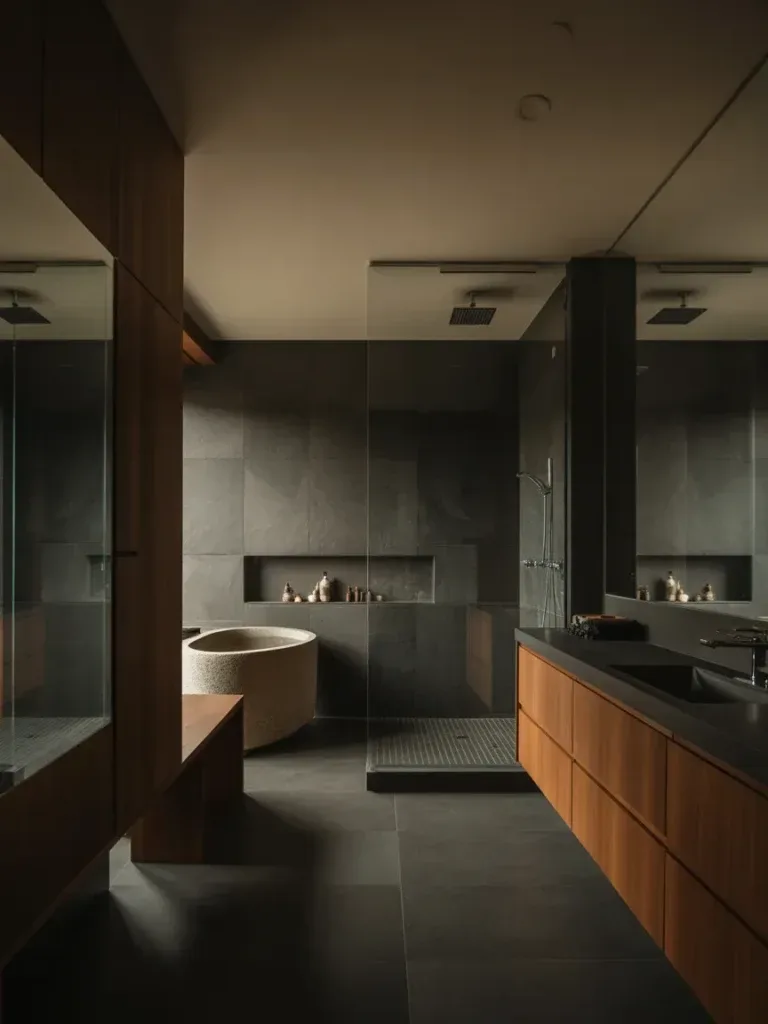
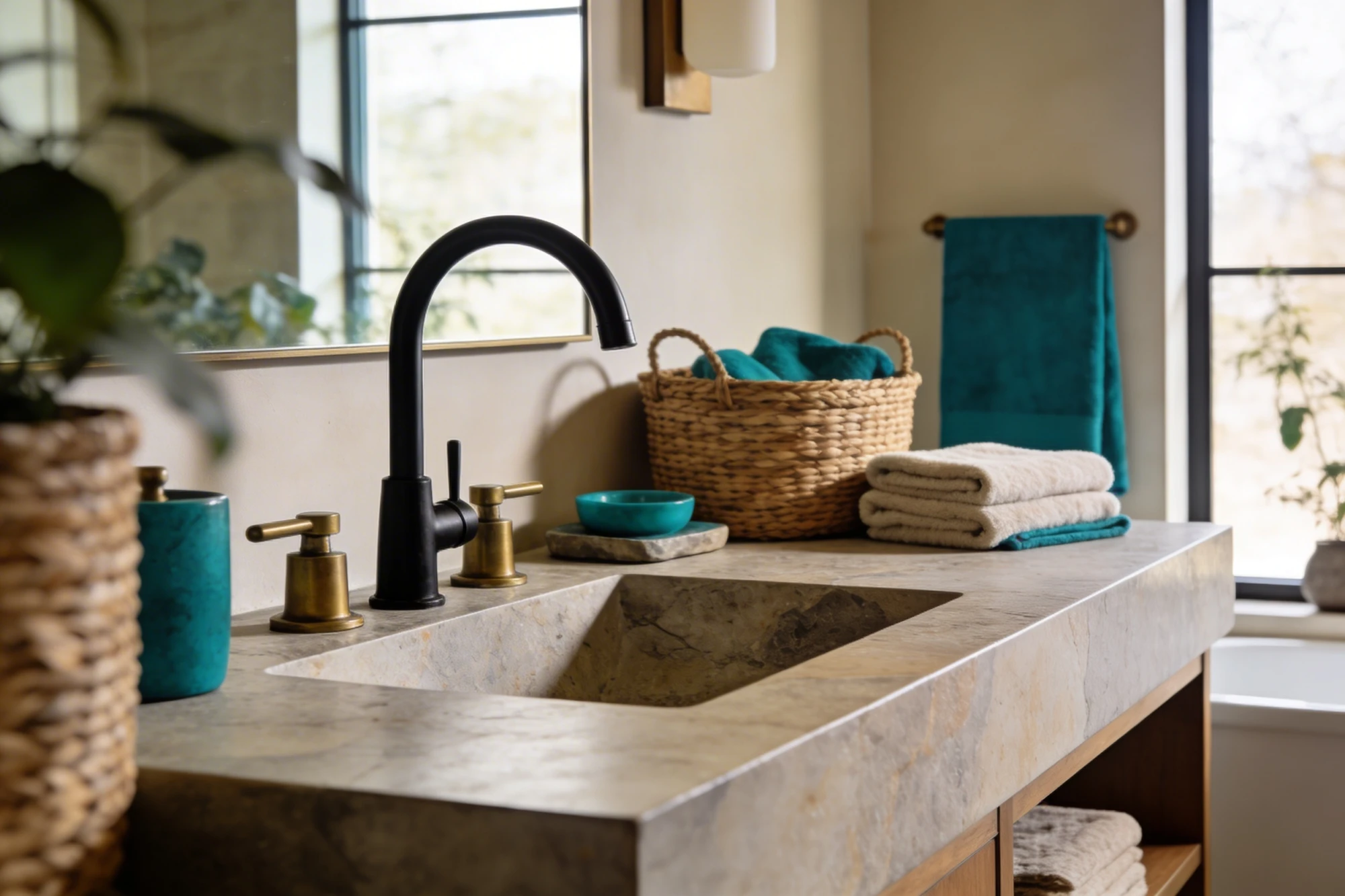
Texture is doing more work in a well-designed bathroom than most people give it credit for — it’s the difference between a room that photographs flat and one that reads as intentional in person. Natural stone or travertine on the vanity countertop, paired with brass or matte black hardware, gives you contrast in both material and finish without touching color at all.
The mistake that shows up constantly: people add texture through five or six different materials at once — stone, wood, rattan, linen, ceramic, and metal all in the same small room — and it stops reading as luxe and starts reading as busy. Two or three textures, repeated rather than scattered, is the actual formula. A stone countertop, a woven basket, and plush cotton towels covers it.
- Matte black or brass hardware for contrast against lighter surfaces
- Natural stone or travertine on the vanity or a partial backsplash
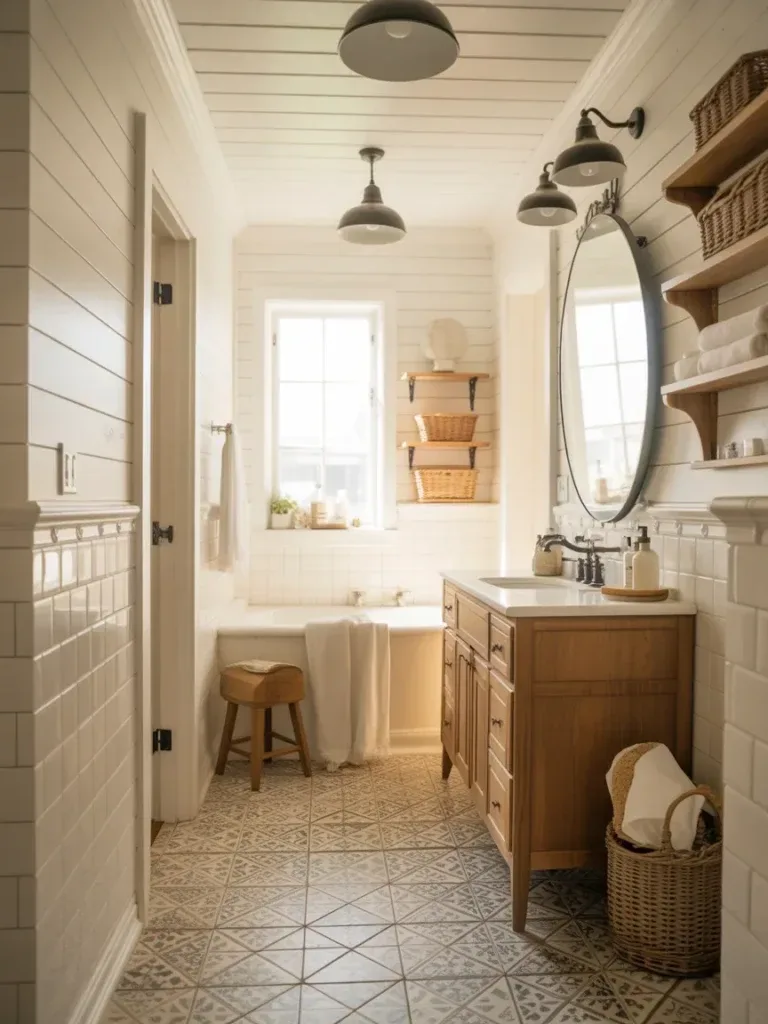
- A woven basket or fiber storage element as the third texture
💡 Pro Tip: If you’re adding stone to a small bathroom, keep it to one surface — a full stone vanity plus a stone-clad shower wall in the same small room tends to read heavy rather than luxurious. Let one stone surface anchor the space and keep the rest simpler.
2. Embrace Warm Neutrals With a Pop of Color
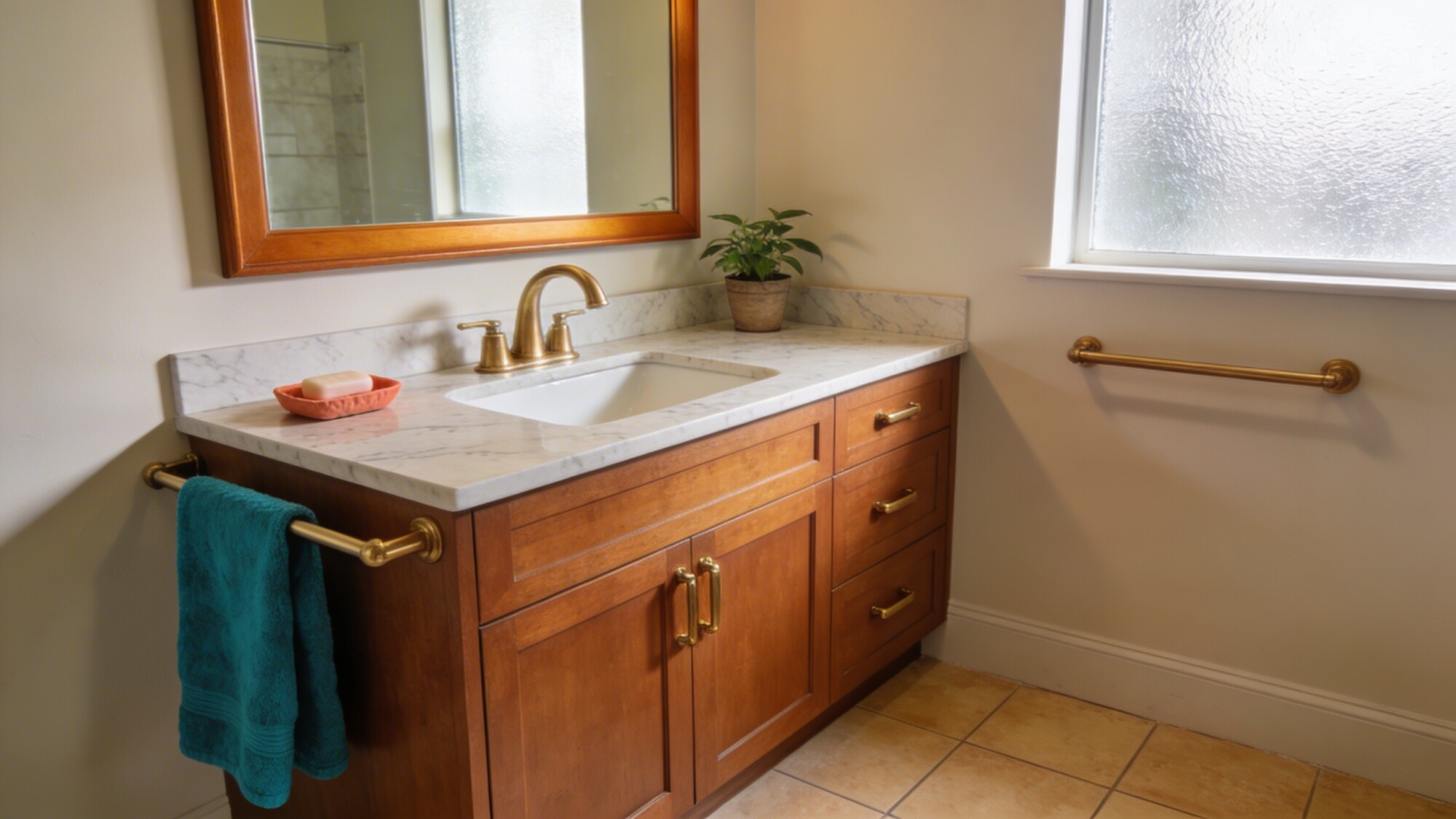
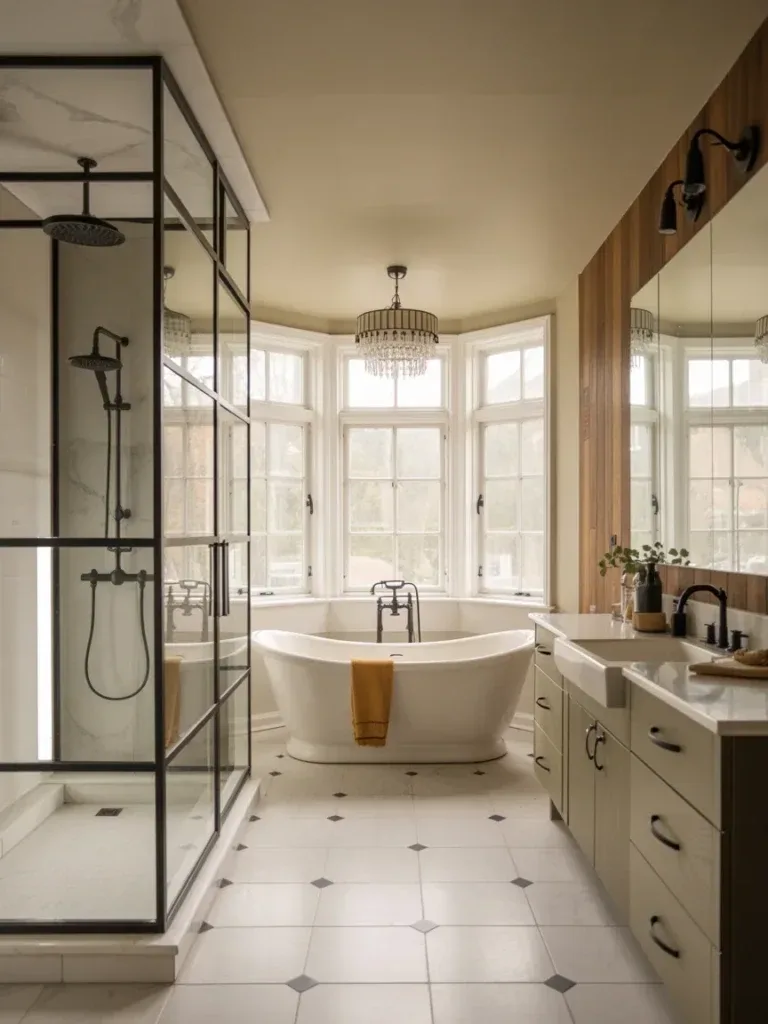
Of all the neutral bathroom color schemes, warm neutrals — taupe, caramel, ivory — tend to age the best because they photograph well in both daylight and warm evening light, unlike cooler grays that can look sterile under yellow bulbs. A caramel-finished wood vanity against soft taupe walls with ivory undertones is a genuinely calming combination that also happens to make small spaces feel bigger, since there’s no hard color contrast breaking up the room visually.
The “pop of color” part is what keeps this from tipping into boring, and it’s also the smart long-game move: change a towel or a soap dish instead of repainting when you want a refresh. A bold teal towel or a coral dish against an otherwise neutral bathroom decor scheme does the job of an accent wall for a fraction of the cost and zero permanence.
- A dominant warm neutral palette — taupe, caramel, or ivory as the base
- One vibrant accent color introduced through towels or small accessories, not paint
- Coordinated warm metals (brushed brass or gold) rather than mixing cool and warm tones
💡 Pro Tip: If you’re choosing among best neutral paint colors and can’t decide between a warm and cool undertone, test both on the actual wall at the room’s darkest hour and brightest hour — a beige neutral bathroom idea that looks warm and inviting at noon can read slightly gray or flat under evening artificial light, and that’s the time you’ll actually see it most.
3. Go Minimalist With Smart Storage
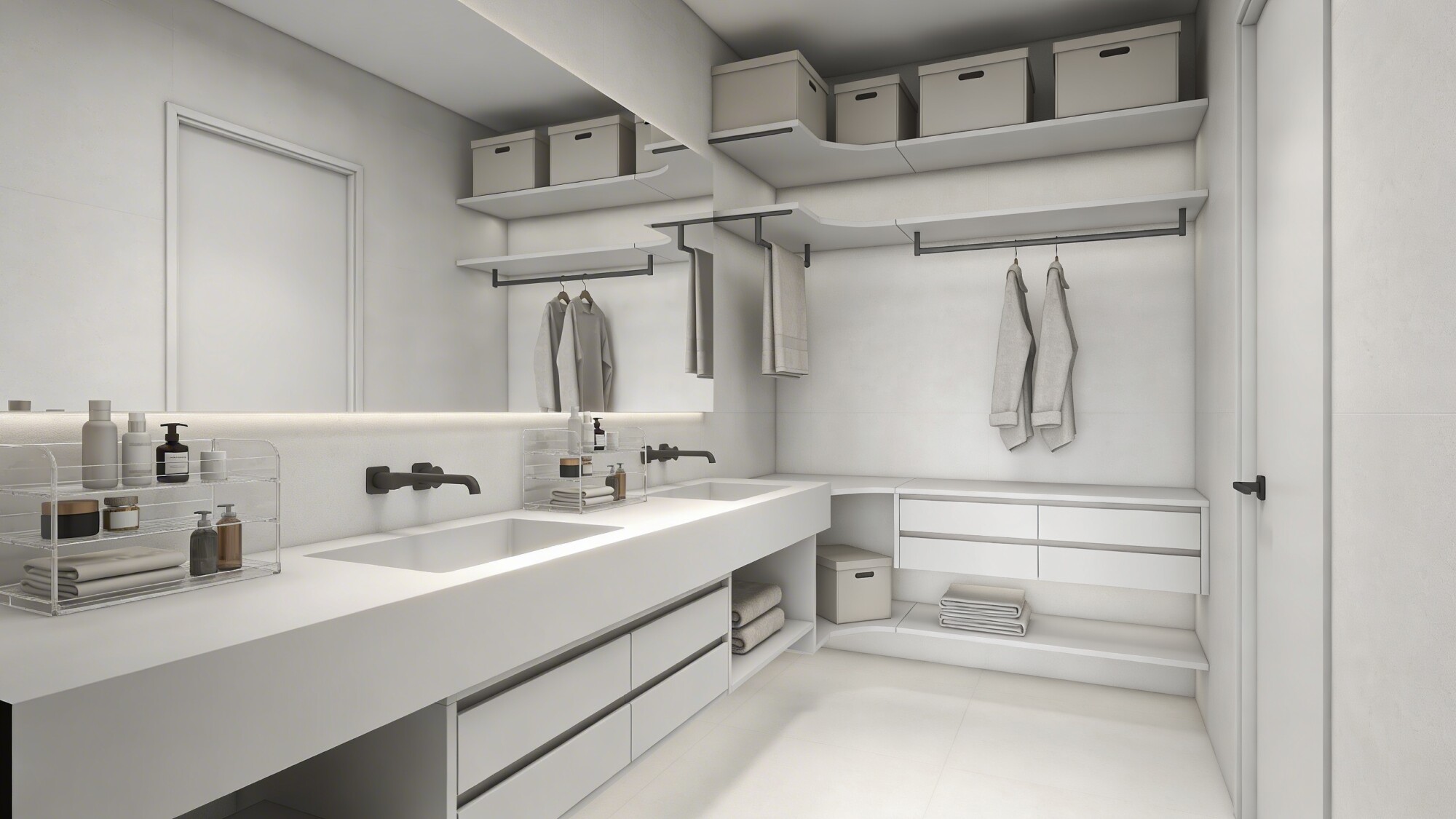
Minimalist doesn’t mean empty — it means the storage is doing enough work that the visible surfaces stay clear without daily effort. Under-vanity drawers with real organization inside beat open shelving for anything you use daily but don’t want on display; floating shelves with closed bins split the difference for items you want accessible but not visible.
Clear acrylic organizers are a small, cheap addition that solves a real problem — being able to see what’s in a drawer without pulling everything out. Tension rods tucked into a cabinet or under a sink for towel or cleaning-supply storage are an underused trick that costs almost nothing and adds real capacity.
- Under-vanity drawers with internal organizers rather than open cabinet space
- Floating shelves paired with closed storage bins, not open display
- Clear acrylic organizers on counters and shelves for at-a-glance contents
4. Install a Statement Mirror — and Light It Properly
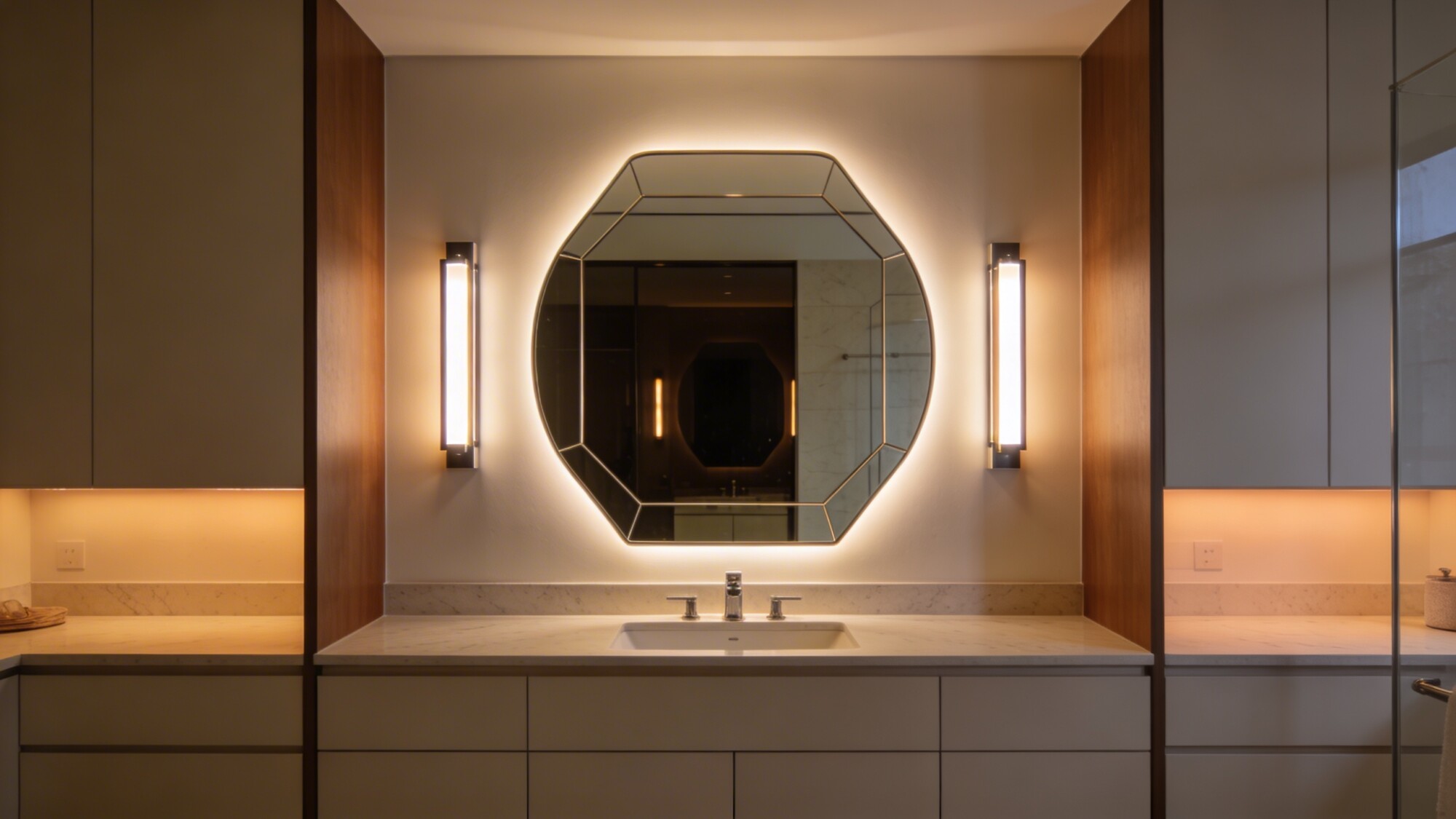
An oversized or uniquely shaped mirror does two things at once: it reflects more light, which makes the room feel larger, and it becomes the room’s visual anchor without needing bold color or pattern anywhere else. This works especially well paired with a calming bathroom color scheme, since the mirror’s shape and frame become the personality the neutral walls aren’t providing.
Lighting is the half of this idea people skip, and it’s the more important half. Vertical sconces flanking the mirror give even, shadow-free light for grooming — a single overhead fixture casts shadows under the chin and eyes exactly where you don’t want them. Ambient LED backlighting behind the mirror frame adds a soft glow for evening use without needing the main lights on at all.
- An oversized or distinctively shaped mirror as the room’s focal point
- Vertical lighting sconces on either side for even, flattering task light
- Ambient LED backlighting for a softer evening glow separate from the main lights
5. Add a Built-In Bench or Nook
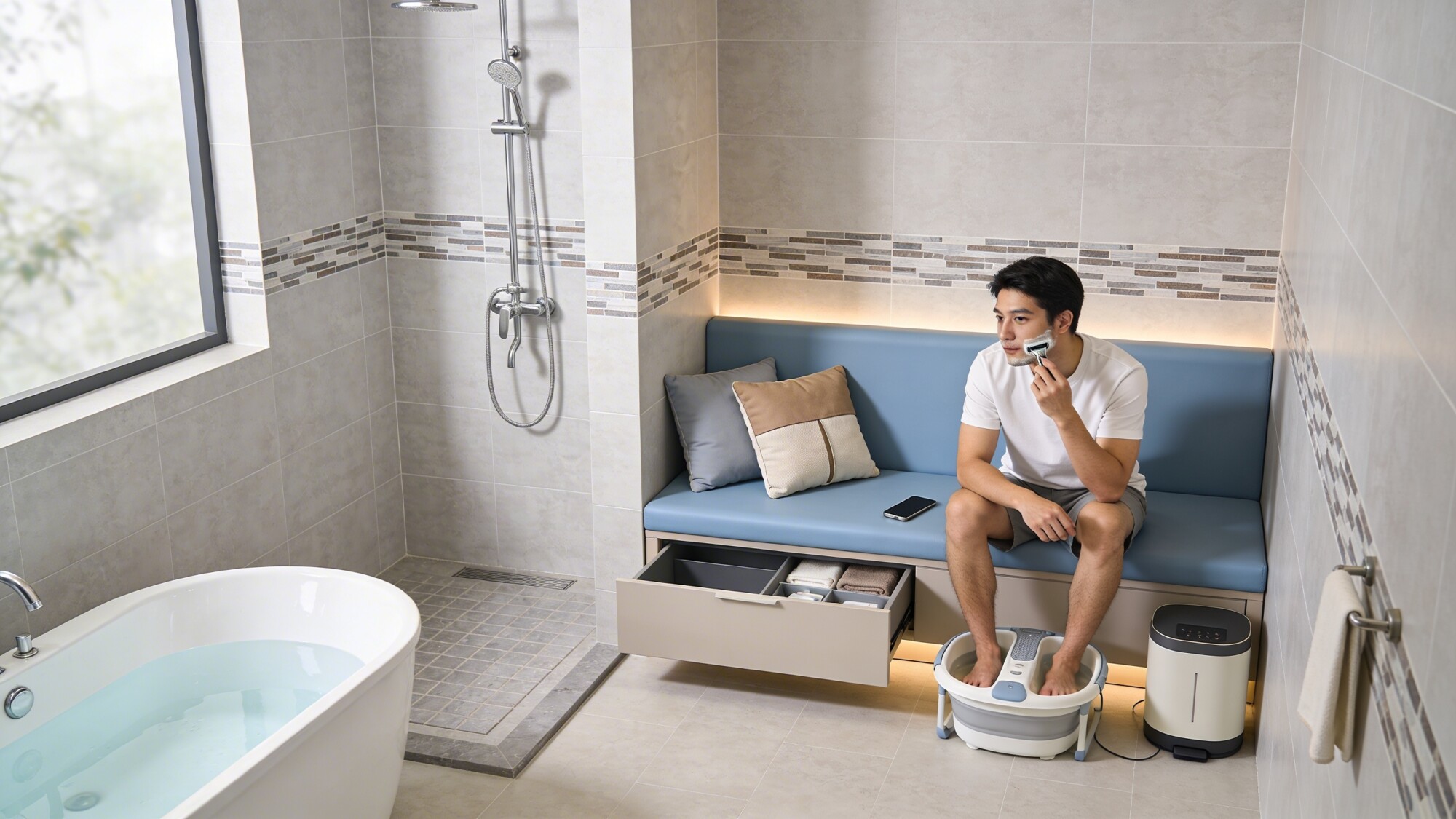
A built-in bench near the shower or tub turns a purely functional room into one that invites you to actually linger — for shaving, a foot soak, or just sitting while the water heats up. This is a construction-phase decision, though, not something you retrofit easily; the tile pattern and waterproofing need to be planned around the bench from the start.
Hidden storage underneath is what makes a bench earn its footprint instead of just taking up space. A slim under-seat cabinet or drawer for spare products keeps the bench from becoming a place things pile up on top of, which is the common failure mode for open bathroom surfaces in general.
- Waterproof seating with hidden storage built in underneath
- A tile pattern or layout that visually directs the eye toward the seating area
- Waterproof cushions or ones with removable, washable covers
6. Play With Tile Patterns Without Overdoing It
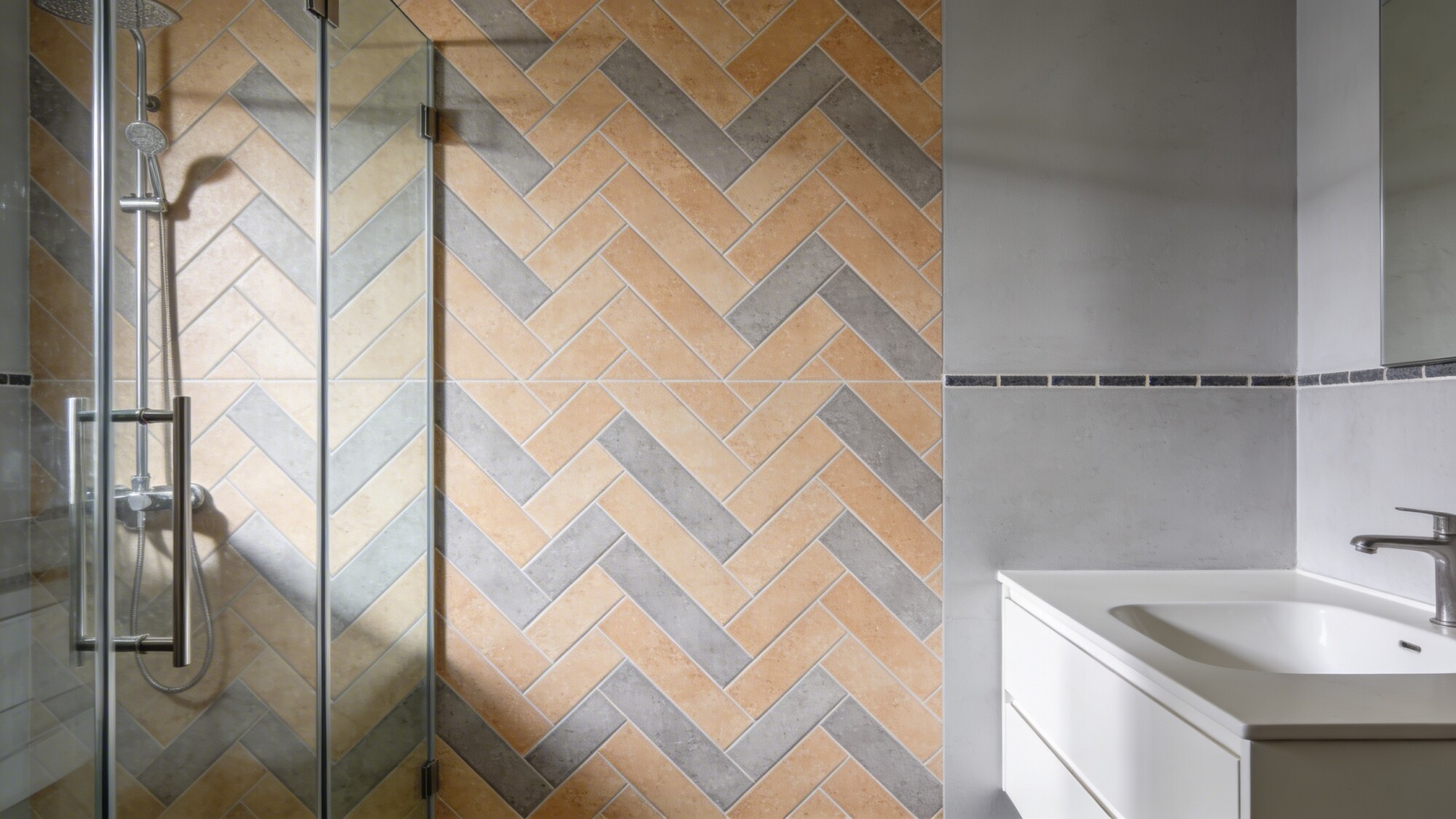
You don’t need a full mosaic to get personality from tile — one bold move, done well, reads as more intentional than pattern spread across every surface. A herringbone or chevron accent wall, a single-color statement shower wall, or classic subway tile with contrasting grout are each enough on their own.
Keep everything else in the room simple if you go this route. A bold tile choice competing with a busy vanity, patterned textiles, and multiple accent colors just cancels itself out — let the tile be the one loud element and let the rest of the room support it quietly.
- Chevron or herringbone as a retro-modern accent wall or floor pattern
- A single bold color statement shower wall, or bold grout against neutral tile
- Subway tile with contrasting grout for drama without pattern complexity
💡 Pro Tip: Seal grout at install and reseal roughly once a year in a high-moisture bathroom — this is the single most skipped maintenance step, and unsealed grout on a bold pattern shows staining and discoloration far faster than it does on plain white subway tile.
7. Bring Nature In With Plants and Natural Light
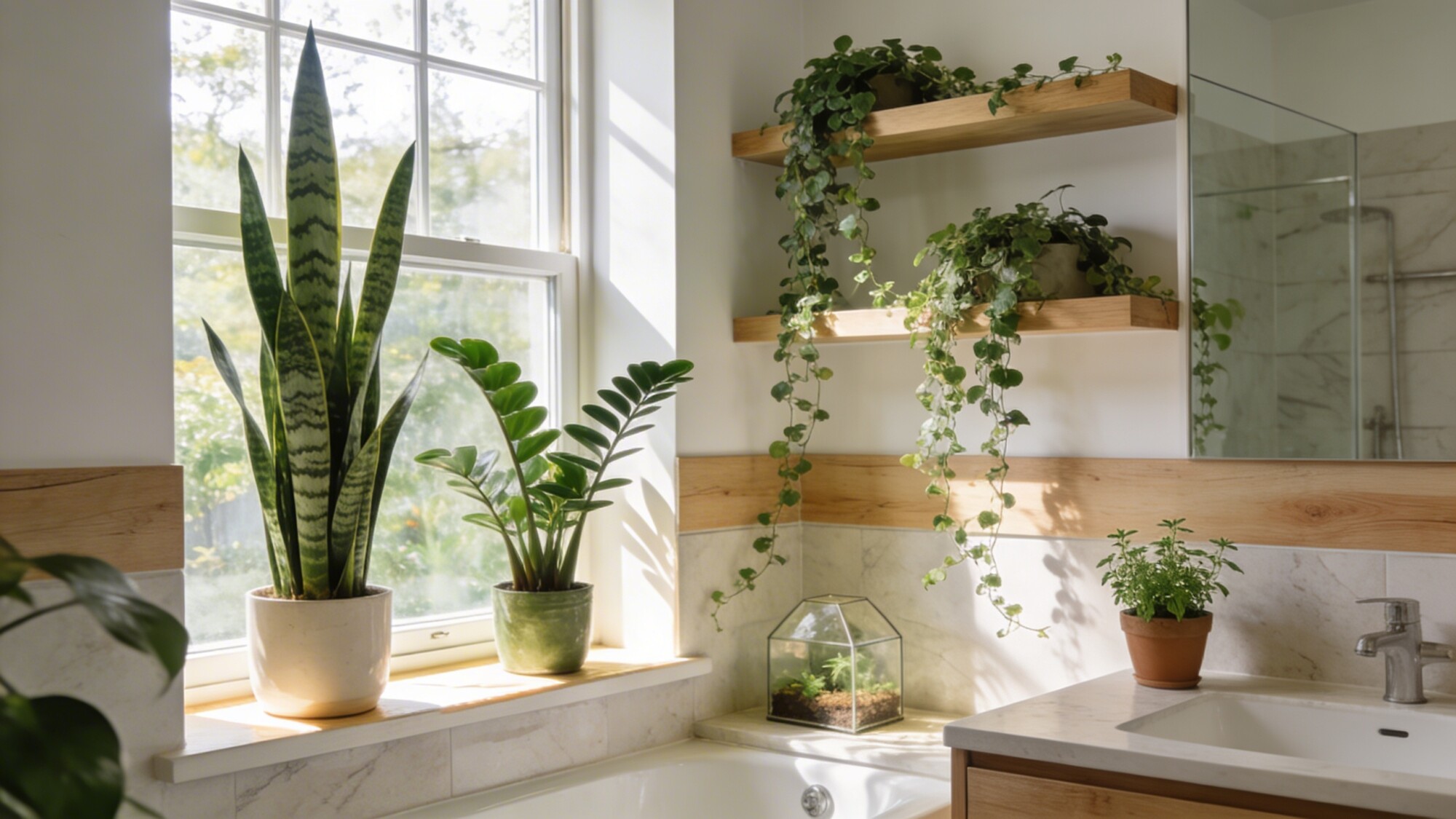
Bathrooms with a window or decent ventilation are one of the few rooms in a house where humidity-loving plants genuinely thrive rather than just survive — snake plants and ZZ plants tolerate lower light and inconsistent watering, which makes them the safer starting point if you’re not confident about plant care. Trailing vines on open shelving add movement without needing floor space.
This idea pairs naturally with a warm neutral palette specifically, since greenery is often the only saturated color in an otherwise neutral bathroom, and it reads as fresh rather than as a deliberate accent color choice.
- Snake plant or ZZ plant for lower-light corners
- Trailing vines on open shelving for movement without added floor footprint
- A small terrarium or potted herb on the counter for a low-commitment option
8. Create a Luxe Shower Experience on a Budget
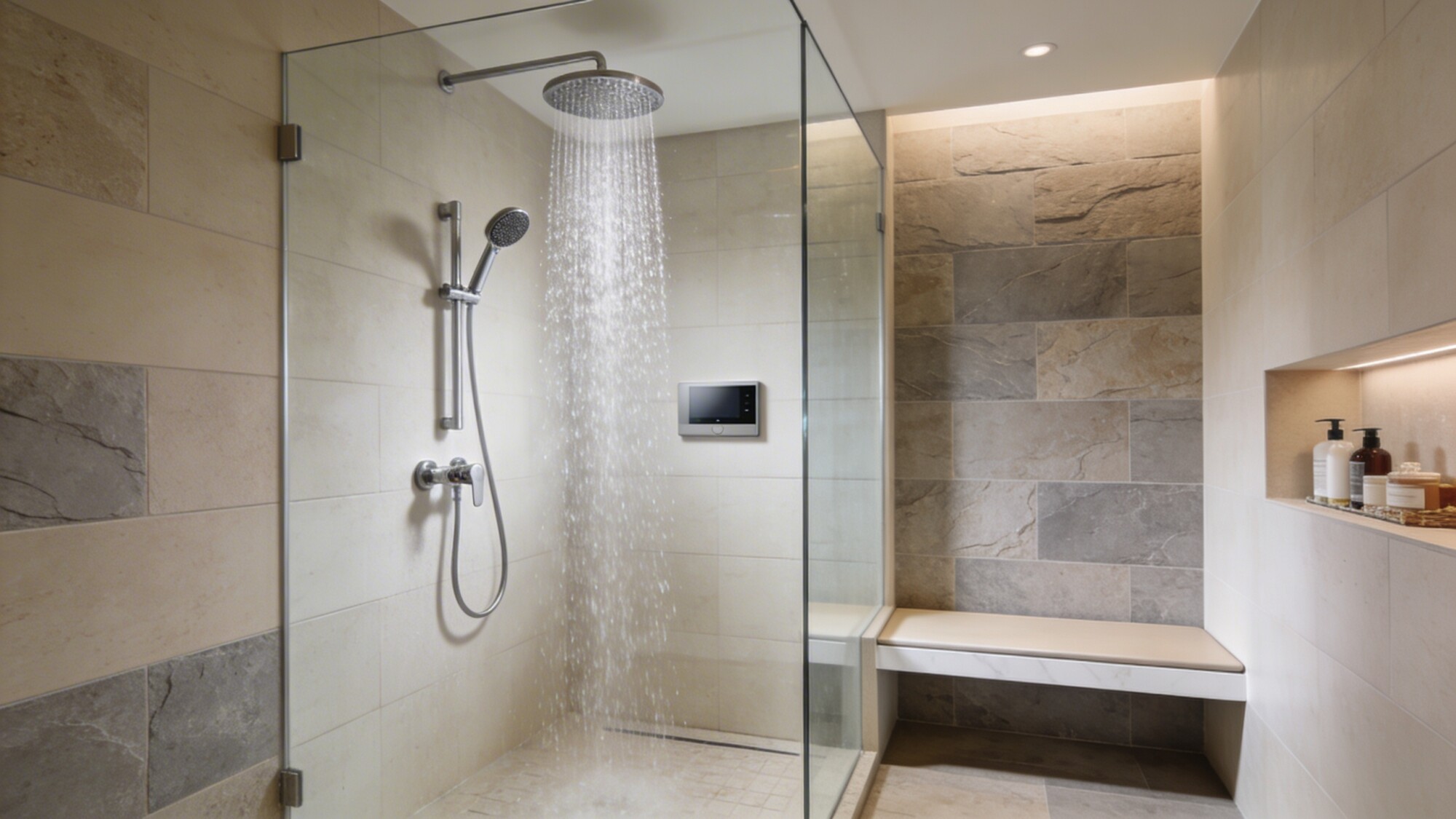
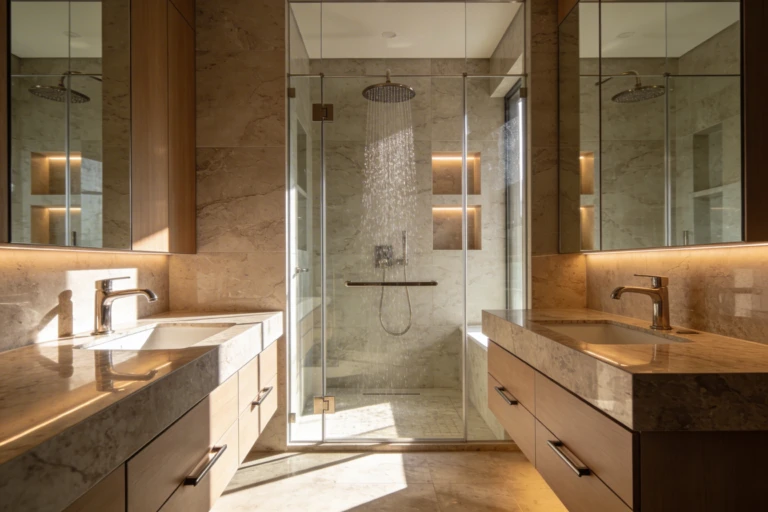
A rain showerhead is the single upgrade on this list that changes the daily experience the most for the money — it’s a straightforward swap if your existing plumbing rough-in supports it, and it doesn’t require demolition. Frameless glass or an easy-clean screen replacing a shower curtain adds the visual upgrade that makes the whole bathroom photograph and feel more finished.
A built-in niche for products is worth doing at the same time if you’re already opening the wall for anything else — it’s a much bigger job to add one after the tile’s finished than to build it in during an existing project.
- Rain or dual-head showerhead system for better daily coverage
- Frameless glass or an easy-clean glass screen instead of a curtain
- A water-resistant niche or small bench for spa products
Which Idea to Start With?
| Idea | Effort | Impact | Best For |
|---|---|---|---|
| Texture Layering (Idea 1) | Low | High | Anyone on a tight timeline or budget |
| Warm Neutrals + Accent (Idea 2) | Low–Medium | High | Anyone wanting a timeless, flexible palette |
| Smart Storage (Idea 3) | Low | Medium | Small bathrooms prone to clutter |
| Statement Mirror + Lighting (Idea 4) | Medium | High | Anyone frustrated with poor grooming light |
| Built-In Bench (Idea 5) | High | Medium–High | New construction or full remodels only |
Frequently Asked Questions
What’s the fastest way to improve a bathroom’s design without a full remodel?
Texture and lighting. Adding two or three tactile materials and layering the lighting around the mirror both take a weekend or less and neither requires touching plumbing or tile.
Are warm neutral bathrooms harder to keep from looking boring?
Not if you plan for one accent element from the start — a towel color, a soap dish, or greenery. The mistake is treating “neutral” as “no color anywhere,” which is what makes a room feel flat rather than calm.
Do I need a window for plants to survive in a bathroom?
Not necessarily, but it helps. Snake plants and ZZ plants tolerate low light reasonably well; if your bathroom has no window at all, stick to those two rather than anything requiring bright indirect light.
Is a built-in bench worth it in a small bathroom?
Only if you’re already doing a full remodel — it needs to be planned into the waterproofing and tile layout from the start. Retrofitting one into an existing small bathroom usually isn’t worth the disruption relative to the payoff.
Our Take
If you’re picking two ideas to start with, texture layering and a warm neutral color scheme with one accent give you the most visible change for the least cost and disruption — both are largely cosmetic, reversible, and don’t touch plumbing or structure. Save the built-in bench and tile pattern work for when you’re already planning a bigger remodel, since both are much easier to do right the first time than to retrofit later.
If a neutral palette is the direction you’re leaning, our neutral bathroom idea collection has a wider range of color and material combinations to pull from, and if storage is your main pain point, the bathroom shelf styling ideas guide covers more ways to keep surfaces clear without sacrificing style.