7 Shelf Styling Living Room: Quick, Chic Ideas to Wow
Most shelf styling living room advice stops at “mix books and plants,” which is true but incomplete — it doesn’t tell you why some shelves look curated and others look like a yard sale in progress. The difference comes down to a handful of specific techniques: height variation, color repetition, and knowing when to leave a shelf empty. If your shelves are part of a larger floating TV shelf setup, the same principles apply, just with the added constraint of working around a screen.
These seven techniques work on built-ins, floating shelves, or a basic bookcase — the mechanics of good shelf decor living room styling don’t change much based on the furniture underneath.
Quick Takeaways
- Height variation matters more than any single decor object — three items at the same height read as a row, not a display.
- Negative space is not wasted space. A shelf packed edge to edge is the single most common styling mistake.
- Pick 2–3 colors and repeat them across objects, books, and art instead of treating each shelf as its own color scheme.
- Built-in shelves benefit from slightly more restraint than floating shelves, since they already read as a “wall of stuff” by default.
1. Layer Textures Instead of Just Objects
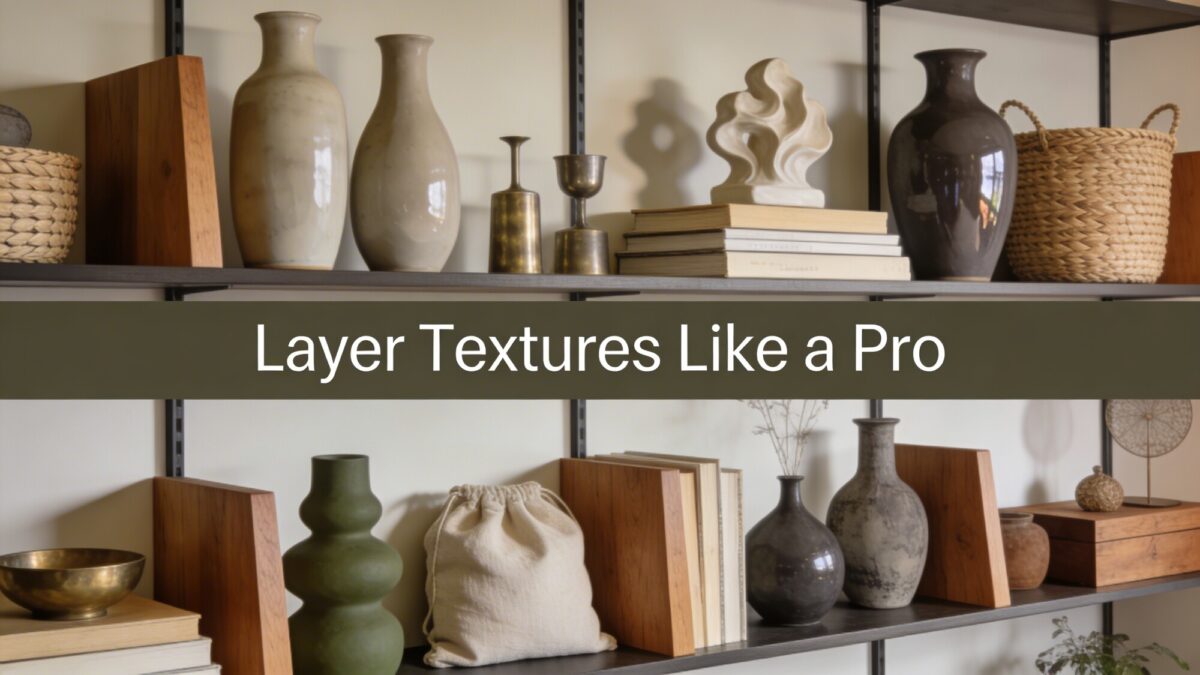
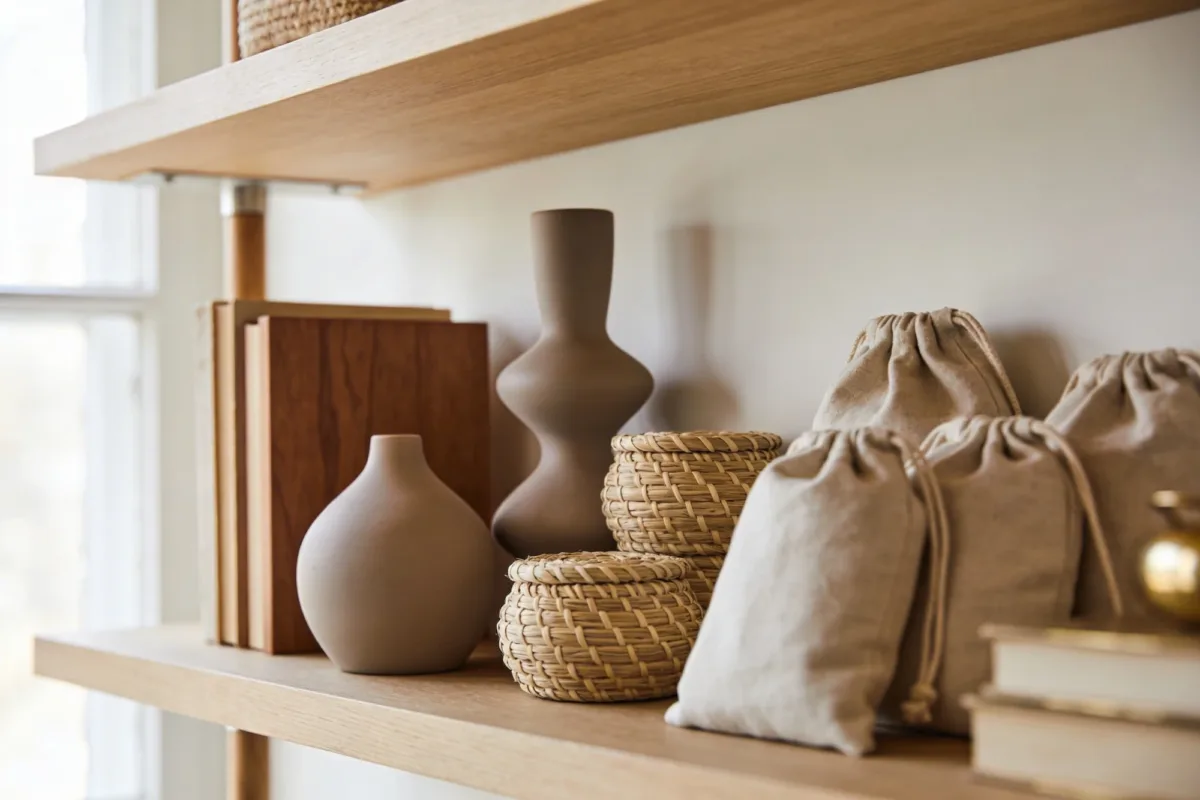
A shelf of five ceramic objects, no matter how nice each one is individually, reads as flat because everything shares the same surface quality. Mixing matte ceramic, natural wood, woven fabric, and a bit of metal gives the eye something to differentiate between, which is most of what “curated” actually means in practice.
You don’t need four categories on every shelf. Two or three textures per shelf, repeated with variation across the whole unit, holds together better than trying to cram every material onto one surface.
2. Build a Visual Triangle
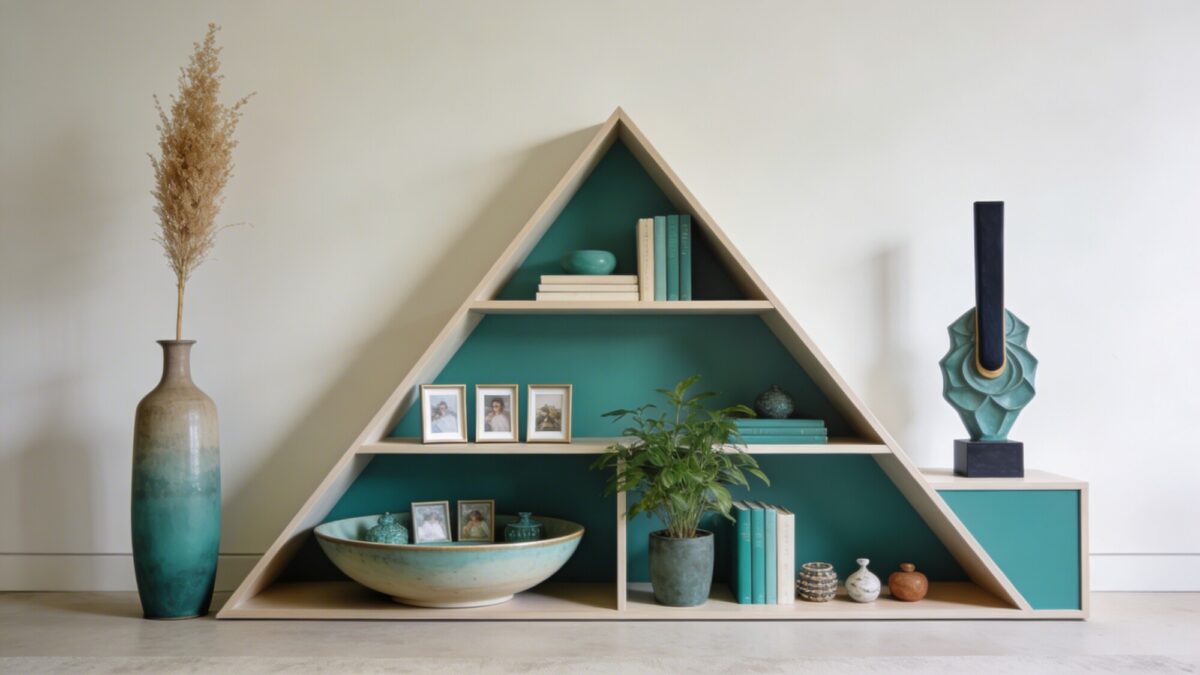
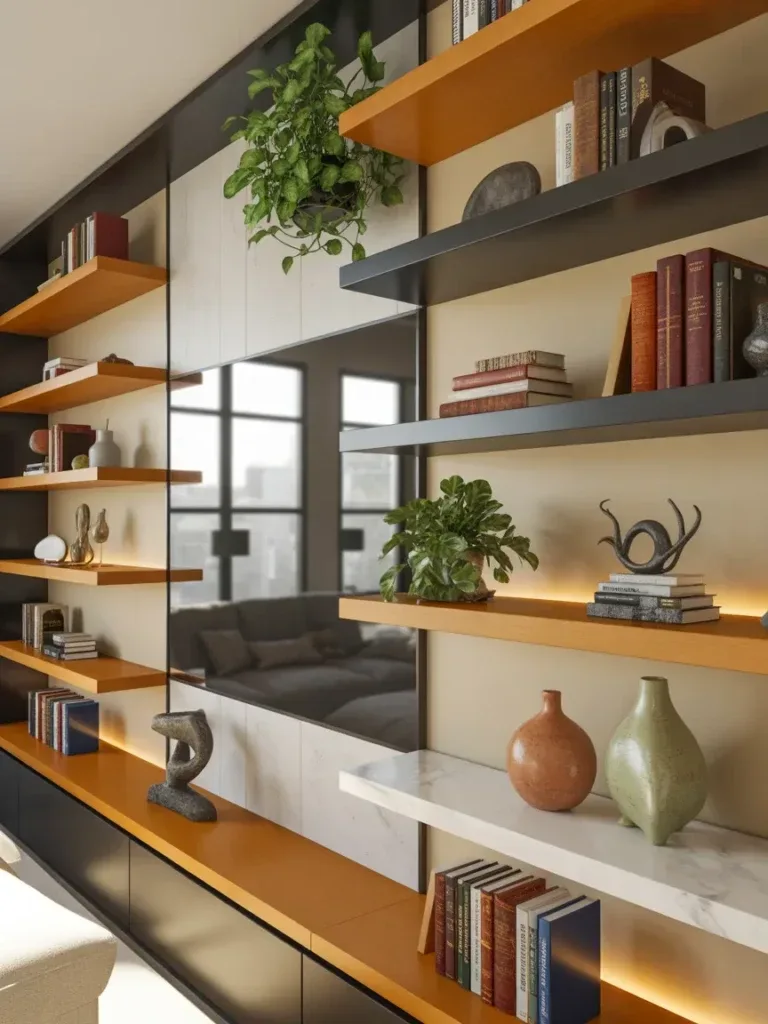
This is the single most useful rule in shelf styling ideas living room decorators actually use, and it’s simple enough to apply without any design background: pick one tall object, one medium object, and one low or wide object, and place them so they form a triangle rather than a straight line.
💡 Pro Tip: If a shelf still looks off after applying the triangle, check whether your “tall” piece is actually tall enough relative to the shelf height. A 10-inch object on a 14-inch-tall shelf barely registers as a height anchor — you often need it closer to two-thirds the shelf’s height to read clearly.
Fill in around the triangle with two or three smaller supporting pieces, not five. Once the triangle is established, more objects start competing with it instead of supporting it.
3. Pick a Color Story and Repeat It
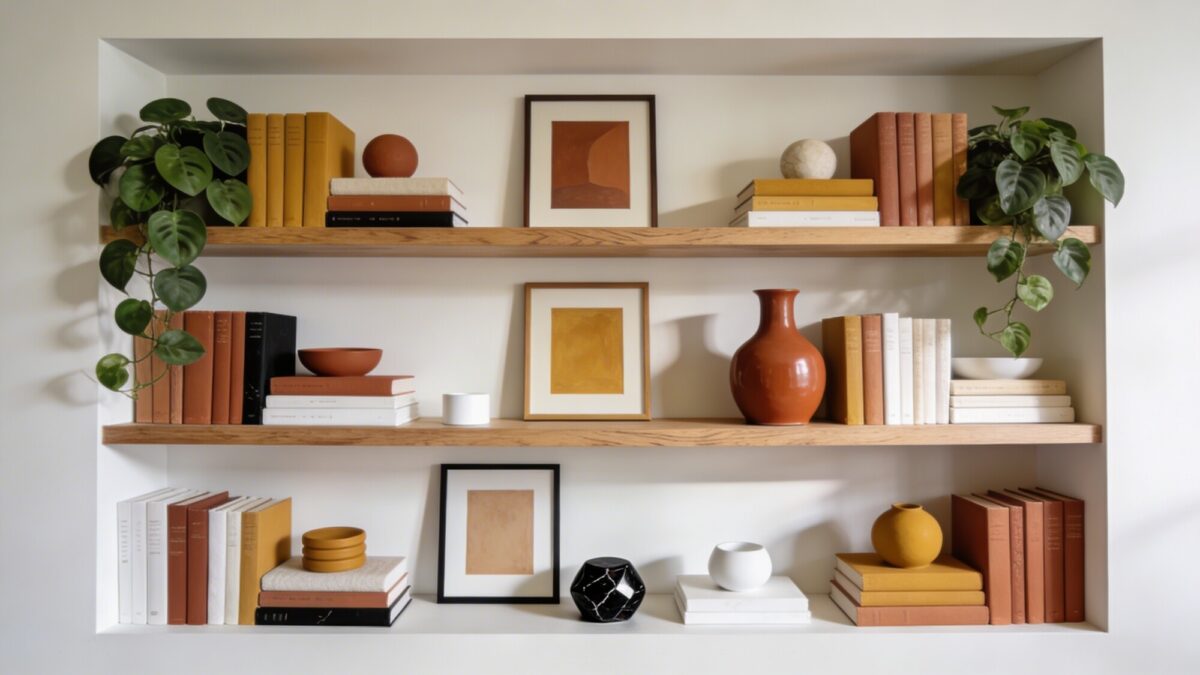
Choosing 2–3 colors and carrying them across books, art, and objects is what separates an intentional shelf from a random collection of things you happened to own. Terracotta, sage, and cream is a common combination for a reason — the colors are close enough on the wheel to feel cohesive without being matchy.
White or black objects work as a grounding anchor between color blocks — a plain white vase or a black-framed print gives the eye a resting point between more saturated pieces.
4. Mix Art, Objects, and Books — But Leave Gaps
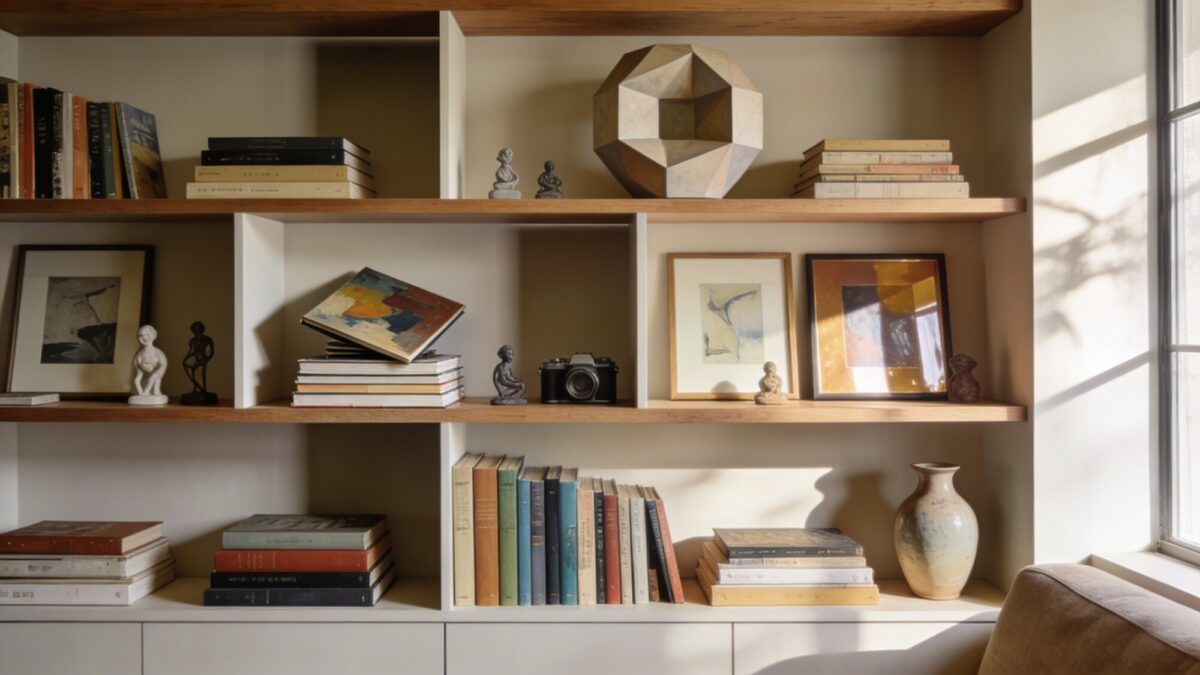
The instinct with a bare shelf is to fill it. Resist that. A shelf with deliberate negative space reads as more expensive and more intentional than one packed corner to corner, even when the packed one has nicer individual objects.
Group books by color or subject rather than height alone, and let one piece — a small sculpture, a framed photo leaned rather than hung — sit slightly askew from the grid. Perfect symmetry across every shelf tends to look staged rather than lived-in.
5. Use Height and Depth Deliberately
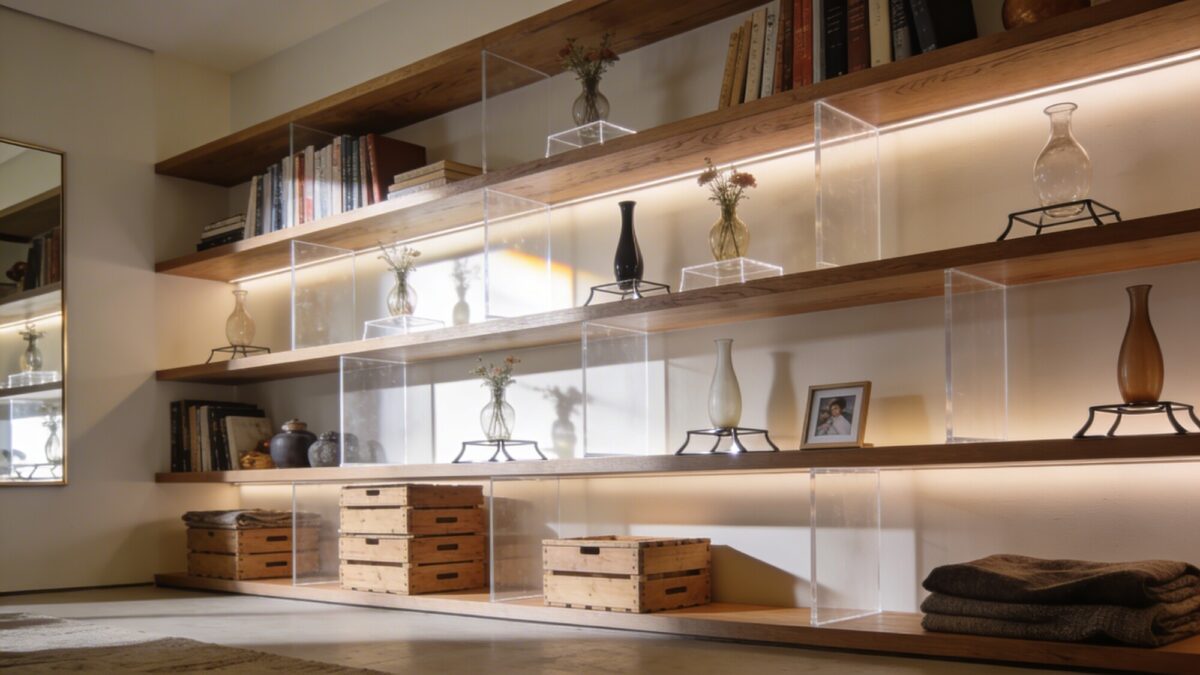
Two objects of identical height sitting next to each other are the most common reason a shelf feels flat. A small acrylic riser or even a stack of two hardcover books under a smaller object solves this without buying anything new.
On built-in shelf styling living room setups where shelf depth varies, use the shallow sections for slim, single objects and save the deeper shelves for anything that needs room to breathe — a stack of books plus a sculpture, for instance.
6. Add Greenery That Won’t Become a Chore
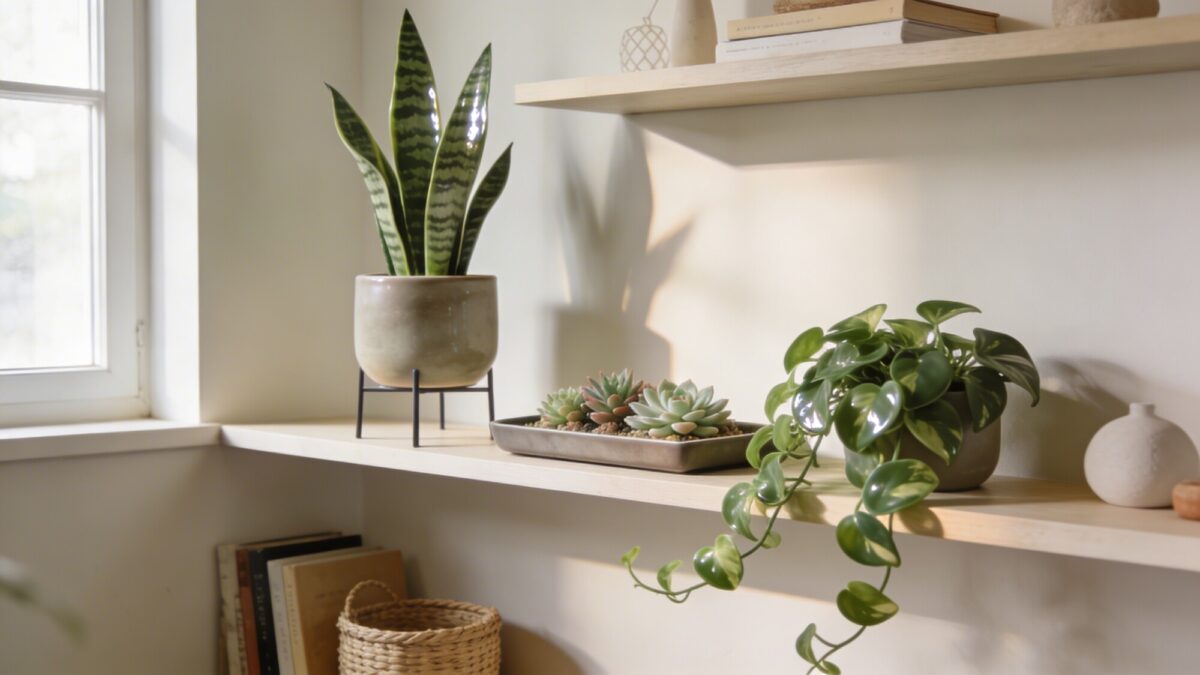
Low-maintenance real plants — pothos, snake plant, a small succulent cluster — hold up better on a shelf than anything that needs regular watering attention, mostly because shelf plants get forgotten more easily than floor plants you walk past daily.
💡 Pro Tip: Rotate any real plant on a shelf a quarter turn every couple of weeks if it’s near a window. One-sided light causes visibly uneven growth on shelf plants faster than on floor plants, since shelf placement usually means light from only one direction.
High-quality faux greenery is a reasonable substitute if you know you won’t keep up with care — the difference in shelf photos is smaller than most people expect, as long as you avoid the cheap plastic-leaf look.
7. Treat the Shelf as Something You Update, Not Finish
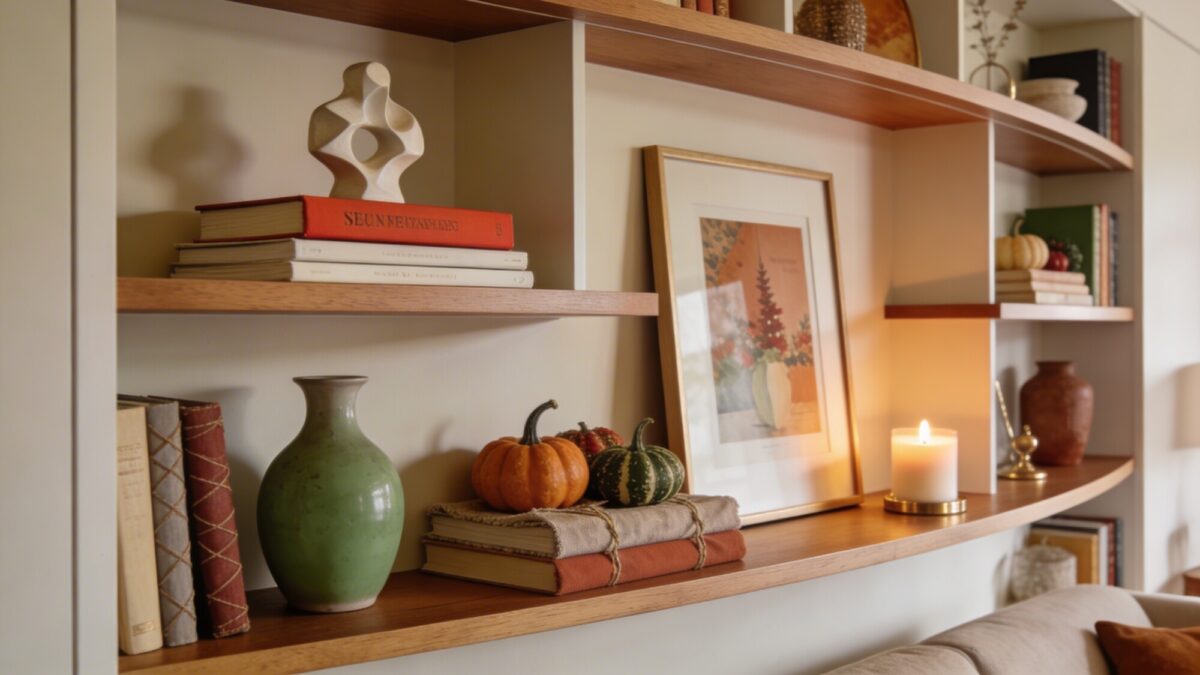
A shelf you style once and never touch again tends to accumulate dust and stop looking intentional within a few months. Swapping one or two items — a book stack for a sculpture, a print for a new photo — keeps it feeling current without a full redo.
A simple monthly swap, or one tied to a seasonal cleaning pass, is enough. You don’t need a new theme every few weeks; small rotations are what keep decorating built-in shelves from turning into a static, forgotten wall.
Common Mistakes to Avoid
- Filling every shelf to the same density — vary how full each shelf looks, not just what’s on it.
- Using more than three colors per shelving unit, which tends to read as cluttered even when each individual object is nice.
- Lining objects up in a straight row instead of building height variation.
- Forgetting the shelf decor living room TV setup needs — if a TV sits within the shelving, keep the shelves directly beside and above it slightly less busy so the eye isn’t competing with the screen.
Frequently Asked Questions
How many objects should go on one shelf?
There’s no fixed number, but 3–5 grouped items with visible negative space around them generally reads better than 8–10 items packed edge to edge.
Do built-in shelves need different styling than floating shelves?
Not fundamentally, but built-ins often come in a full wall unit, so restraint matters more — filling every single shelf at the same density looks heavier in a built-in than the same approach on two or three floating shelves.
Should shelf styling match the rest of the room’s color scheme?
It should relate to it, not necessarily match exactly. Pulling one or two accent colors already in the room onto the shelf ties it together without making the shelf a mirror of the couch.
How often should I refresh a styled shelf?
Monthly is a reasonable cadence for a small swap — one or two items — rather than a full restyle, which most people don’t have the bandwidth to keep up with anyway.
Our Take
Start with the visual triangle on your busiest shelf — it’s the single technique with the biggest visible payoff for the least effort, and once you’ve got it, the color story and texture layering build naturally on top of it. If you’re working with floating shelves specifically rather than a built-in, our guide to floating shelf styling secrets covers the mounting and spacing details this piece doesn’t.