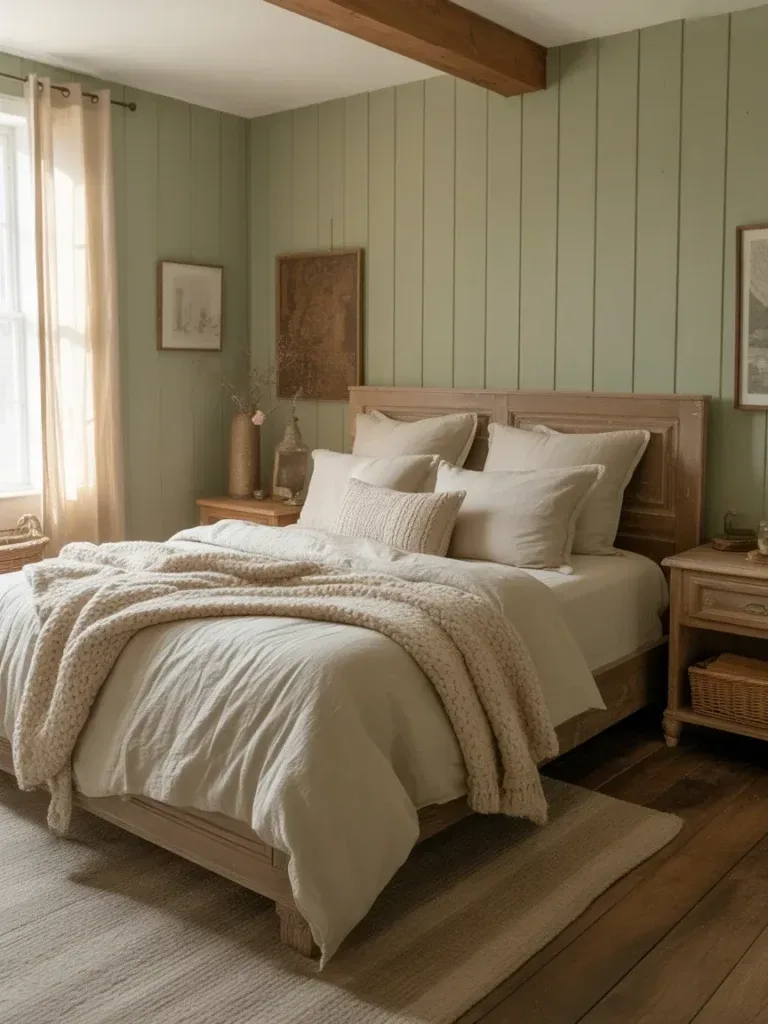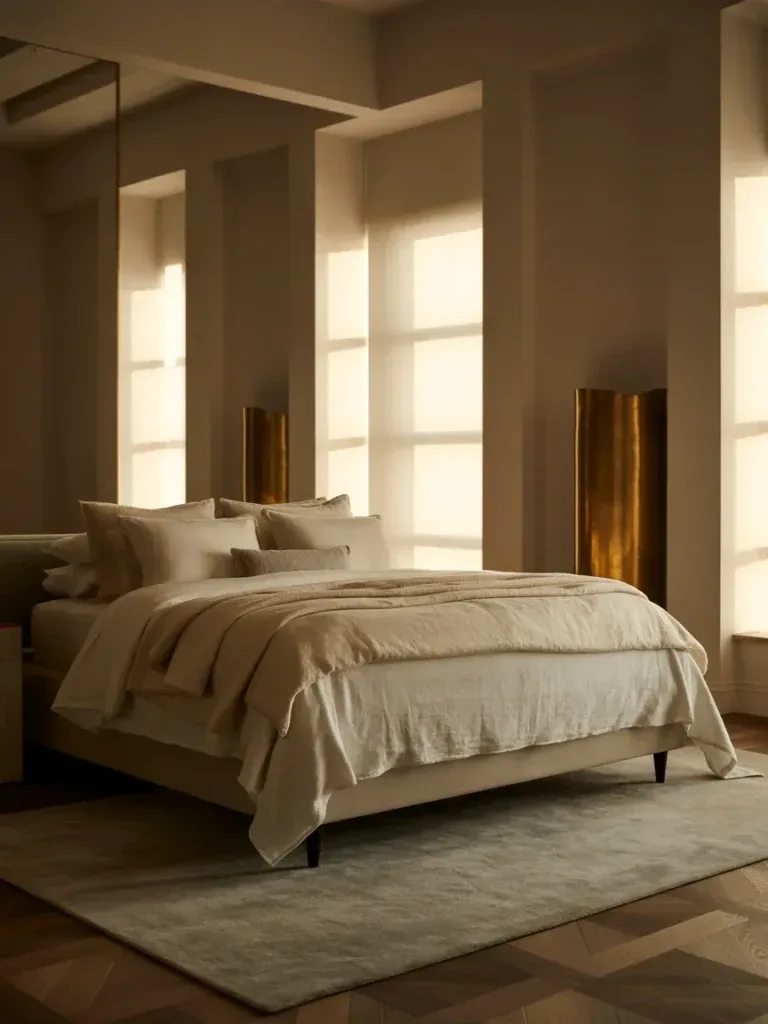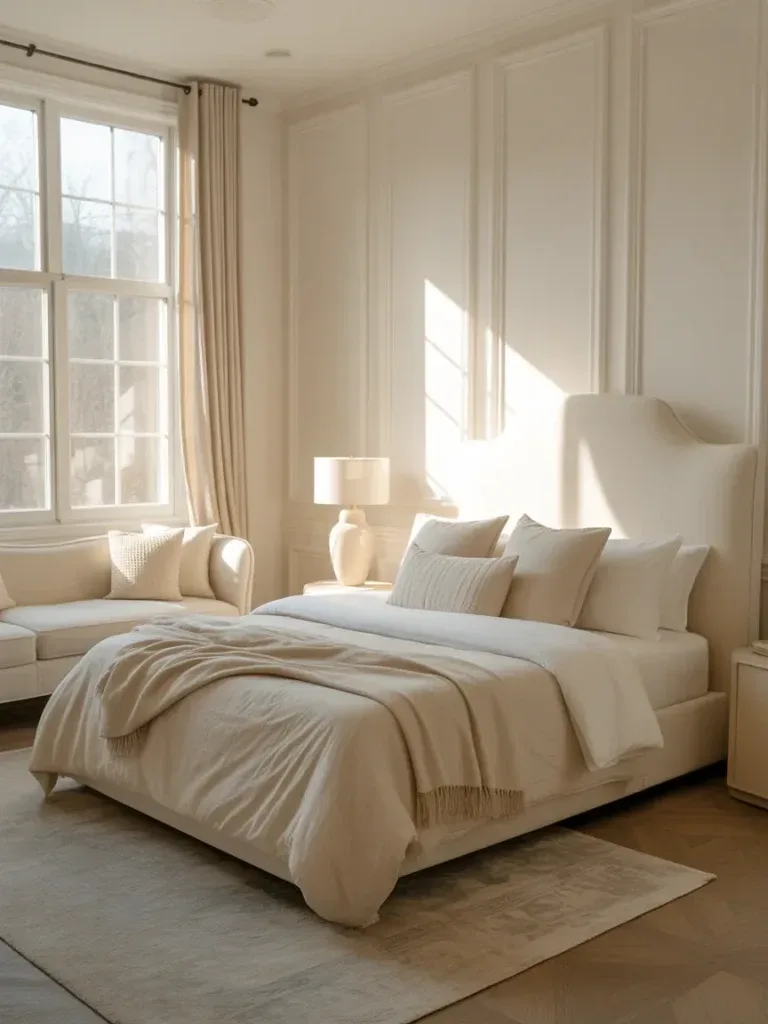
7 Teen Bedroom Ideas That Grow with Them: Adaptable Rooms
The problem with most teen bedroom ideas is timing. You commit to a theme at thirteen, and by fifteen your kid can’t stand the sight of it. The fix isn’t picking a “safer” theme — it’s building the room around pieces that can be reconfigured instead of replaced. If you want more general aesthetic bedroom decor inspiration before you commit to a layout, that’s a good place to start browsing first.
Everything below is organized around one question: what changes easily, and what should you spend real money on because it won’t need to change at all?
Quick Takeaways
- Spend on furniture that reconfigures (modular desks, storage beds) — that’s the money that lasts through high school.
- Spend almost nothing on color and personality — decals, throw pillows, and removable wallpaper handle that, and none of it is permanent.
- A study zone with real task lighting matters more than most parents budget for; it’s the one area teens actually use daily.
- Underbed and vertical storage solve 80% of the clutter problem in a typical 10×12 teen room — you rarely need to buy a bigger dresser.
- Screens-off cable management (charging station off the nightstand) does more for sleep than any “sleep-friendly” decor trend.
1. Flexible Furniture That Grows With The Mood
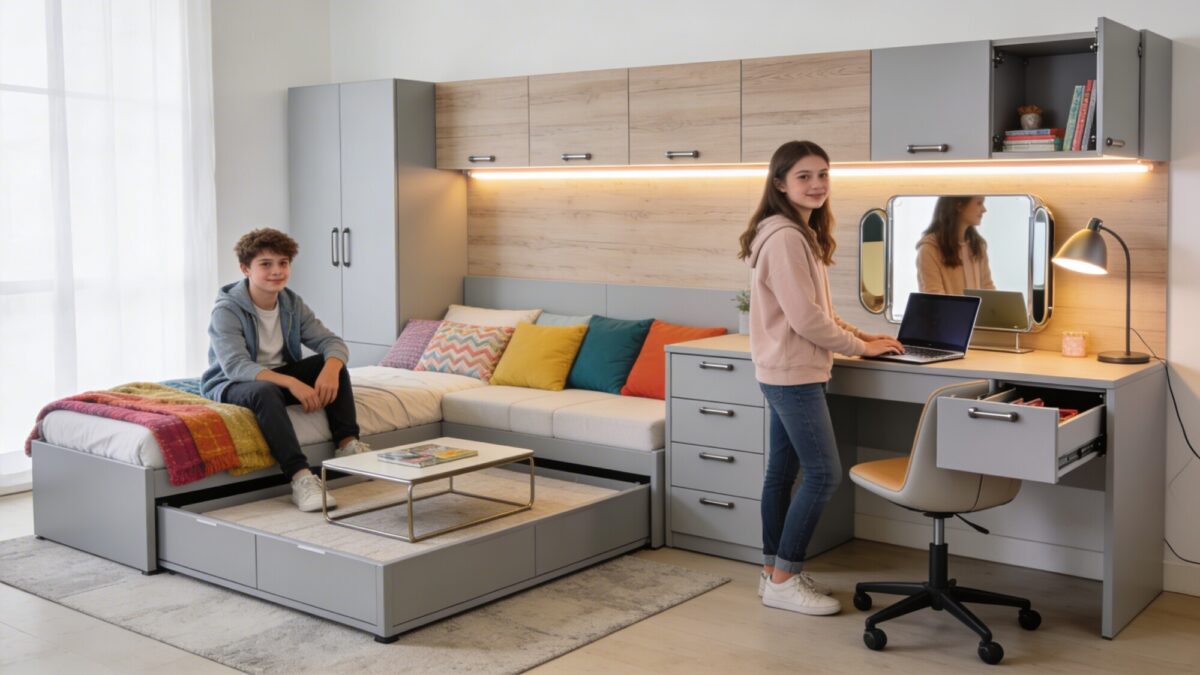
A daybed that reads as a couch during homework hours and a bed at night solves a real space problem, not just a style one. In a typical teen bedroom — 10 by 12 feet, give or take — you don’t have room for a bed, a desk, a lounge chair, and a vanity as four separate pieces. Furniture that pulls double duty is how you fit all four functions into three pieces of furniture.
The trade-off worth knowing about: fully modular furniture (think sofa-bed hybrids with swappable panels) usually costs 20-40% more up front than buying a basic twin bed and a basic desk separately. You’re paying for flexibility, not for the furniture itself. If your teen’s interests are still shifting fast — new hobby every six months — that premium pays off. If they’ve settled into a groove (three years deep into competitive swimming, say), a basic setup with good bones might serve them just as well for less money.
💡 Pro Tip: Before buying anything modular, measure the room and mock up the layout with painter’s tape on the floor. Most “space-saving” furniture still needs walking clearance around it, and that clearance is what actually determines whether the piece works — not the dimensions on the product page.
What to look for
- A bed frame with a headboard that can be repositioned or removed — it’s the single hardest thing to change later if you get it wrong
- A desk with a flat, mirror-free surface by default, so it can pull vanity duty without a permanent mirror mount
- Neutral wood tones or matte black/white finishes on the big pieces — save the color for things you can swap
2. A Color Plan for Blue, Purple, or Any Bold Bedroom Ideas That Won’t Trap You
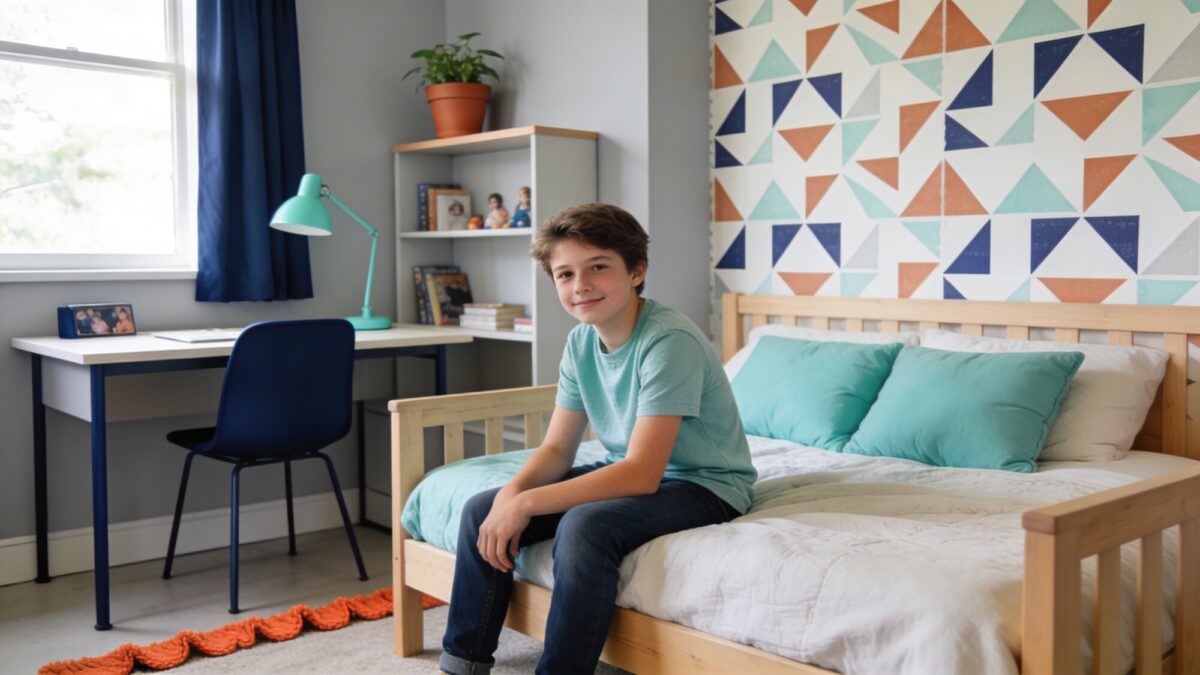
This is where most teen bedroom ideas go wrong: parents paint a full wall in whatever purple bedroom decor or blue room color ideas the teen is obsessed with that month, and eighteen months later nobody wants to repaint it. The better move is a neutral wall — soft gray, warm white, or oatmeal — with the bold color living in things that are cheap and easy to change.
If your teen wants a purple themed bedroom aesthetic or a lavender bedroom right now, that’s completely doable without touching the walls: a duvet cover, a rug, curtain panels, and a few throw pillows will get you 90% of the visual impact of a painted room, for a fraction of the cost and none of the repainting labor later. Same logic applies for a blue bedroom for a girl or any other trend — put the saturated color in textiles, not paint.
Removable wallpaper and wall decals are the one exception worth knowing about. A geometric decal on a single accent wall gives you a stronger visual statement than paint can, and it peels off clean (test a corner first — cheap decals sometimes take drywall paint with them). For a deeper look at working blue into a room without the commitment of paint, our blue bedroom decor ideas guide walks through specific combinations that hold up over time.
💡 Pro Tip: Buy the duvet cover and one accent item (rug or curtains) in the trend color, but keep the pillow shams and throw blanket in a neutral that matches the wall. That way, when the trend color falls out of favor, you’re only replacing two items instead of the whole bed.
3. A Study Nook That Feels Like a Real Workspace
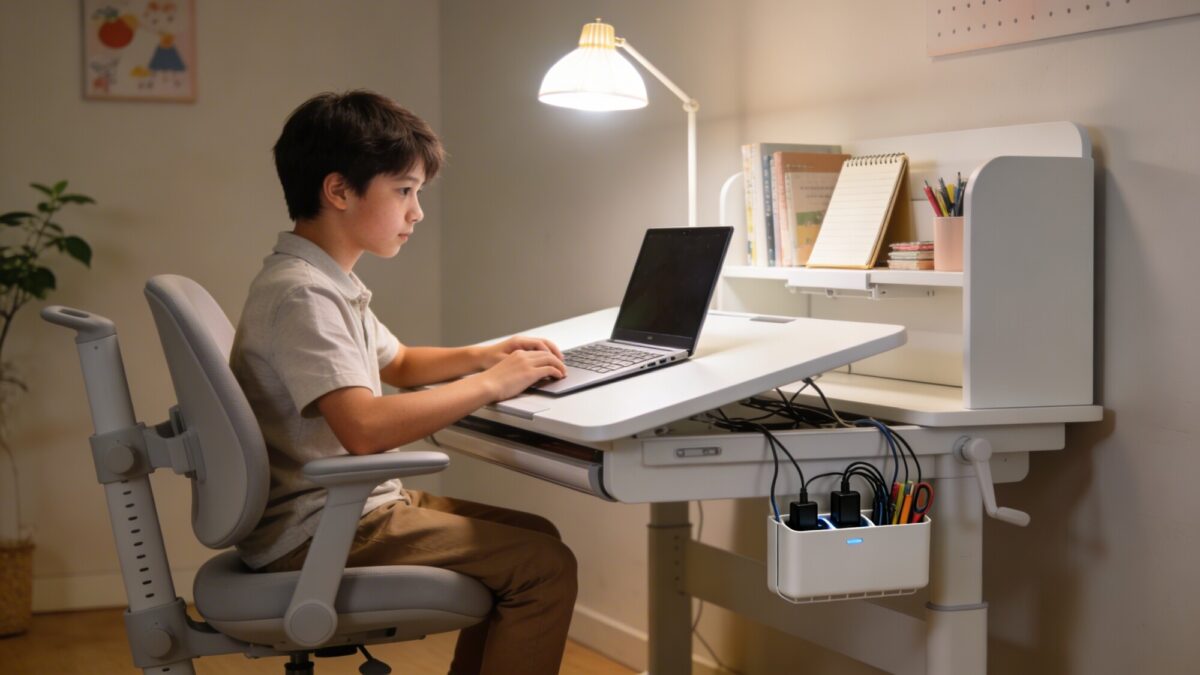
Most teen desks fail for one reason: bad lighting. A desk lamp that throws harsh white light straight down creates glare on a laptop screen and makes homework feel worse than it needs to. Warm-white LED (around 3000K) angled from the side, not directly overhead, is the difference between a desk that gets used and one that becomes a dumping ground for clothes.
An adjustable chair matters more than an adjustable desk here. Most teens are still growing, and a chair that doesn’t move with them leads to slouching, which leads to the desk getting abandoned in favor of the bed — which is worse for both posture and sleep quality, since working from bed blurs the line the brain needs between “awake space” and “sleep space.”
For rooms where floor space is genuinely tight, a corner desk or a wall-mounted fold-down surface can free up several square feet without sacrificing the workspace. We cover specific layouts for that situation in our teen bedroom ideas with built-in study zones guide.
Study nook checklist
- Chair height adjusts and the desk is at elbow height when seated
- Light source sits to the side of the dominant hand, not directly overhead
- Charging cables run along the desk edge or through a grommet, not loose across the surface
- At least one closed drawer or bin for loose papers, so the surface can be cleared in under a minute
4. Storage That Handles the Chaos Without Looking Like a Warehouse
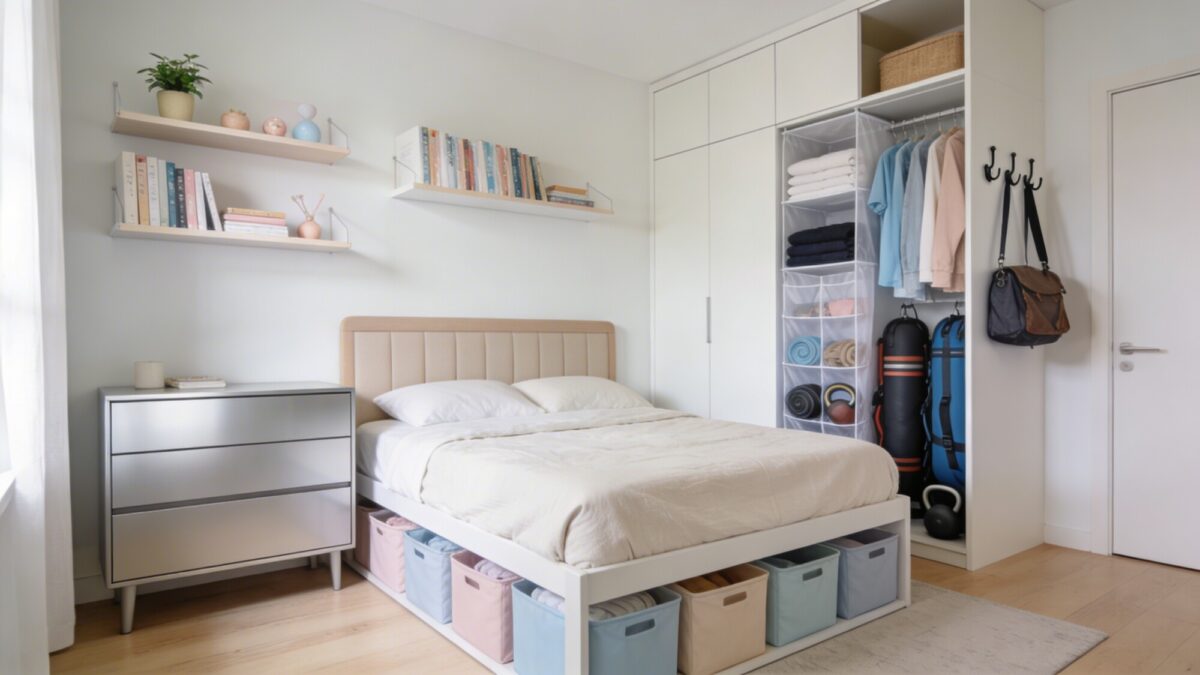
Teen rooms accumulate volume fast — gym bags, chargers, half-finished art projects, seasonal clothes. Buying a bigger dresser is the instinct, but it’s rarely the fix. In most standard-size teen rooms, vertical space and under-bed space go unused while the closet gets crammed floor to ceiling.
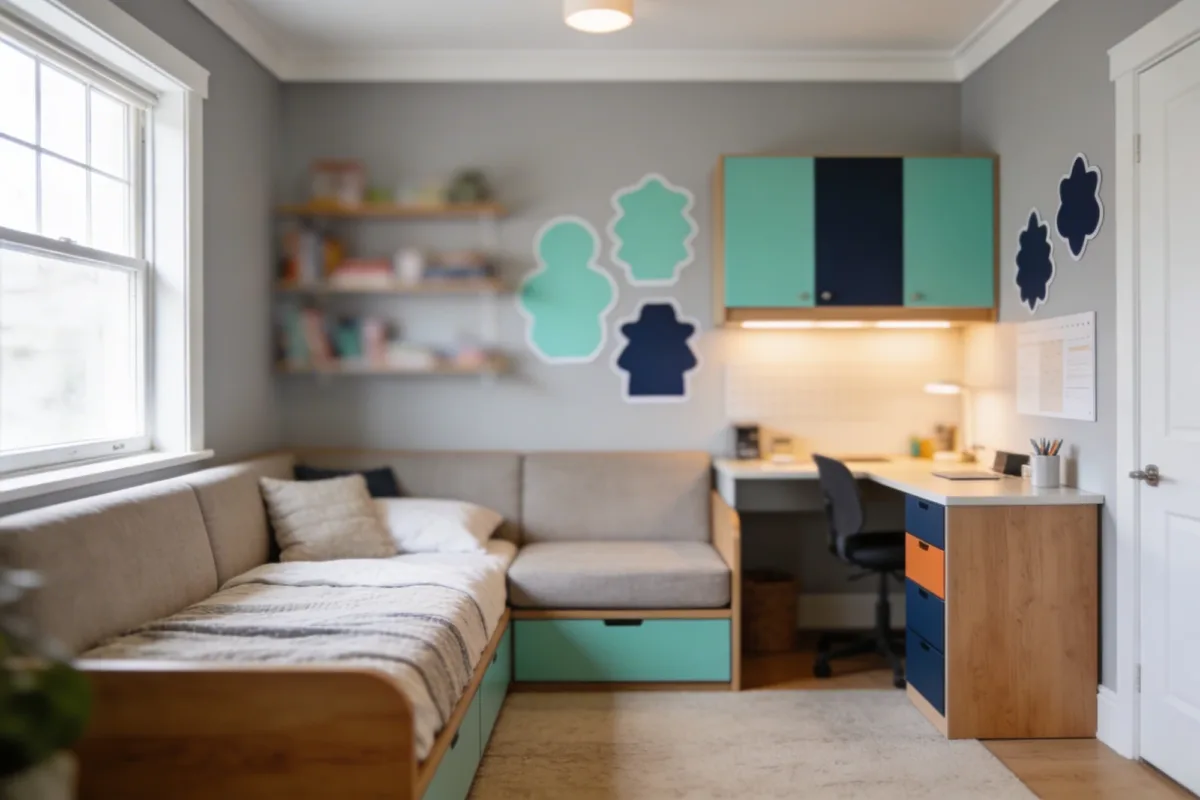
Under-bed bins with lids handle out-of-season clothes and bulky items (winter coats, extra bedding) without eating floor space. Floating shelves above the desk or bed handle books and display items that would otherwise clutter a dresser top. A hanging closet organizer with 4-6 cubbies does more for daily grab-and-go clothing access than a second dresser would, and it costs a fraction as much.
If the room itself is small — under 100 square feet — storage strategy matters even more than furniture choice, since there’s no room to add pieces later. Our teen bedroom ideas for small rooms guide goes deeper on layouts that work in tight footprints specifically.
5. Personalization That Doesn’t Require Repainting Later
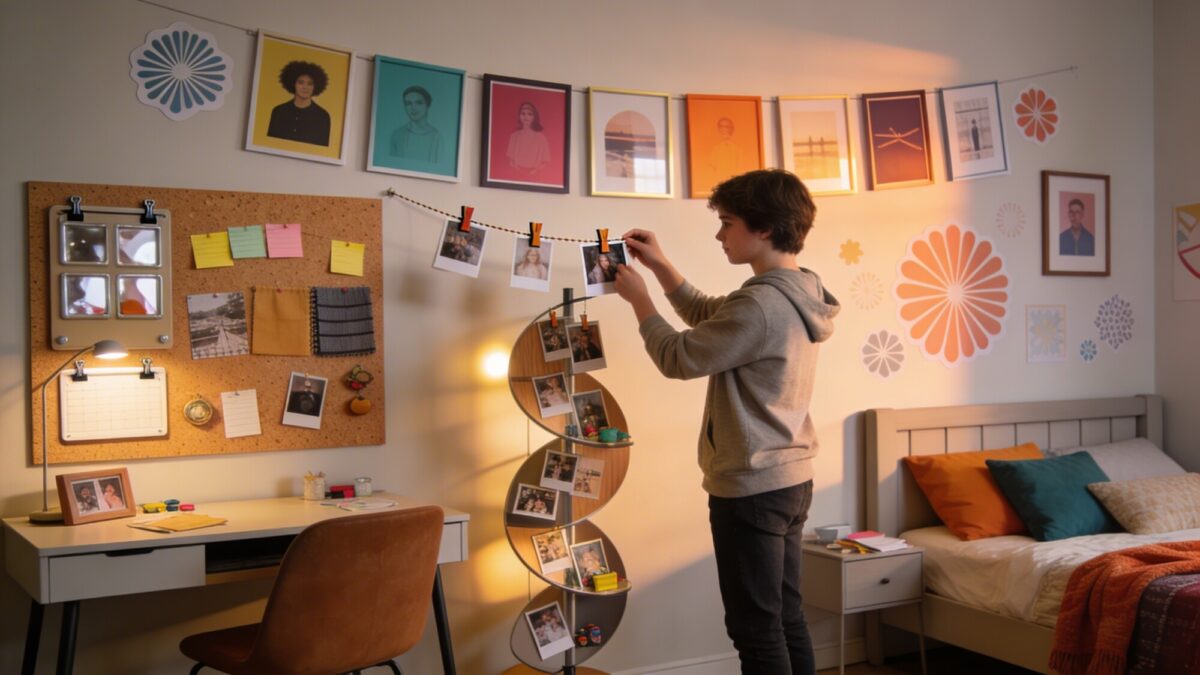
This is where most parents overcorrect. In trying to future-proof the room, it’s tempting to strip out personality entirely and end up with something that feels more like a hotel room than a teenager’s space. The fix isn’t less personality — it’s personality that lives on removable surfaces.
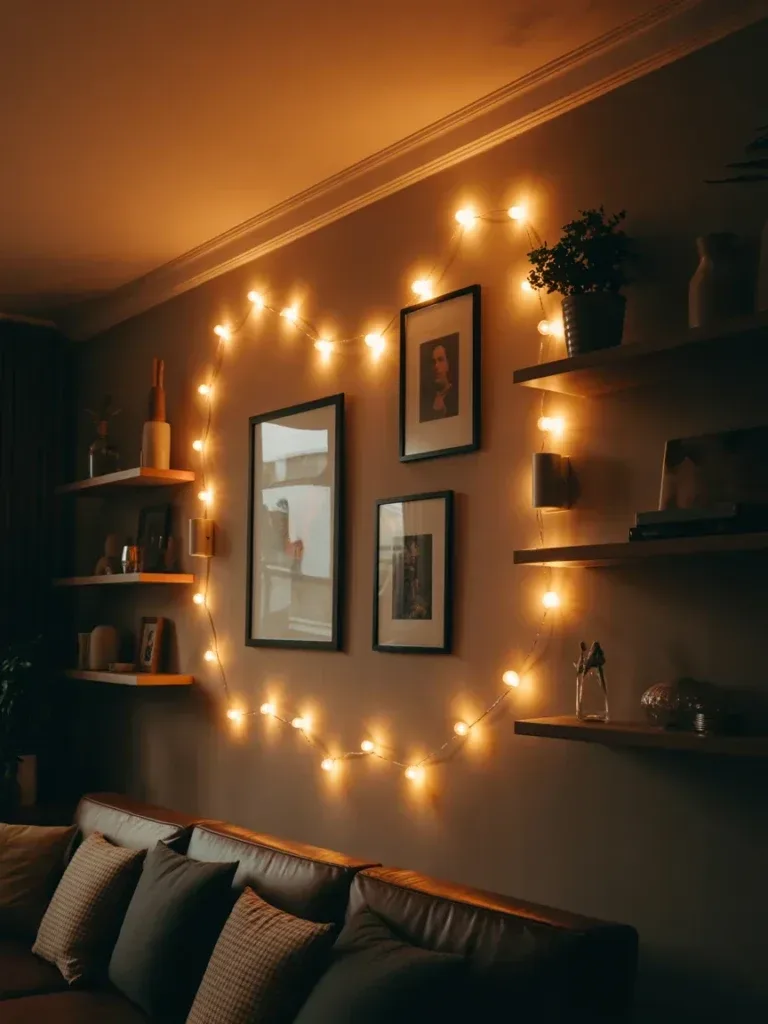
A cork board or magnetic panel takes photos, ticket stubs, and sketches without a single nail hole. Command strips (the real ones, not the knockoffs — the cheap versions genuinely do peel paint) hold string lights, small shelves, and lightweight art. A rotating photo clip line costs under $15 and lets a teen swap out what’s displayed weekly without any tools at all.
If your teen is into a specific aesthetic — boho, witchy, gothic, whatever’s trending — that’s exactly the kind of thing that should live in removable layers rather than a full room theme, since aesthetic obsessions genuinely do shift every year or two at this age. Our boho bedroom ideas for teens guide is a good example of how to lean into a specific look using layered textiles and decor rather than permanent changes.
💡 Pro Tip: Skip glue-based wall decals entirely and use magnetic paint on one small section of wall (a 2×3 foot patch behind the desk is plenty) instead. It costs about the same as decent decals, holds photos and small art with cheap magnets, and never leaves residue when the room gets redone.
6. A Cozy Corner for Down-Time
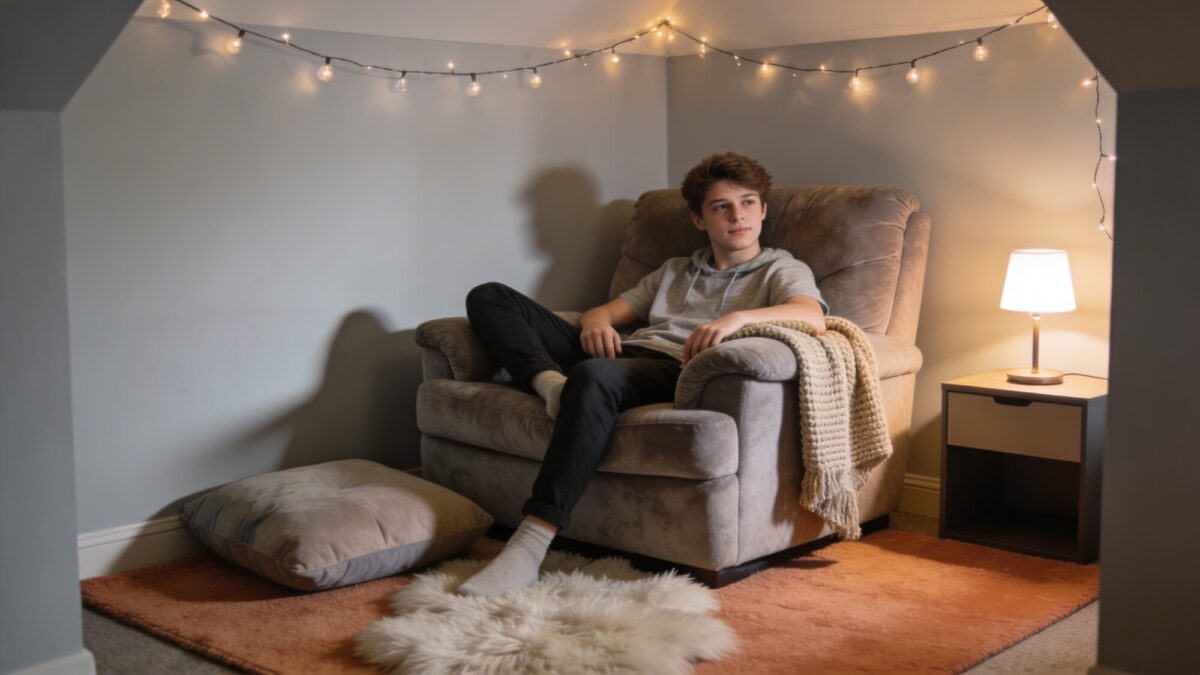
Every teen bedroom benefits from one spot that isn’t the bed and isn’t the desk — somewhere to read, game, or just sit that doesn’t come loaded with “sleep here” or “work here” associations. A single comfortable chair, or a beanbag plus a couple of large floor pillows on a soft rug, does this without eating much square footage.
The materials matter more than the furniture choice itself. A rug in this corner does double duty: it softens the acoustics of the room (useful if gaming or music happens here) and it visually separates the zone from the rest of the room without a physical divider. Boho floor cushions work especially well for this because they can be pushed against a wall or stacked away entirely when the space needs to open up for something else — friends over, a yoga mat, whatever comes up.
💡 Pro Tip: Put the cozy corner near the window if you have the choice. Natural light during the day makes the same chair function as a reading spot in daylight and a screen-free wind-down spot at night — you don’t need two separate zones for that.
7. Tech That Stays Out of the Way
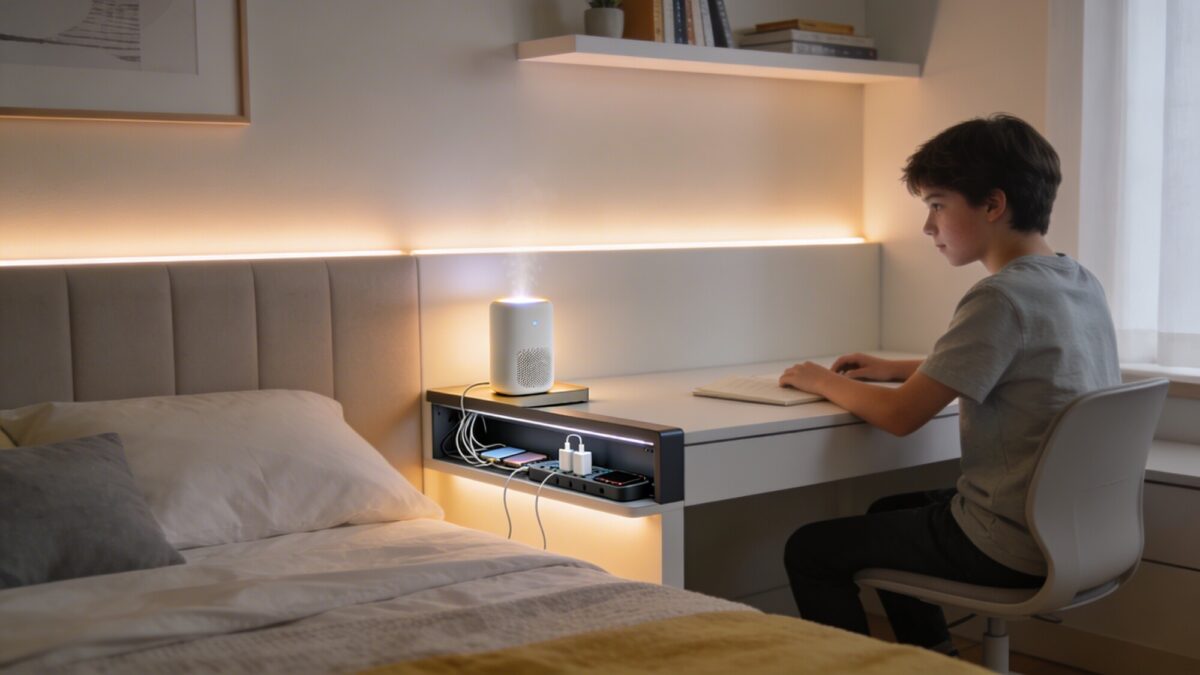
Cords are the single fastest way a well-designed room starts looking chaotic again within a month. A charging station that lives on the desk, not the nightstand, does two things at once: it keeps the sleep surface clear, and it makes a soft case for a screens-off wind-down window before bed, since the phone physically isn’t within arm’s reach of the pillow.
A white-noise machine or a basic speaker with a warm nightlight function is a small addition that pulls real weight — it gives the room an ambient sound option for studying or falling asleep that doesn’t require a phone or laptop running all night.
Budget Tiers: What to Buy Now vs. Later
If you’re trying to figure out where to start, this breaks the room into three budget tiers based on what actually moves the needle first.
| Budget | Prioritize | Skip for now |
|---|---|---|
| Under $150 | Removable decals, throw pillows, a rug, a desk lamp with warm LED bulb | New furniture, wall paint, built-in storage |
| $150–$500 | Under-bed storage bins, an adjustable desk chair, a cork or magnetic board, string lights | Full bed replacement, modular furniture systems |
| $500+ | A modular bed or storage bed frame, a proper adjustable-height desk, a hanging closet organizer system | Anything purely decorative — that money is better spent on furniture that lasts |
The order matters more than the total budget. Textiles and lighting first, storage second, furniture last — that way you’re never redoing something you already bought.
FAQ: Teen Bedroom Ideas
How often should a teen bedroom actually be updated?
Full furniture updates: roughly every 3-5 years, or whenever a growth spurt or a move to a bigger bed size forces the issue. Color and decor updates: as often as the teen wants, since those pieces are cheap and removable by design if you followed the plan above.
Is it worth painting an accent wall for a teen bedroom?
Only if the color is genuinely neutral-adjacent (a deep navy or sage green tends to age better than a saturated trend color like bright purple). If the color choice is trend-driven, removable wallpaper or a large piece of textile art gives the same visual punch without the repaint labor in a year or two.
What’s the single best upgrade for a small teen bedroom?
Under-bed storage, hands down. It reclaims the single largest chunk of unused square footage in a standard teen room without costing much or requiring any construction.
Should the desk or the bed get more of the budget?
The desk, in most cases — it’s used daily for homework, and a bad chair or bad lighting there causes real friction. A basic bed frame with a good mattress covers the sleep side; you don’t need a statement headboard for that to work.
How do I stop a themed room from feeling babyish as they get older?
Keep the “theme” confined to removable textiles and decor, and let the furniture and wall color stay neutral. That’s the whole strategy in this guide — it’s what lets the room mature without a renovation.
Our Take
The rooms that actually last through the teen years aren’t the ones with the most dramatic theme — they’re the ones where the expensive stuff (bed, desk, storage) is neutral and adaptable, and the cheap stuff (pillows, decals, rugs) carries all the personality. Spend your real budget on the furniture tier table above, let your teen pick the rest, and expect to swap out textiles every year or so without it costing you anything close to a full redo.
If you’re planning the room from scratch rather than adapting an existing one, our teen bedroom ideas for girls and boys guide is a solid starting point for picking a direction before you shop.