7 Trendy Bedroom Ideas for Men That Feel Elevated You Need Now
Most “masculine bedroom” advice boils down to one instruction: buy dark bedding. That’s not wrong, but it’s not the thing that actually makes a room feel expensive. The rooms that read as intentional — hotel-suite intentional, not dorm-room-with-better-sheets — come down to restraint in a few specific places and a willingness to spend where it counts. If you’re starting from a completely blank room, our modern bedroom interior design ideas guide is a good place to map out the bones before you get into finishes.
None of what follows requires a full renovation. It’s mostly about sequencing: what to fix first, what to spend real money on, and what’s genuinely optional.
Quick Takeaways
- Pick 3-4 colors total and stick to them — most “cluttered” rooms are actually just color-inconsistent, not object-heavy.
- Layered lighting (overhead + task + accent) does more for mood than any single statement piece.
- Storage that’s built in or flush-fronted reads as more expensive than open shelving, even at a similar price point.
- Texture is the cheapest upgrade on this list — a good throw and a textured rug change a room more than new furniture does.
- One retreat-style corner (a chair, a bench, a window nook) is what separates “nice bedroom” from a room you actually want to spend time in.
1. A Bedroom Colour Idea That’s Restrained, Not Boring
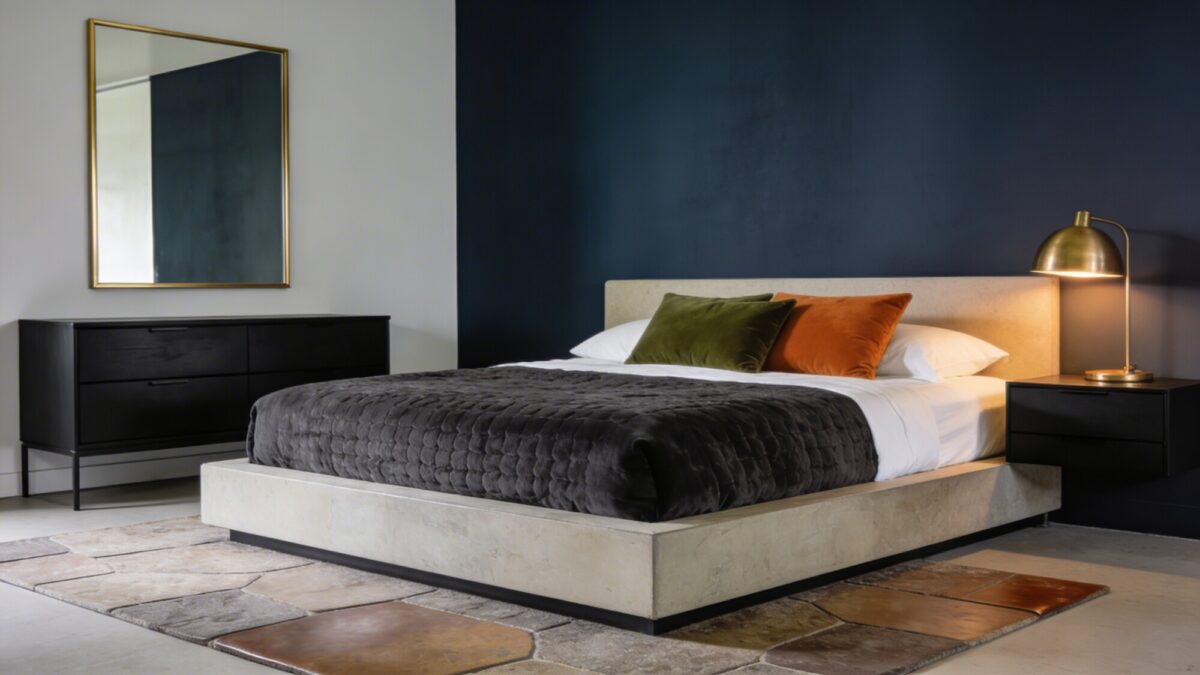
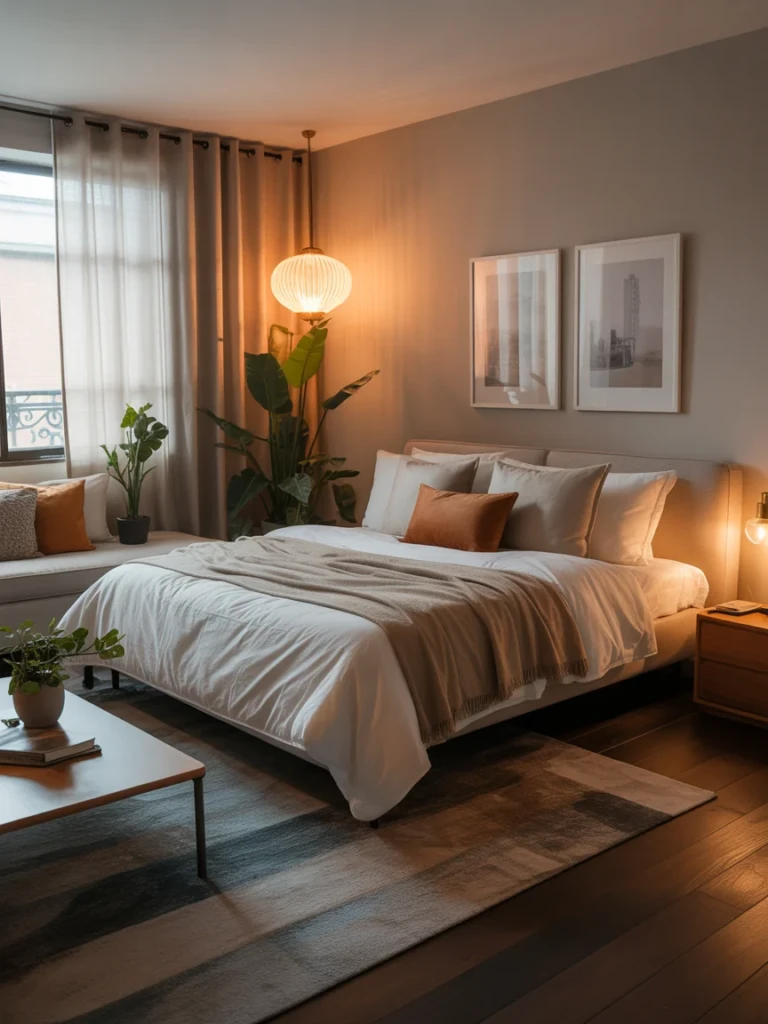
The single biggest mistake in a men’s bedroom is treating color as an afterthought — a gray wall, whatever bedding was on sale, a mismatched rug. A room reads as designed when the palette is deliberate: two or three base tones (charcoal, deep navy, warm stone) and one or two accent colors (olive, burnt orange, brushed brass) that show up consistently across bedding, hardware, and accessories.
This isn’t about going monochrome. It’s about picking your accent color once and repeating it — in a pillow, a lamp base, a piece of framed art — rather than letting every new purchase introduce a new hue. A room with five colors in it, each used once, looks cluttered even if it’s objectively tidy. A room with three colors, each used two or three times, looks composed.
💡 Pro Tip: Before buying anything new, lay out everything you already own that’ll live in the room — bedding, rug, curtains, lamp — on the floor together. It’s the fastest way to spot the one mismatched piece that’s throwing off the whole palette, and it’s a lot cheaper to fix that one piece than to keep adding things around it.
2. Lighting on the Wall, Not Just the Ceiling
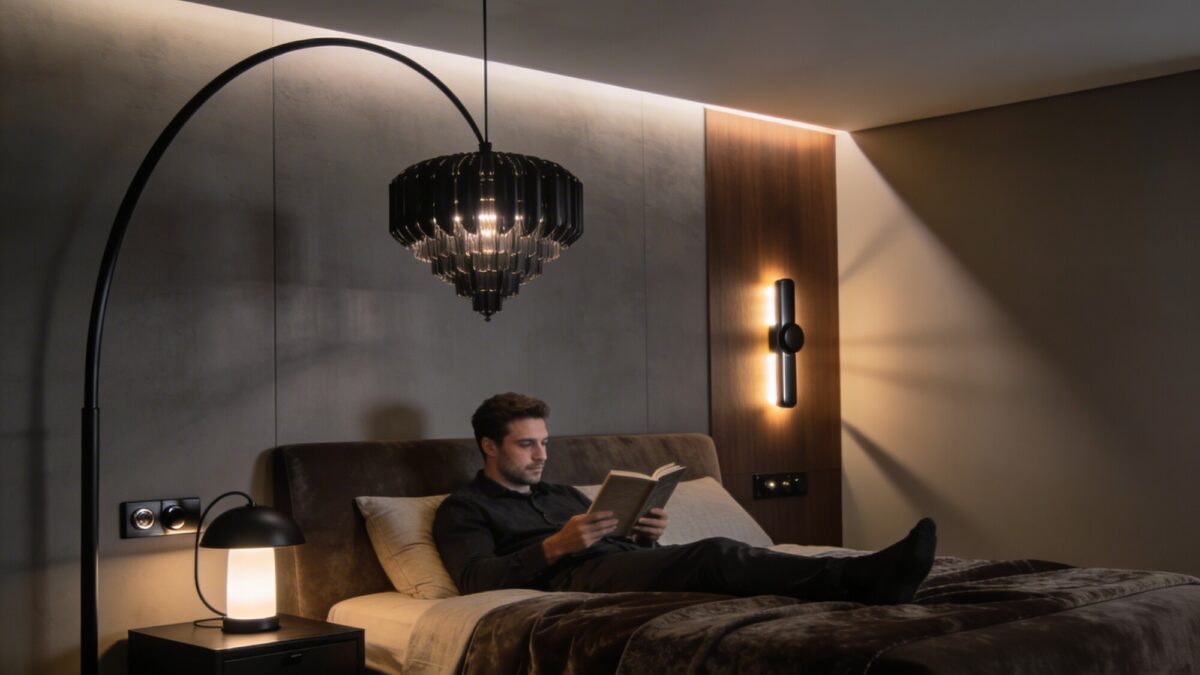
A single overhead fixture is the most common lighting mistake in bedrooms generally, not just men’s rooms. Flat, top-down light flattens the room and makes everything under it look slightly clinical — more exam room than retreat. The fix is layering: an overhead source for general light, a table or floor lamp for reading, and a wall-mounted or accent light for depth and shadow.
Wall-mounted fixtures specifically do something ceiling lights can’t — they create pools of light and shadow that give a room dimension after dark, which is when most people actually spend time in their bedroom. A wall sconce beside the bed, angled to wash light up or down rather than straight out, does more for evening ambience than a brighter overhead fixture ever will.
Dimmers are worth the extra $15-30 per fixture if your electrical setup allows it. The difference between “bright enough to find your keys” and “dim enough to wind down” shouldn’t require turning lights fully on or off — it should be one dial.
Lighting layers to aim for
- Ambient: an overhead fixture or flush mount, ideally dimmable
- Task: a reading lamp positioned to the side of where you’d actually sit or lie down, not directly overhead
- Accent: a wall sconce, uplighting behind furniture, or an LED strip tucked under a shelf or bed frame
3. Storage That Disappears Instead of Announcing Itself
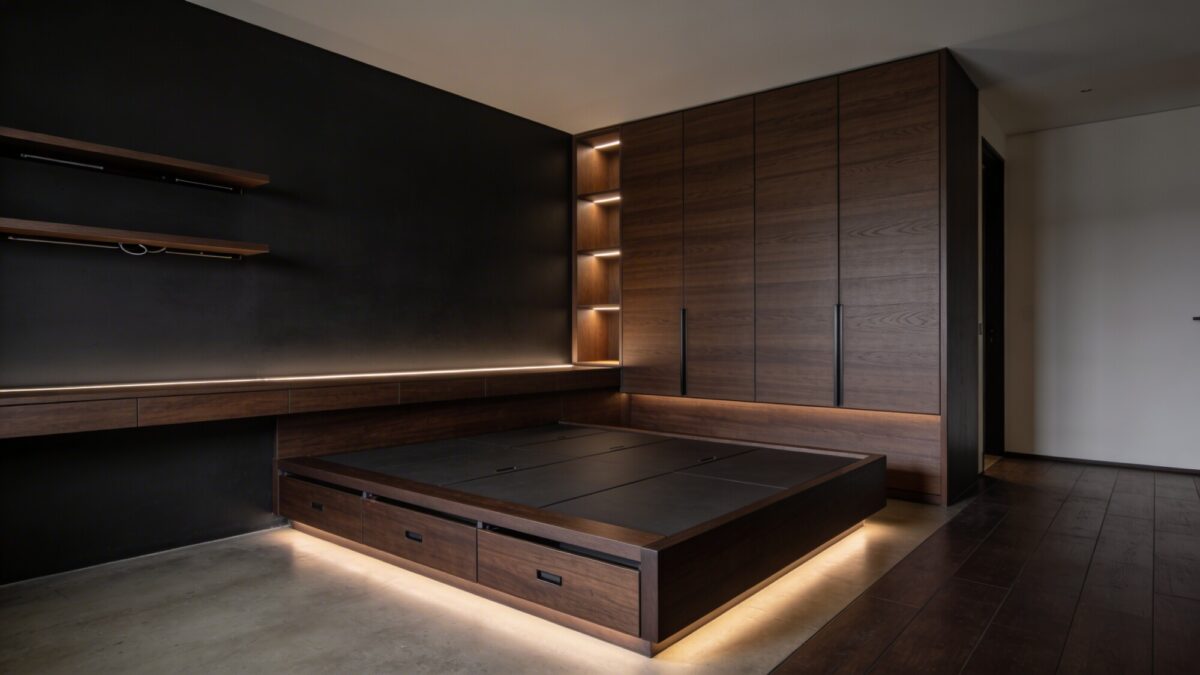
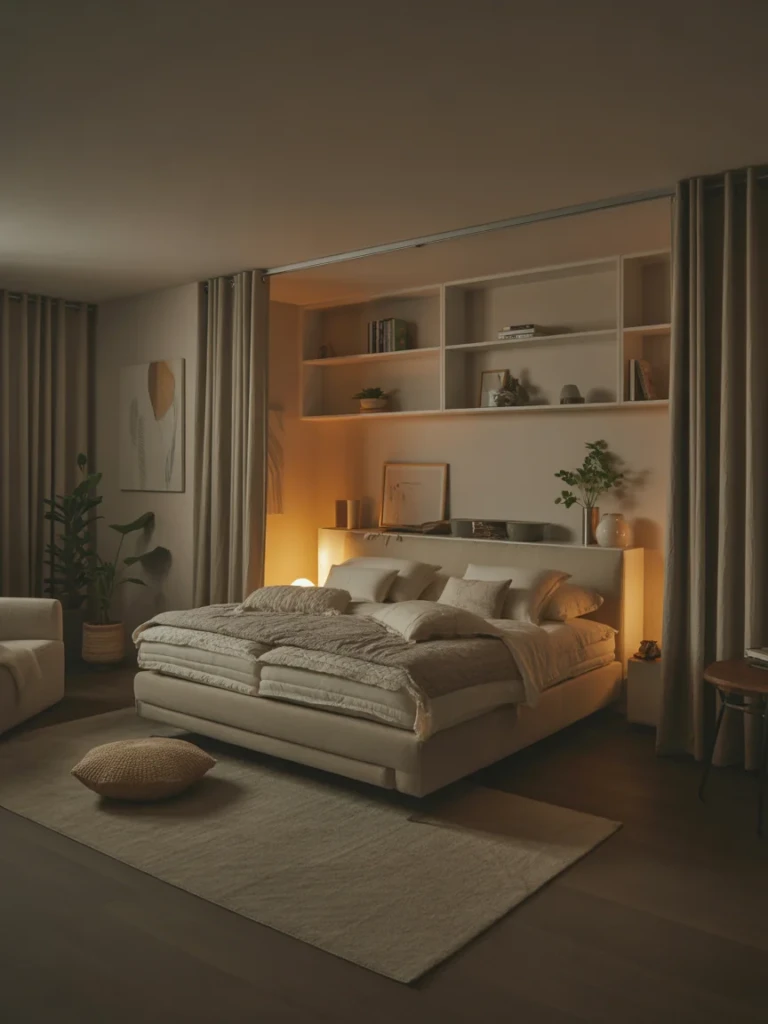
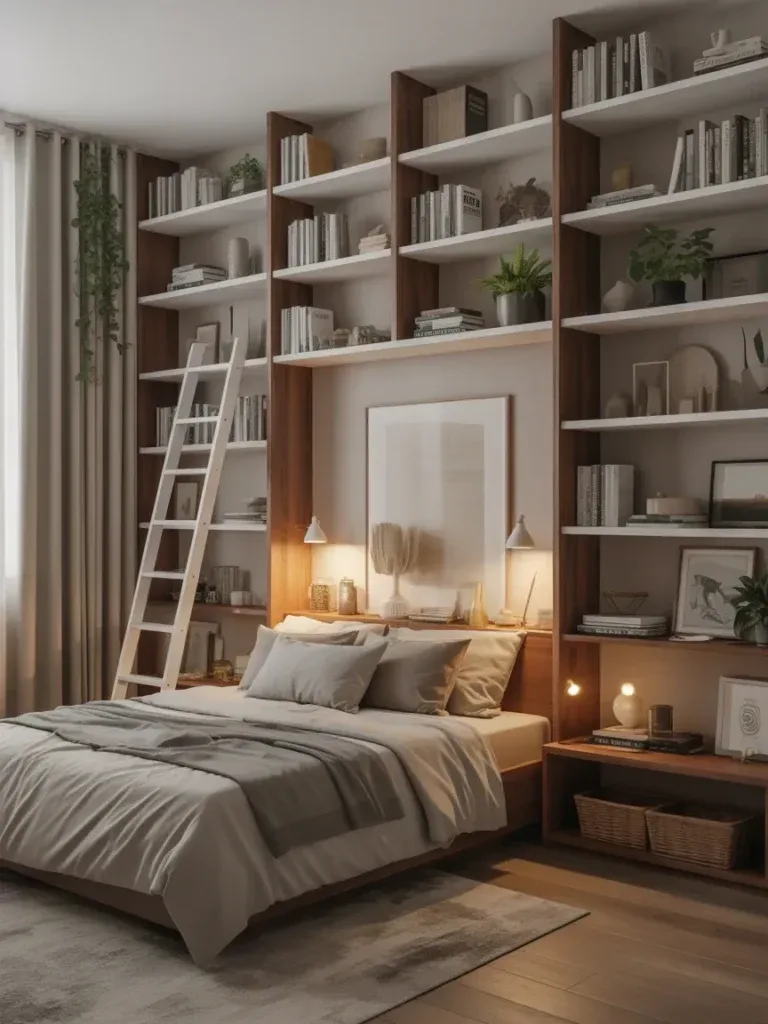
Open shelving photographs well and functions badly in a room you actually live in — it needs constant tidying or it turns into visual noise fast. Closed, flush-fronted storage (handle-less cabinet doors, drawers built into the bed platform) costs more up front but takes almost no daily maintenance to keep looking finished, because everything’s simply out of sight.
If a full built-in wardrobe isn’t in the budget, a platform bed with integrated drawers underneath solves a lot of the same problem for a fraction of the cost — you’re using dead space that would otherwise sit empty under the mattress. Cable management matters here too: a charging cord or a lamp cord left visible against a otherwise clean wall undercuts the whole effect of the storage work you just did.
💡 Pro Tip: If you’re retrofitting an older room rather than building new, adhesive cable channels (the kind meant for home offices) run about $10-15 for enough to do an entire bedroom, and they take under twenty minutes to install along a baseboard. It’s the highest-value-per-dollar fix on this whole list.
4. Texture Layers: Where the Money Actually Shows
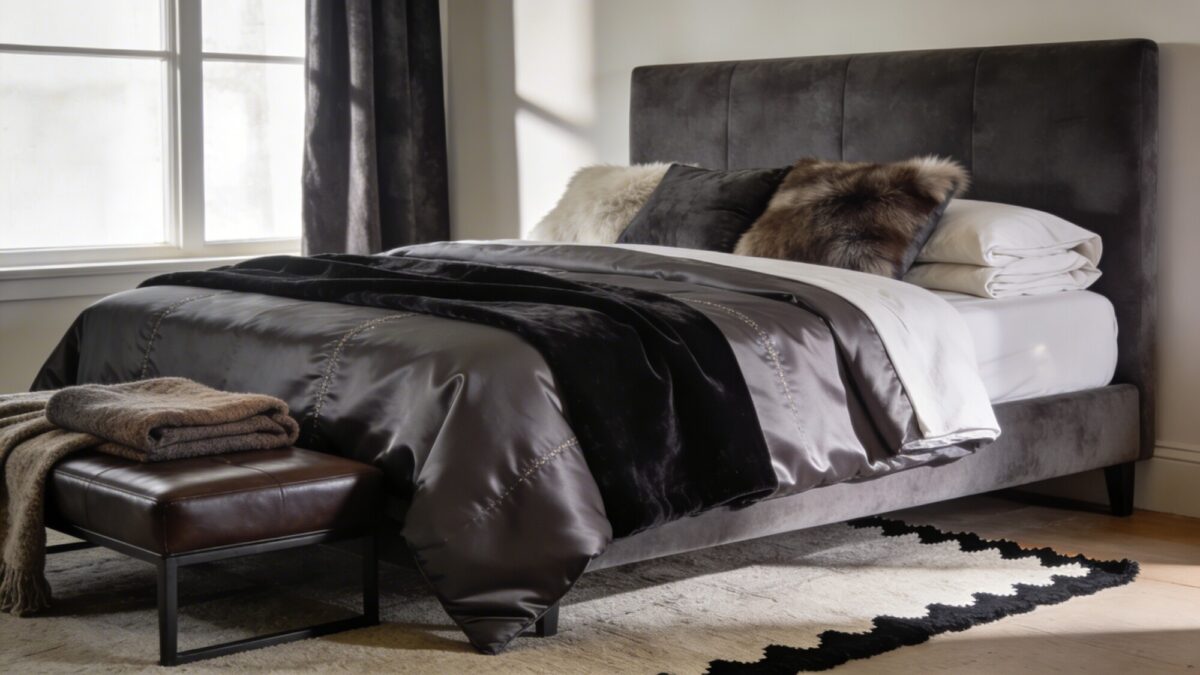
A room can have the right colors and still look flat if everything in it has the same texture. This is the part people underestimate: pairing a smooth surface against a rough one (a satin duvet against a suede headboard, a cotton sheet folded over a wool blanket) is what makes a room look layered rather than assembled from a single catalog page.
A low-pile rug with a visible edge or border does more here than a plain one — it gives the eye somewhere to land at floor level, which most bedrooms are missing entirely. If you’re working with a modest budget, prioritize the rug and one good throw blanket before anything else on this list; they cover the most visible surface area for the least money.
Texture pairings that work
- Suede or velvet headboard with a smooth satin or sateen duvet
- Wool throw blanket over crisp cotton sheets
- A low-pile, tightly woven rug under furniture with visible wood grain or metal legs
5. Tech That Earns Its Place, Not Tech for Its Own Sake
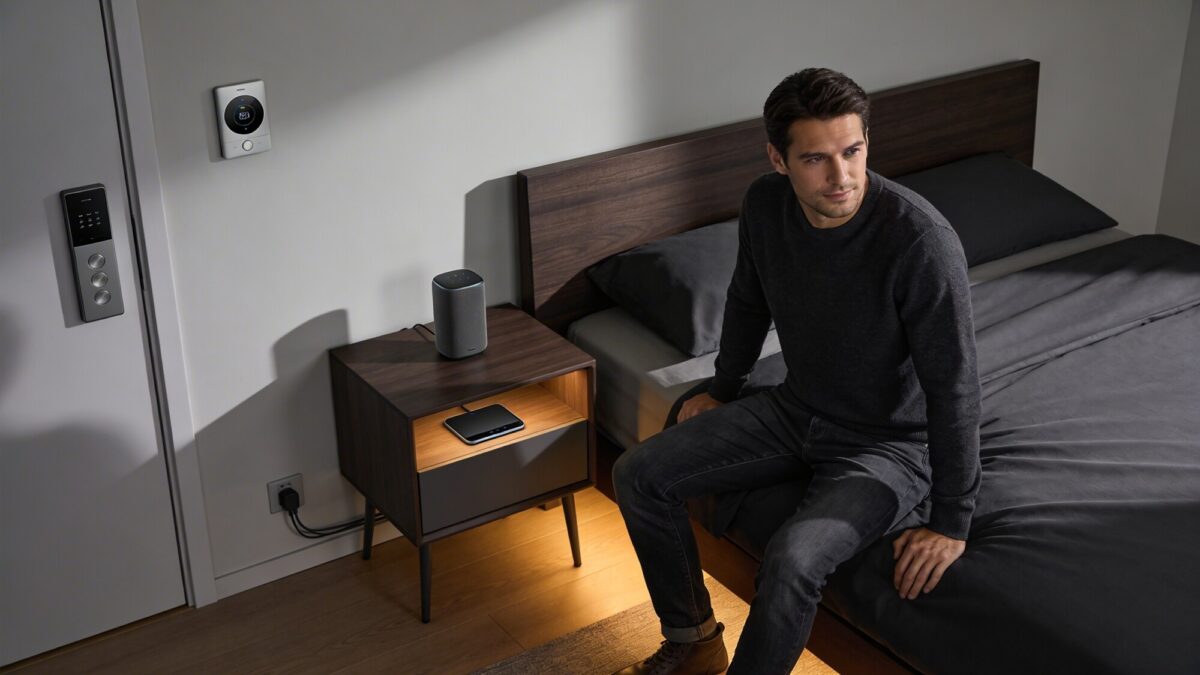
A room full of visible gadgets — chargers, speakers, a tangle of cords behind the headboard — undoes a lot of the polish everything else on this list is trying to build. The goal isn’t to skip smart tech, it’s to make it disappear into the furniture: a wireless charging pad built into or resting flush on a nightstand, a smart speaker small enough to not be the first thing you notice in the room.
A smart thermostat or lighting scene controller is genuinely useful — being able to dim every light in the room to one preset before bed is a real quality-of-life upgrade, not a gimmick. But it only reads as sophisticated if the hardware itself stays out of sight. A visible thermostat panel mounted at eye level next to a carefully composed headboard wall undercuts the whole effect.
6. A Headboard That Does the Heavy Lifting
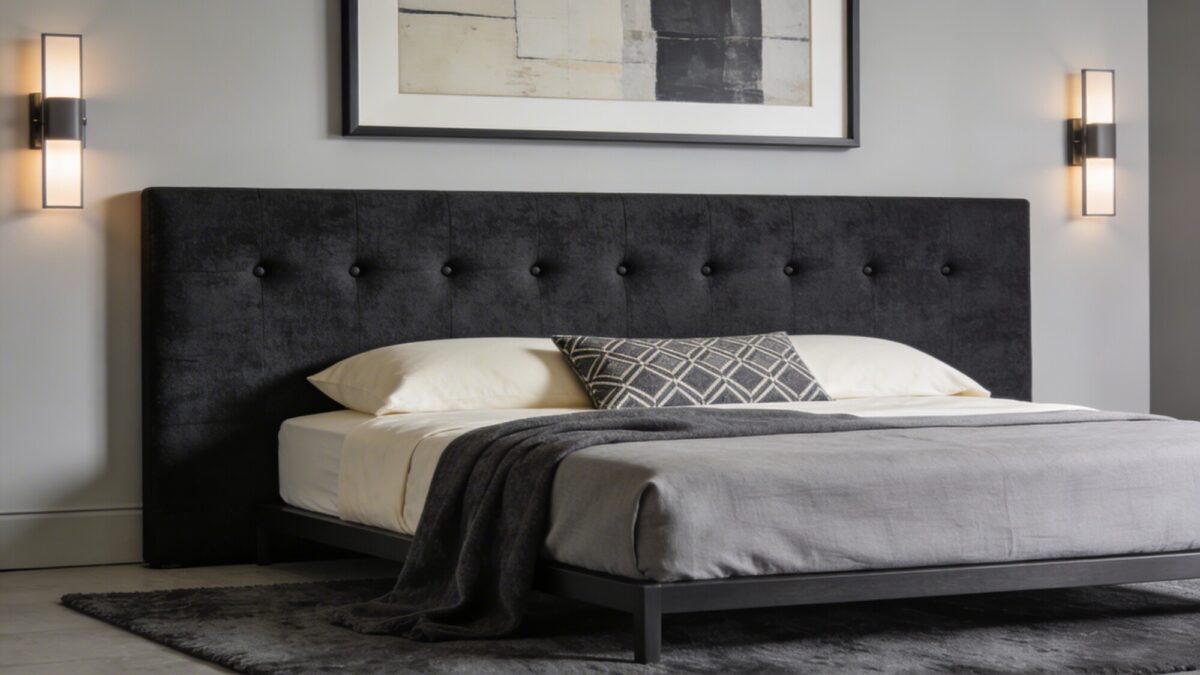
If you only upgrade one piece of furniture, make it the headboard. It’s the largest visual surface in the room after the walls, and unlike a dresser or nightstand, it’s directly behind where your eye lands when you walk in. A tufted upholstered panel in a deep color, a carved wood headboard in espresso or ash, or a brushed-metal frame with clean lines will all anchor a room in a way a plain mattress-and-frame setup never does.
The trade-off worth knowing: upholstered headboards look richer but require more upkeep (fabric attracts dust and needs occasional cleaning), while wood or metal headboards are lower-maintenance but read as slightly colder unless the rest of the room brings in warmth through textiles. Neither is wrong — it depends on whether you’d rather vacuum a headboard twice a year or add an extra throw blanket to warm up a wood one.
If you’re weighing bed frame styles more broadly — including options with more classic lines than the ideas here — our modern luxe bedroom ideas guide covers frame and headboard pairings in more depth.
7. One Corner That Isn’t the Bed
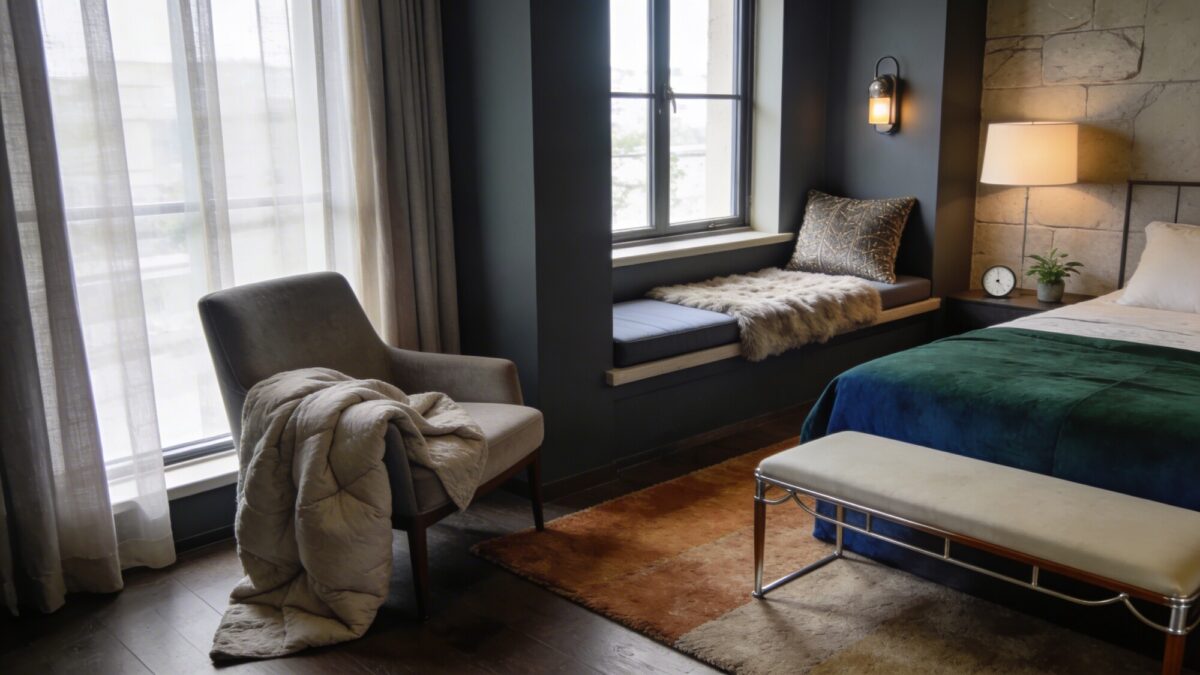
Every version of this room that actually feels finished has one thing in common: somewhere to sit that isn’t the bed. A compact reading chair with a good throw, a window nook with a cushioned bench, or even just a small bench at the foot of the bed gives the room a second function and makes it feel like a retreat rather than a place you only pass through on the way to sleep.
This doesn’t need to be large. A single armchair and a floor lamp in an otherwise unused corner is enough — the point isn’t square footage, it’s having a spot in the room built for sitting rather than lying down. If your space genuinely doesn’t have room for this, our small bedroom ideas for men guide covers ways to fit a reading nook into tighter footprints.
Where to Spend First: A Priority Table
If you’re doing this in stages rather than all at once, this is roughly the order of impact per dollar spent.
| Priority | Upgrade | Why it goes here |
|---|---|---|
| 1 | Rug + one textured throw | Covers the most visible surface area for the lowest cost |
| 2 | Layered lighting (lamp + wall sconce) | Changes the mood of the room more than any single furniture piece |
| 3 | Headboard upgrade | Largest single visual anchor in the room |
| 4 | Closed/flush storage | High cost, but removes daily clutter maintenance permanently |
| 5 | Smart tech integration | Nice-to-have; only worth it once the visual basics are handled |
FAQ: Bedroom Ideas for Men
What’s the fastest way to make a bedroom look more masculine without a full redesign?
Narrow the color palette first. Pull anything that doesn’t match your base two-to-three colors, then add one textured throw and a rug. That alone does more than most furniture purchases.
Is dark bedding actually necessary for a masculine bedroom?
No — the palette matters more than any single item being dark. A charcoal or navy accent (a throw, a headboard, curtains) paired with lighter neutral bedding reads just as intentional as an all-dark room, and it’s easier to keep looking clean day to day.
Should lighting or furniture come first when redoing a bedroom on a budget?
Lighting, almost always. A well-lit room with basic furniture looks more finished than a well-furnished room lit by a single harsh overhead bulb.
How do I keep a minimal bedroom from feeling cold or unfinished?
Texture. A minimal room with only smooth, hard surfaces reads as sparse; the same room with one wool throw, a textured rug, and a suede or velvet accent reads as intentional and warm.
Our Take
The rooms that actually feel elevated aren’t the ones with the most furniture or the biggest budget — they’re the ones with the tightest color discipline and the most attention paid to lighting and texture, which are the two cheapest categories on this whole list. Start with the rug, the throw, and one good lamp before you touch furniture. If you’re ready to take on a full room refresh with a step-by-step plan, our modern bedroom ideas you can copy tonight guide is a solid next stop.