8 Teen Bedroom Ideas for Small Rooms That Still Feel Cool: Tiny Makeover Magic – Quick Wins
A small teen bedroom has to do more with less square footage than almost any other room in the house — sleep, study, hang out with friends, and store an entire personality’s worth of stuff. The teen bedroom ideas for small rooms that actually hold up aren’t the ones that look best in a single photo; they’re the ones built around real daily use. For more layouts built specifically around tight square footage, see our small bedroom layout ideas.
The through-line across everything below is the same: in a small room, the floor is the scarcest resource in the house. Every idea that works well is one that gets something up off the floor — onto a wall, under a bed, or overhead.
- Storage: vertical wall storage beats floor furniture almost every time in a small room.
- Layout: a lofted or elevated bed can free up an entire zone underneath for study or seating.
- Color: one soft base plus one bold accent, not a full rainbow of “fun” colors.
- Furniture: pick pieces that do two jobs (desk plus vanity, bed plus storage) instead of buying more furniture.
- Personality: a gallery wall or textiles do more for “feeling like theirs” than most decor purchases.
Small Room Bedroom Ideas Start With the Walls, Not the Floor
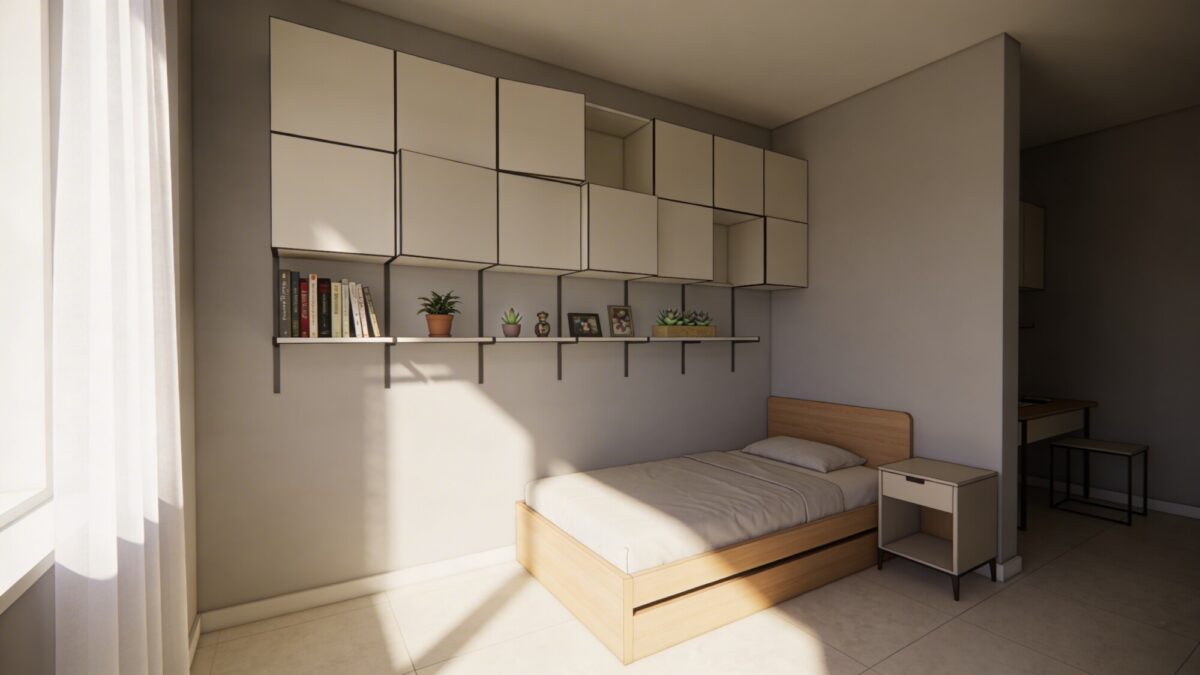
In a small bedroom, floor-standing furniture is the first thing to cut, not the last. A bookshelf that sits on the floor takes up the same footprint whether it’s two feet or six feet tall — so building storage up the wall instead gets you the same capacity without losing any usable floor space. Floating shelves or wall-mounted panels installed at varying heights hold books, plants, and a few personal items while keeping the actual floor clear enough to walk across without rearranging furniture first.
What Actually Matters Here vs. What Doesn’t
The shelf material and finish matter less than the mounting. Cheap floating shelves rated for 10–15 lbs will sag or pull out of drywall under a stack of textbooks; look for shelves rated to at least 25–30 lbs if books are going on them, and anchor into a stud wherever possible rather than relying on drywall anchors alone.
💡 Pro Tip: Leave one shelf completely empty when you first install wall storage. It’s tempting to fill every inch immediately, but an empty shelf gives room to add things as the school year goes on instead of forcing a rearrange the first week something new shows up.
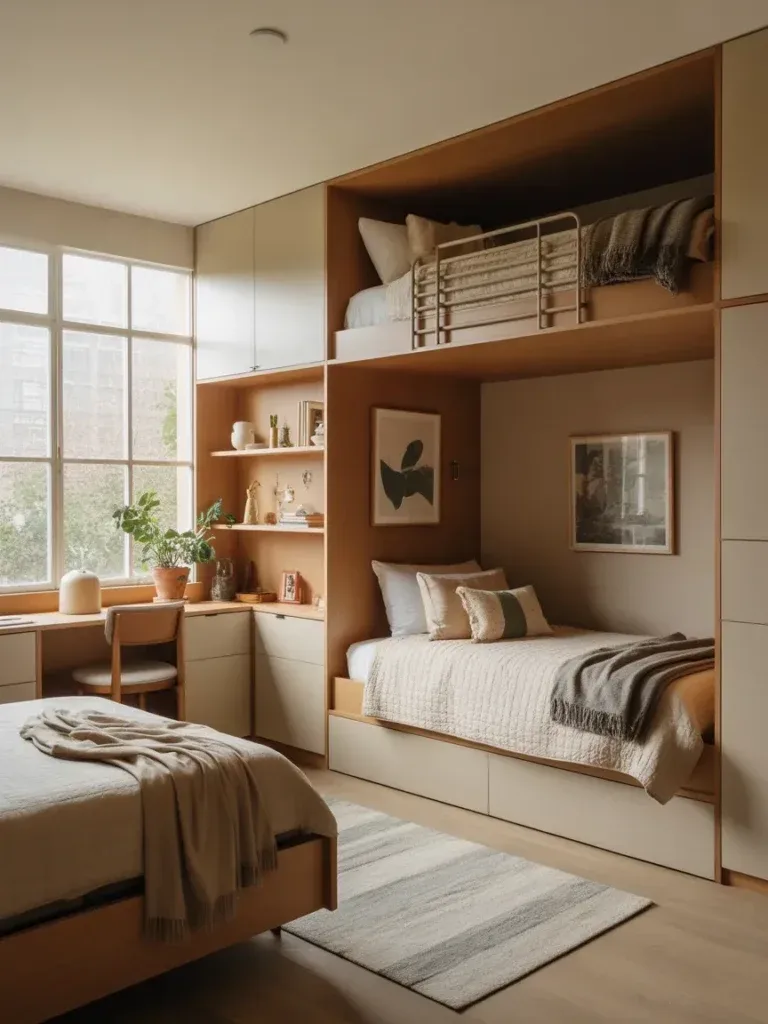
A Lofted Bed Turns One Room Into Two Zones
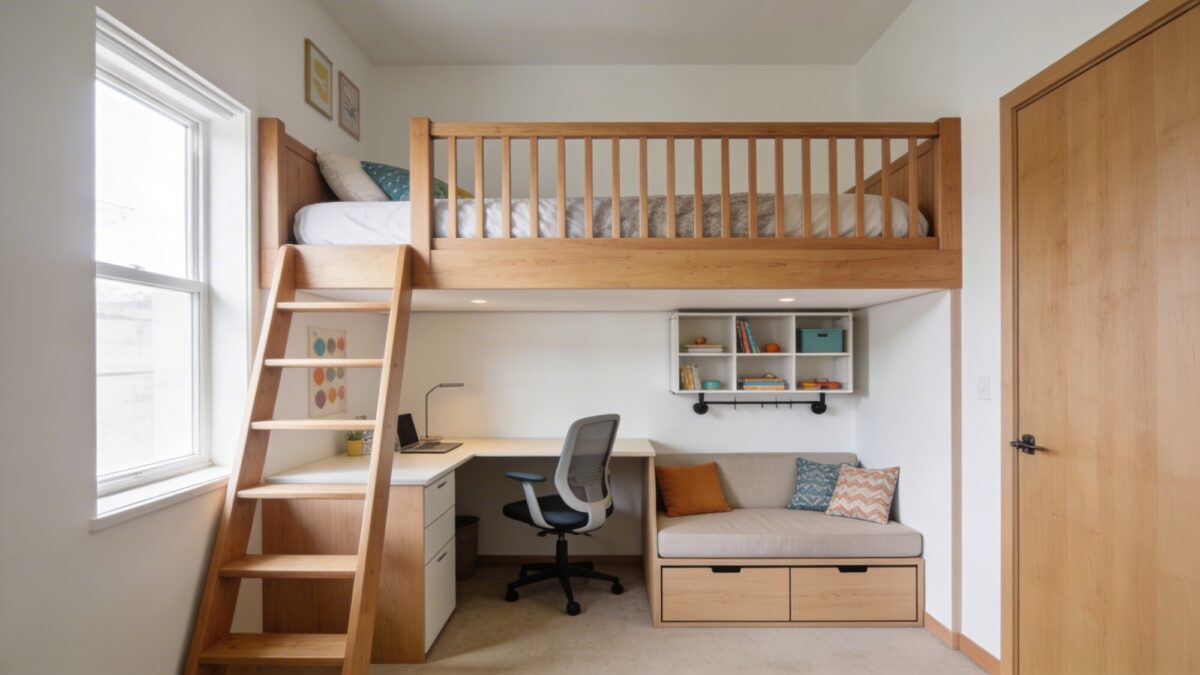
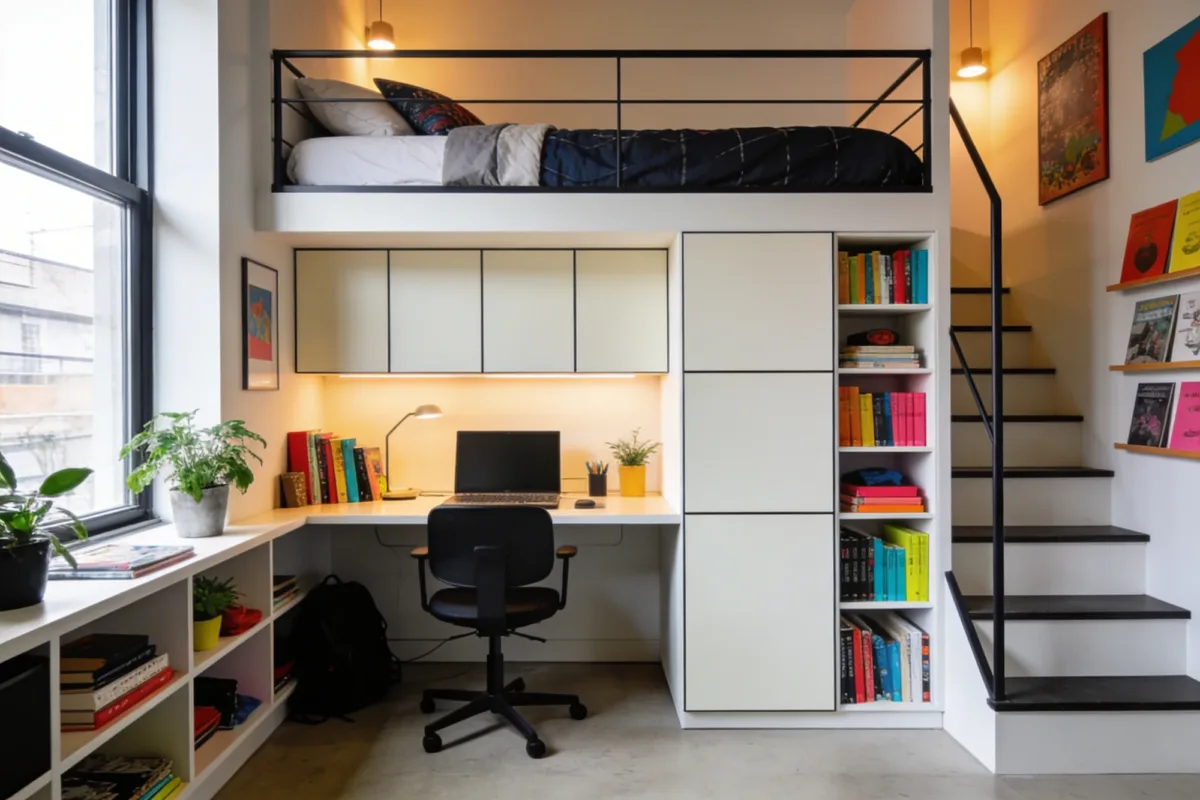
This is the single biggest structural change on this list, and it’s the one that makes the most difference in a genuinely small room. Elevating the bed frees up the entire footprint underneath for a desk, a small seating area, or dresser storage — effectively doubling what that square footage can do.
Things to Consider Before You Loft a Bed
- Ceiling height — most lofted beds need at least 7.5 to 8 feet of total ceiling clearance to leave comfortable headroom both on top and underneath.
- Weight rating and age — loft beds are a genuinely different structural product than a regular frame, so buy new or check the weight rating carefully on anything secondhand.
- What actually goes underneath — decide on desk vs. seating vs. storage before buying the loft, since the frame width will need to accommodate whatever you’re planning down there.
The trade-off nobody mentions upfront: a loft bed is harder to make and harder to get in and out of at 2am for a bathroom trip. It’s worth it in a genuinely tight room, less worth it if the room has even a little extra floor space to work with already.
A Soothing Base Color With One Bold Accent
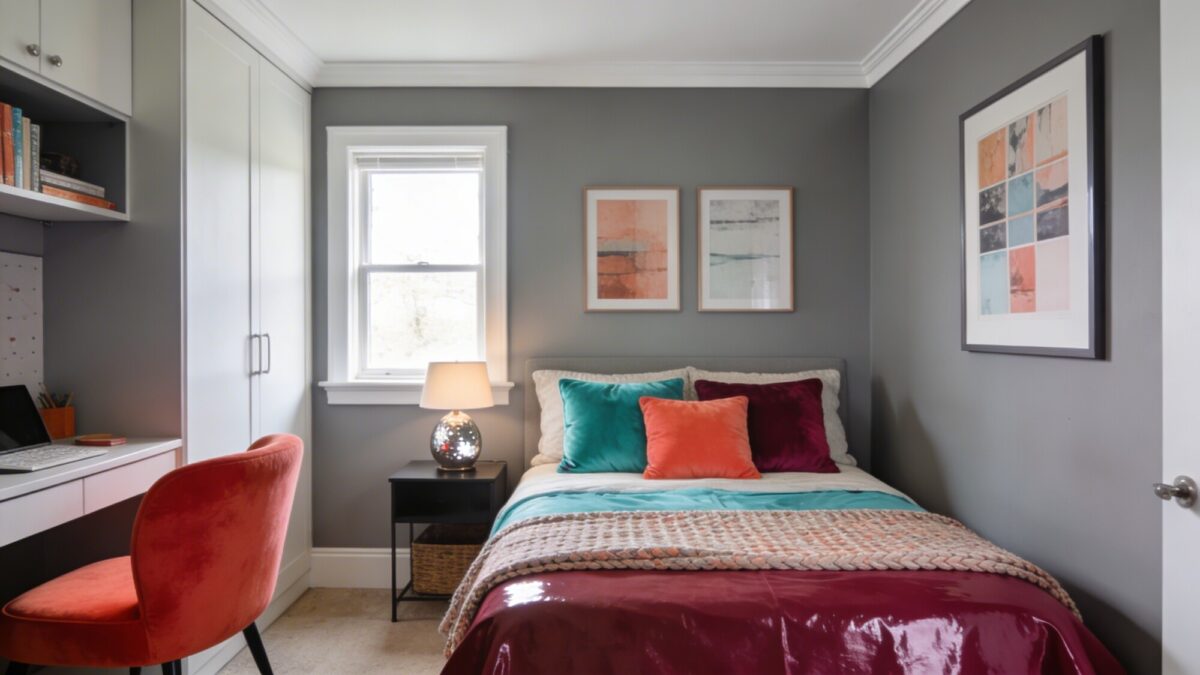
Small rooms painted in several colors at once feel busier and smaller than they are. A soft, warm neutral base — warm gray or airy white — combined with exactly one bold accent color (mint, teal, coral, or plum) used in two or three spots keeps the room feeling personal without visually shrinking it further.
The accent doesn’t need to be paint. A statement chair, a bedspread, or a piece of wall art in the bold color does the same visual job as an accent wall, and it’s far easier to change out later when the color falls out of favor — which, with a teenager’s taste, it eventually will.
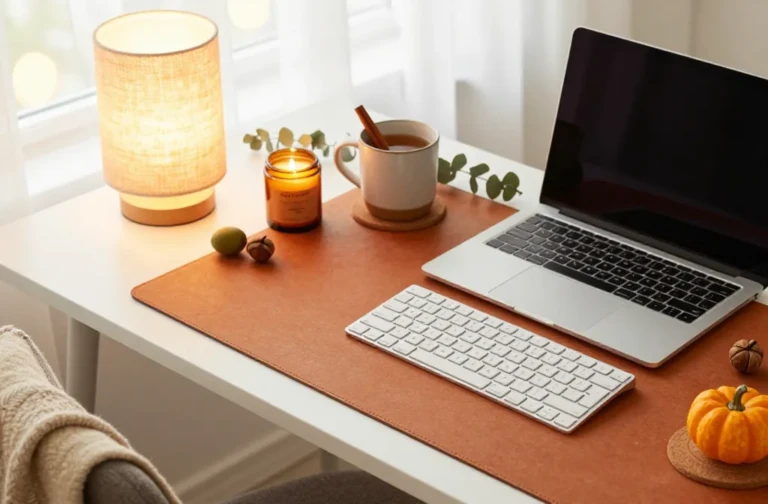
A Desk That Doubles as a Vanity Saves an Entire Piece of Furniture
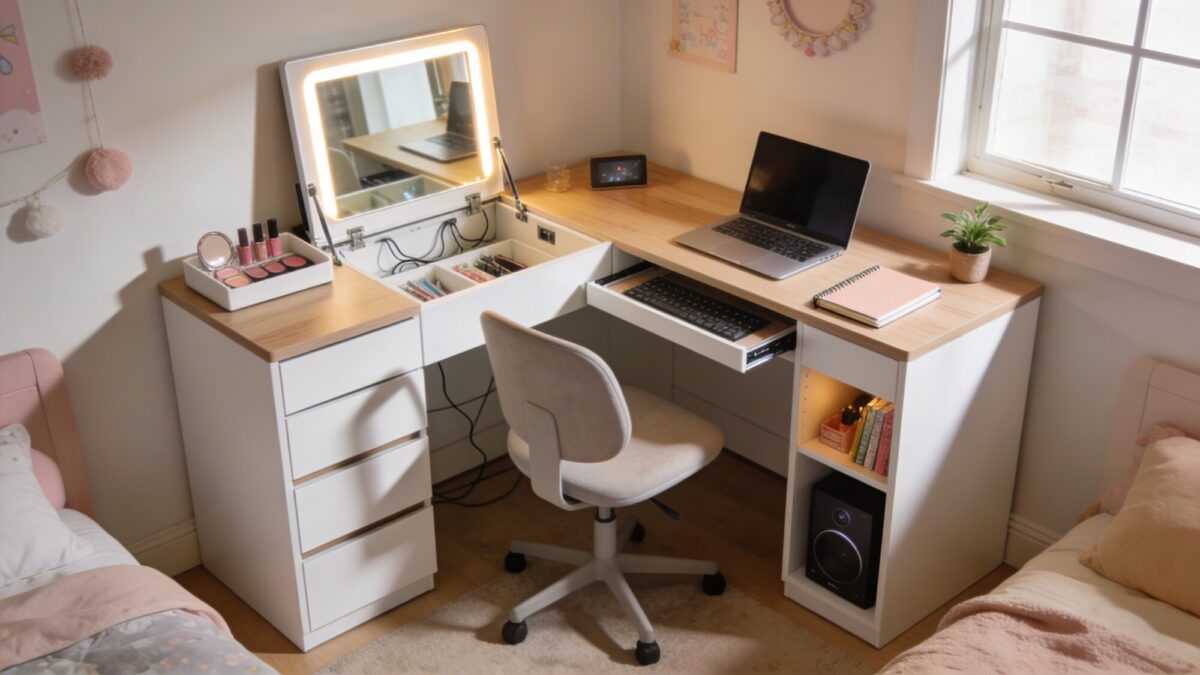
A desk and a vanity are two separate pieces of furniture doing two separate jobs — in a small room, that’s two footprints you don’t have room for. A desk with a fold-out mirror and a small dedicated tray for makeup or skincare items handles both without adding a second piece of furniture.
💡 Pro Tip: Route the desk lamp and mirror LED on the same power strip with a single switch, mounted where it’s easy to reach without ducking under the desk. Small rooms lose usable desk surface fast to a tangle of separate cords and plugs.
Ceiling Treatments Make a Small Room Feel Taller
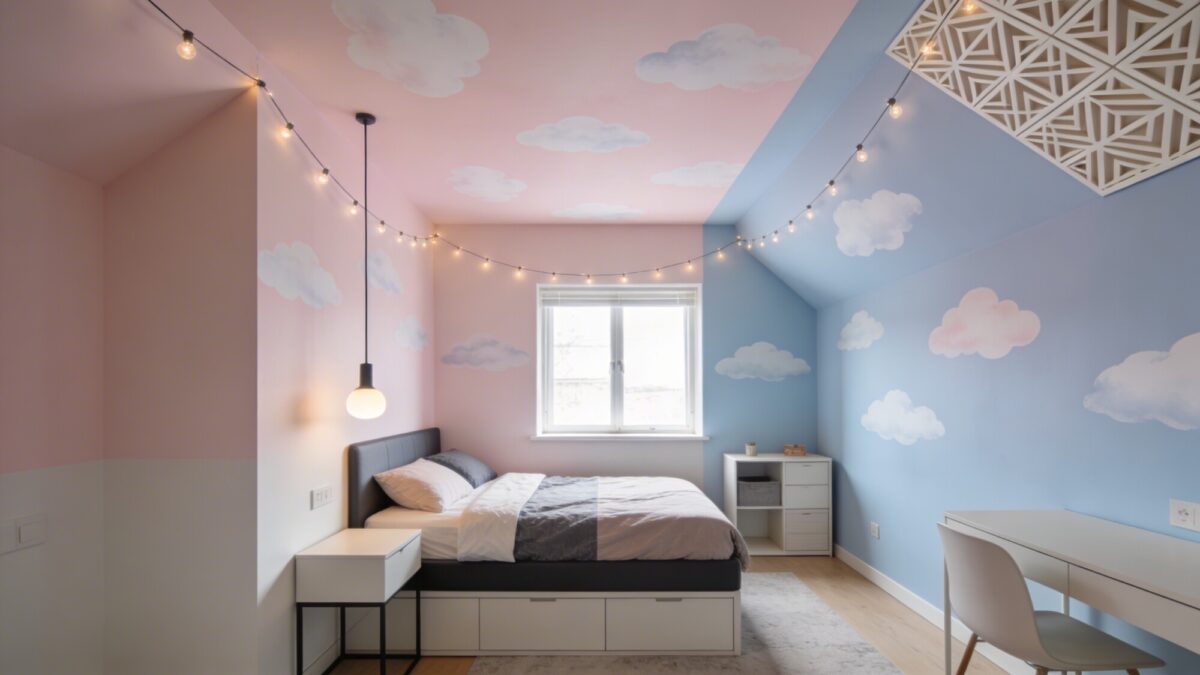
The ceiling is the one surface in a small room that almost never competes with furniture for space, which makes it one of the highest-value places to add color or interest. A ceiling painted to match — not necessarily identical to, but coordinated with — an accent wall draws the eye upward and makes the walls feel taller than they are. Removable decals or string lights add personality without a paint commitment, which matters if this is a rented room or one that’ll change hands to a younger sibling eventually.
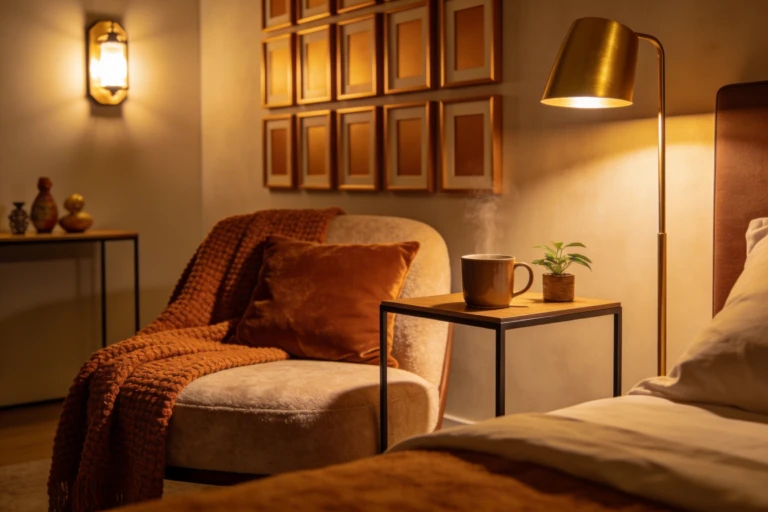
Textured Textiles Do the Most Work for the Least Space
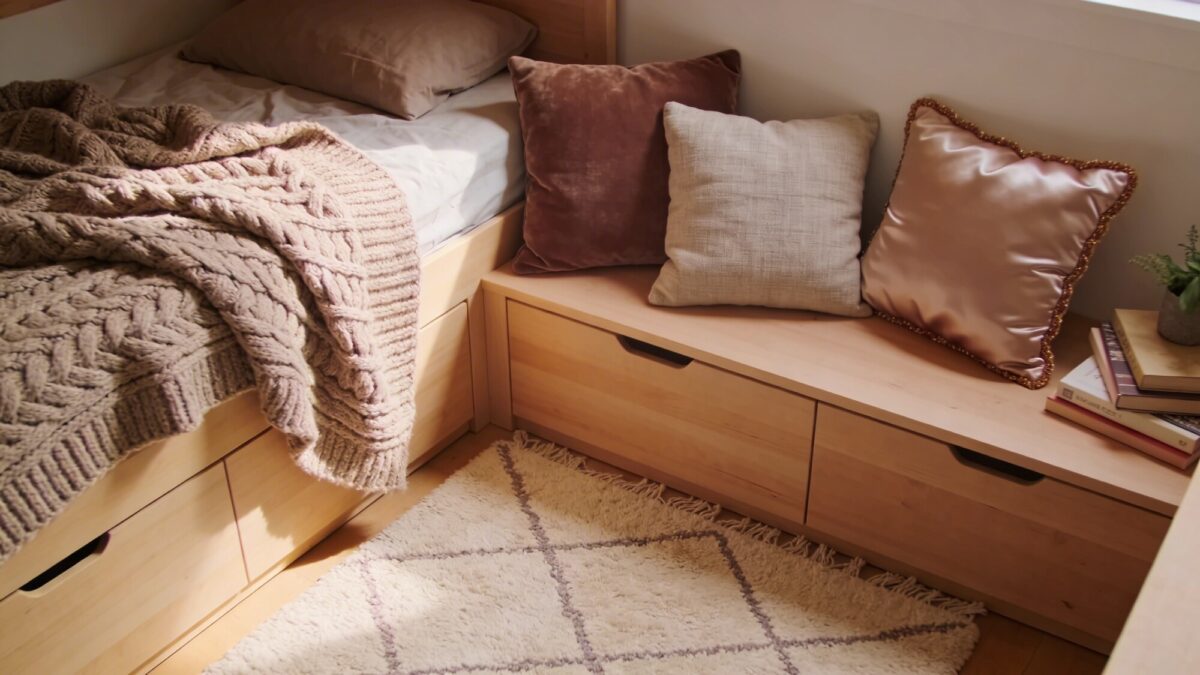
Texture is the cheapest, lowest-commitment upgrade on this whole list, and it matters more in a small room than a large one — there’s simply less wall and floor to distract from a flat, single-texture bed. A chunky-knit throw, a low-pile rug (low-pile matters in a small room since a thick rug eats into the limited walking space), and two or three pillows in varied finishes cover most of what the room needs.
Modular Furniture for a Room That Will Change
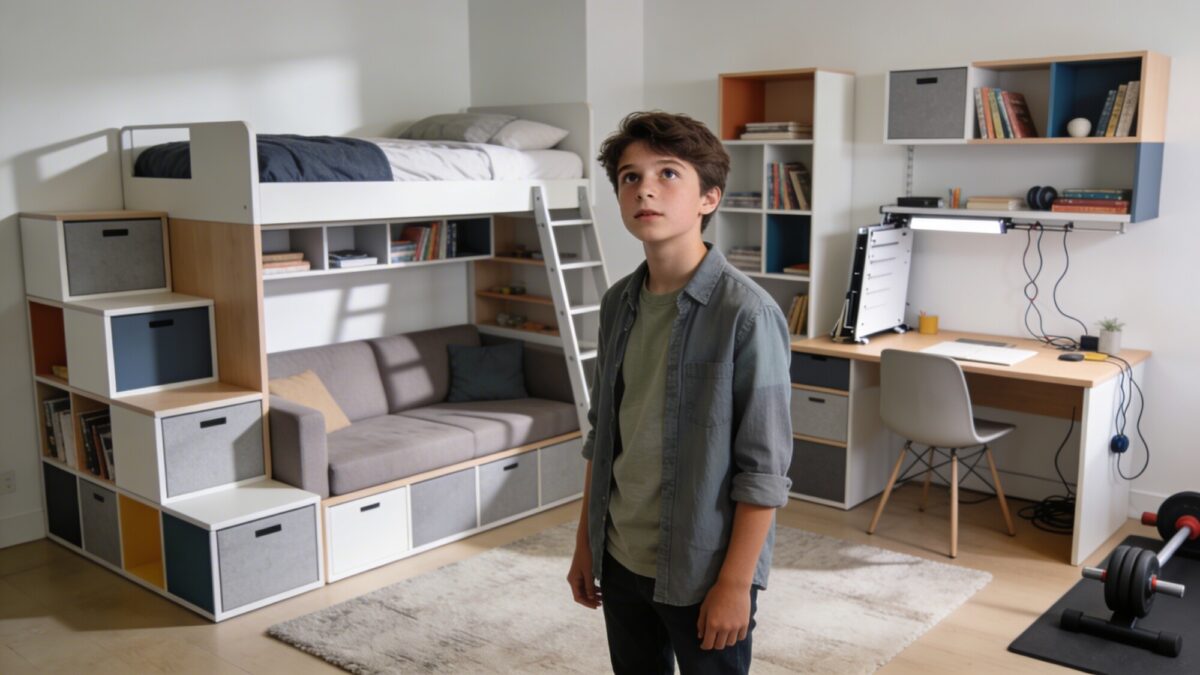
A teen’s interests and needs at 13 look nothing like they will at 17, and a small room has less margin to absorb a full furniture replacement every couple of years. Modular pieces — stackable cubes that work as both seating and shelving, a bed frame with reconfigurable storage — let the layout shift without buying all-new furniture each time. If storage is the bigger priority than reconfigurability, our teen bedroom storage and style ideas covers a few setups that lean more toward fixed built-ins.
💡 Pro Tip: Before buying modular pieces, check whether the manufacturer still sells matching add-on units two or three years out. Some modular lines get discontinued fast, which means you can’t expand the same system later — you’re stuck buying a whole new set instead of just adding a cube.
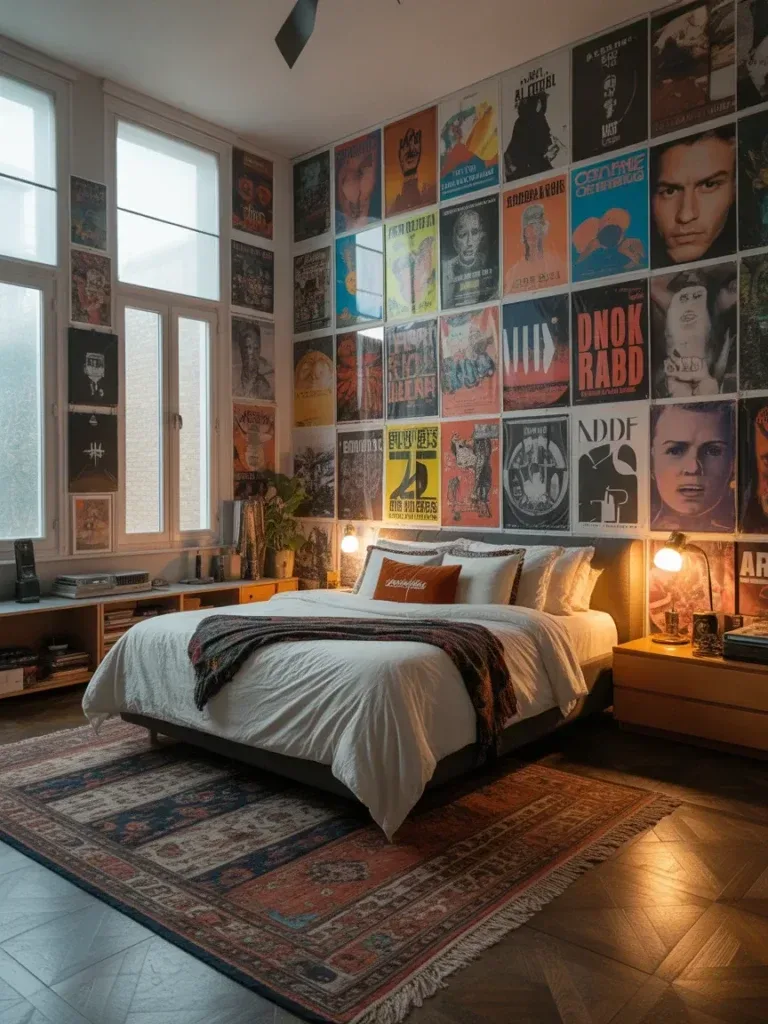
A Gallery Wall That Fits a Tiny Space
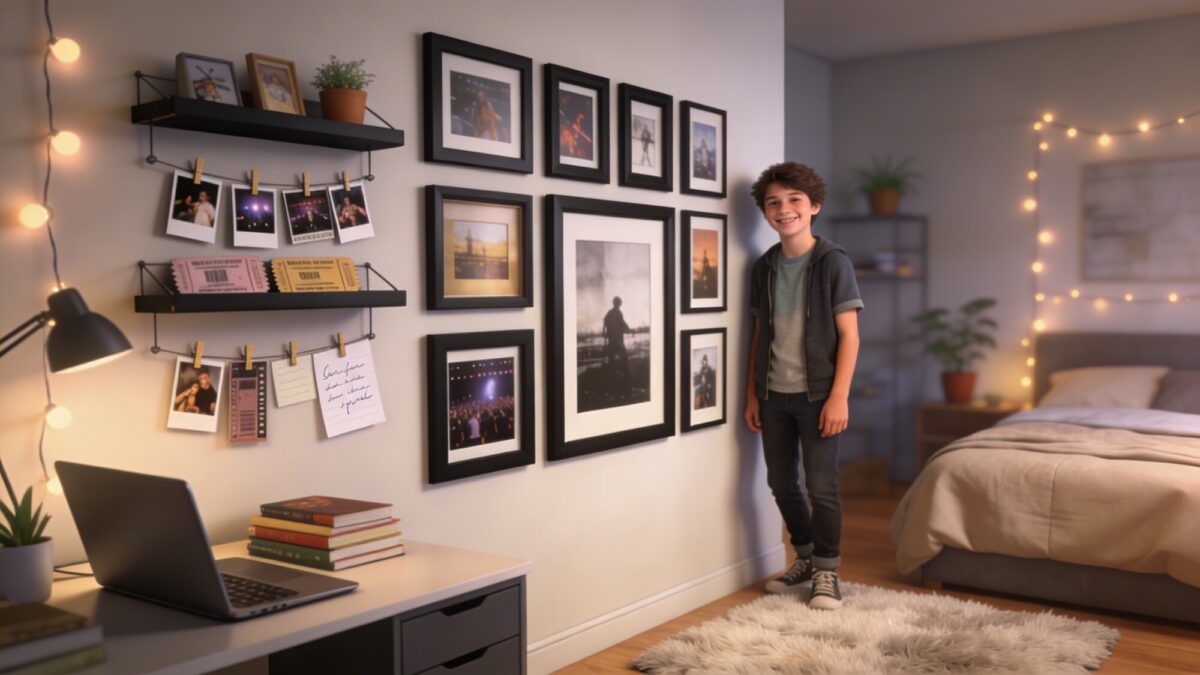
A gallery wall doesn’t need a large wall to work — it needs a consistent frame color or style so a small, mixed collection of photos and mementos reads as intentional rather than a mess of tape and pushpins. Clip displays for photos that get swapped out regularly work better than fixed frames in a teen’s room specifically, since interests and friend groups change faster than a permanently framed photo can keep up with.
Small Room, Small Room Bedroom Layout: A Quick Self-Check
Before committing to a full redo, walk through these questions to figure out which of the ideas above will make the biggest difference first:
- Is more than half the visible floor space taken up by furniture rather than walkway?
- Does the room have one piece of furniture doing only one job that could realistically do two (a desk that could also be a vanity, a bed frame with no storage)?
- Is the ceiling height enough to consider a loft bed (roughly 7.5–8 feet minimum)?
- Is there unused wall space above furniture height that’s currently bare?
If most of these are “yes,” start with wall storage and a multi-function desk before considering a full loft-bed conversion — those two changes are lower-cost and lower-disruption, and they’ll tell you how much more room the space actually needs before you commit to a bigger structural change.
FAQ
What’s the single best small bedroom idea for teens with a tight budget?
Wall-mounted floating shelves. They’re the cheapest way to add real storage capacity without buying a new piece of furniture, and they don’t reduce usable floor space at all.
Is a loft bed worth it for a small teen bedroom?
Usually yes, if the ceiling height allows it — it’s the one change that effectively adds a second zone to the room. It’s less worth it if the room already has enough floor space that a loft feels unnecessary, since it does make the bed itself less convenient to use.
How do I keep a small teen bedroom from feeling cluttered?
Cut down to one bold accent color instead of several, and prioritize furniture that does two jobs (a desk-vanity combo, a storage bed) over buying separate pieces for each function.
What rug size works best in a small bedroom?
Low-pile over high-pile — a thick rug eats into the already-limited walking space. Size it to sit under the bed’s front legs at minimum rather than skipping a rug altogether, since it still helps define the room even at a smaller size.
Should I paint a small teen bedroom a dark color?
It’s not off-limits, but it works better as one accent wall than the whole room. A fully dark small room tends to feel smaller rather than cozier, especially with limited natural light.
Our Verdict
If the room is genuinely small, start with vertical wall storage and a dual-purpose desk before anything else — they’re the lowest-cost, lowest-risk changes and they free up the most usable space per dollar spent. A lofted bed is the highest-impact single change on this list, but it’s also the biggest commitment, so it’s worth trying the smaller fixes first to see how much more room the space actually needs. For more ideas on stretching a small footprint further, see our small room bedroom ideas.