Smart Kitchen Remodel on a Budget: Big Impact, Small Spend
A smart kitchen remodel on a budget isn’t about doing less — it’s about doing the right things first. Most kitchens don’t need new bones. They need better light, better hardware, and a layout that stops fighting you every time you cook. Once you’ve priced out even one custom cabinet box, you start to understand why the industry pushes full gut jobs: they’re profitable. They’re also rarely necessary.
Quick Takeaways
- Hardware, paint, and lighting deliver the biggest visual change per dollar spent — start there.
- Cabinet boxes are almost always fine; it’s the doors, hinges, and finish that read as dated.
- Countertops and layout changes (like moving to a corner sink) cost more but solve real functional problems — budget for these separately from cosmetic work.
- Electrical and plumbing work belongs to a licensed pro, even on a tight budget. This is the one place cutting corners gets expensive fast.
Set a Clear, Realistic Vision for Your Kitchen Renovation on a Budget
Before you touch a swatch or a shopping cart, decide three things: what you’re allowed to spend per zone (cabinets, countertops, appliances), which one or two features you actually need — a bigger sink, a working pantry, better task lighting — and a timeline you can live with, including the version where it runs a week long. Most budget kitchen renovation ideas fall apart not because the money ran out, but because the plan never got specific enough to protect the money in the first place.
Write the budget ceiling down per category before you shop. It’s the only thing that stops a $40 faucet from turning into a $180 faucet because it “matched better.”
Cosmetic Changes That Pack a Punch
Color, Lighting, and Hardware
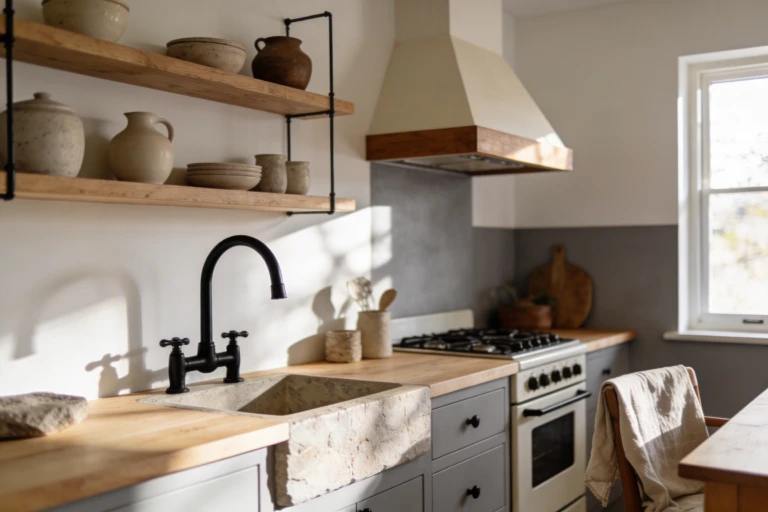
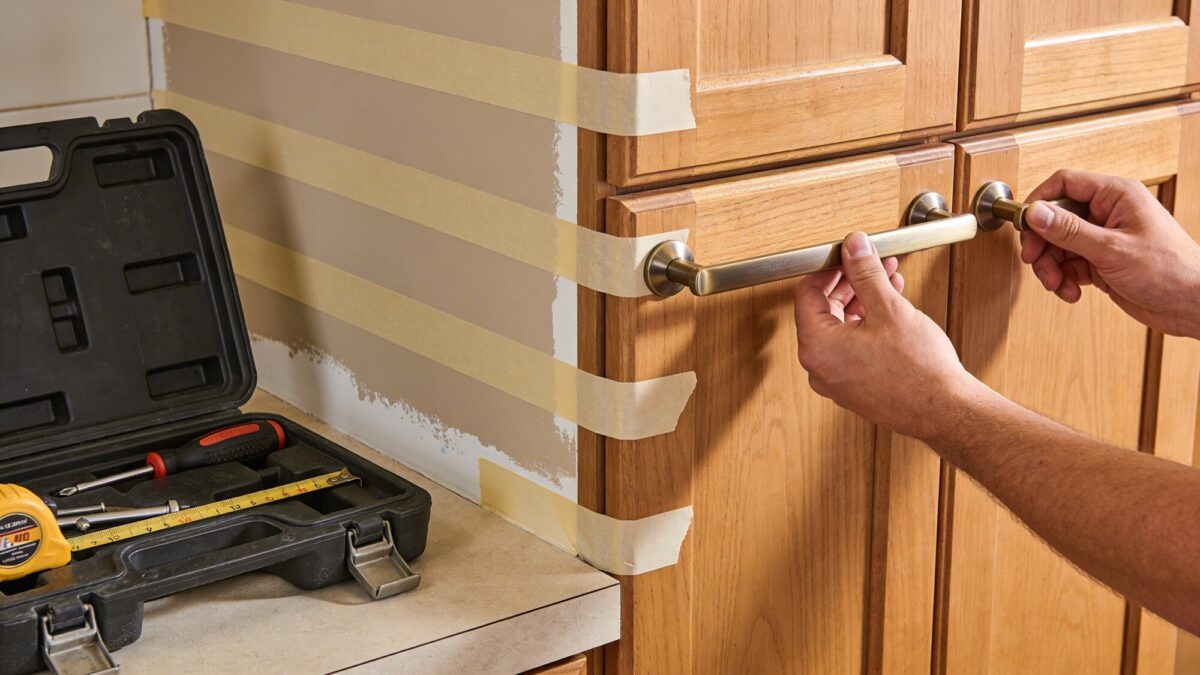
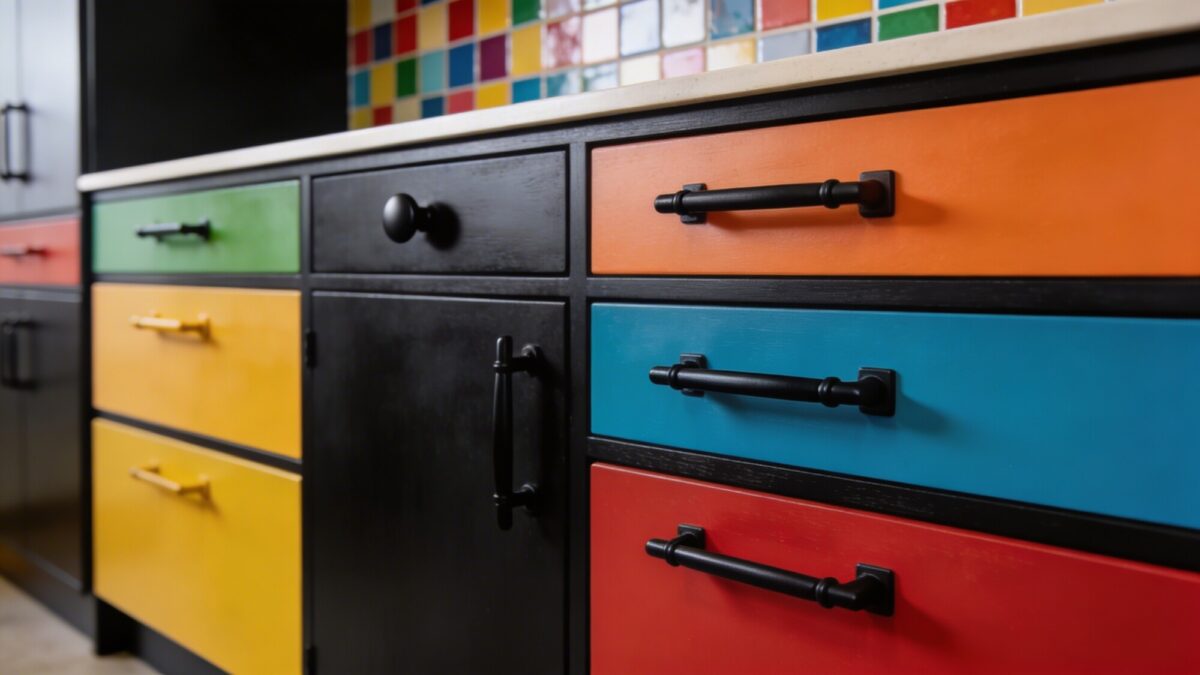
New pulls and knobs change the entire read of a kitchen for the cost of a nice dinner out. Brushed nickel and matte black are the two finishes that photograph well in almost any cabinet color, which matters if you’re planning to sell in the next few years.
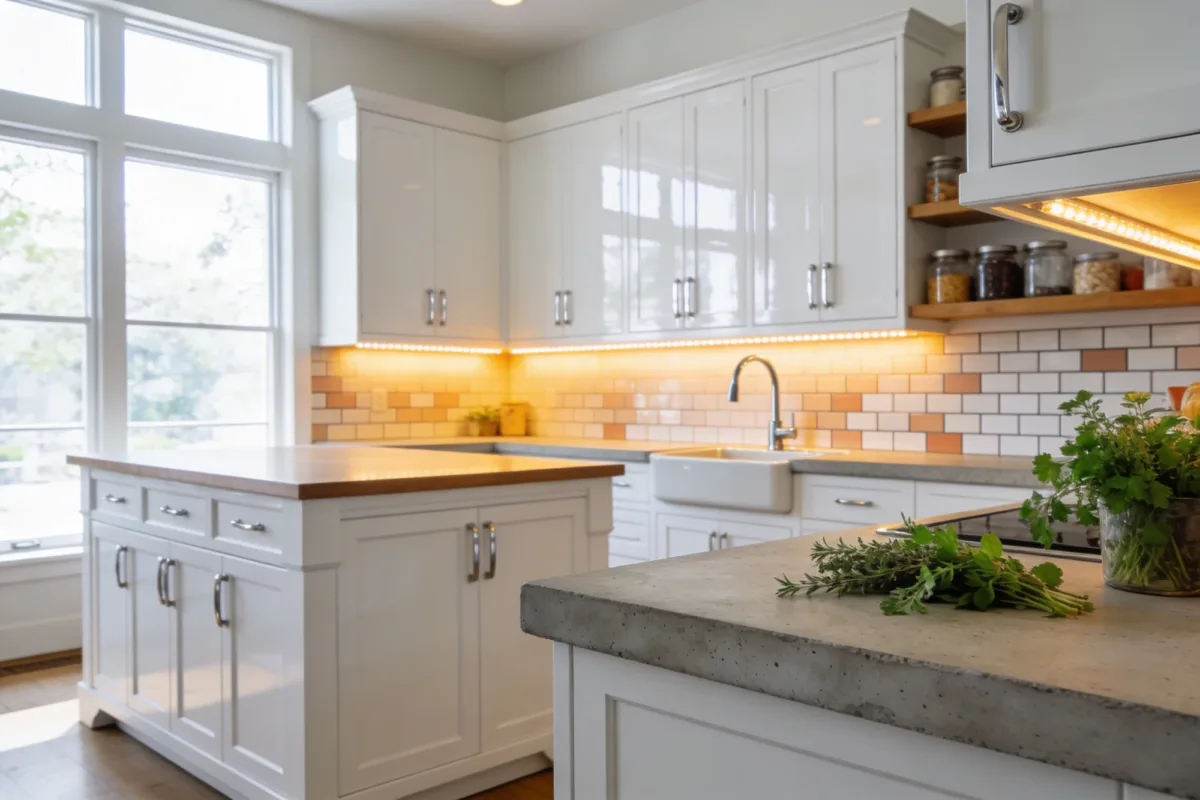
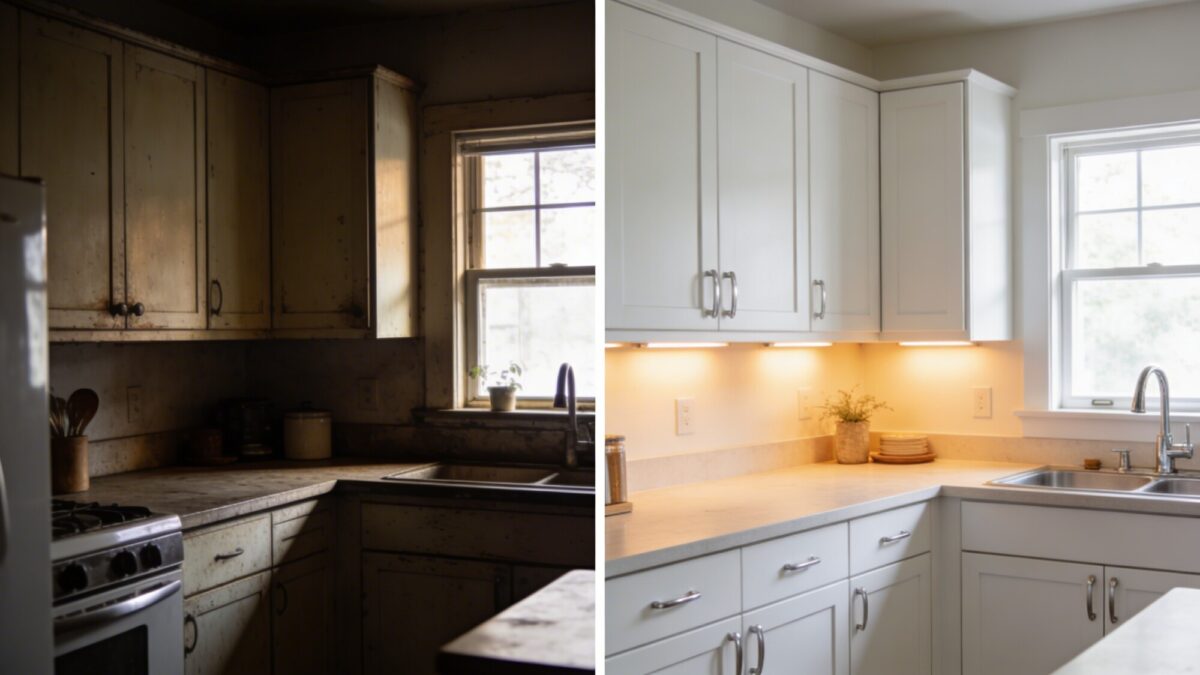
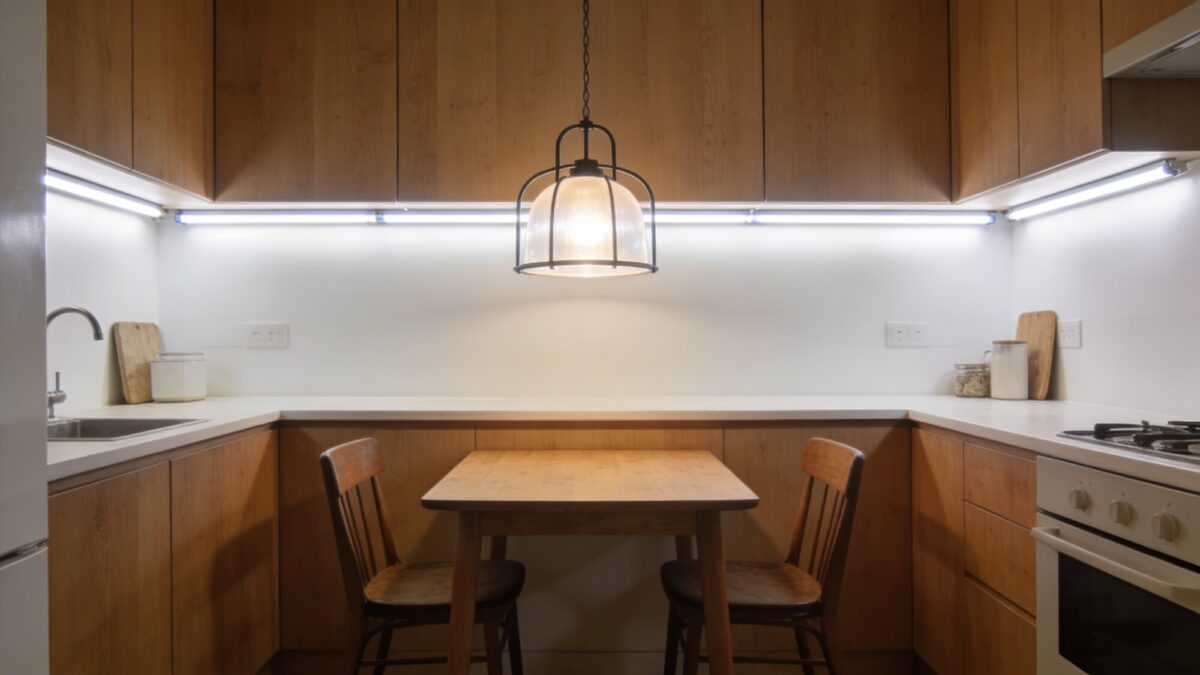
Under-cabinet LED strip lighting is the upgrade people underrate the most. It’s a few hours of work, it fixes the “why is my counter always in shadow” problem every kitchen has, and it makes the whole room look considered rather than accidental.
Cabinet paint is the highest-risk, highest-reward move on this list. Done well, it looks like new cabinetry. Done in a rush without sanding and priming properly, it chips within a season and you’ll be redoing it — so budget the extra day for prep, not just the paint itself.
Countertop Alternatives Worth Considering
You don’t need stone to get a stone look. Here’s how the common budget-friendly options actually compare once you factor in the work involved, not just the sticker price.
| Option | Relative Cost | DIY Difficulty | Best For |
|---|---|---|---|
| Stone-look laminate | Low | Moderate (needs a template and careful cuts) | Full countertop swaps on a tight budget |
| Peel-and-stick backsplash tile | Very low | Easy | Refreshing a backsplash without touching counters |
| DIY concrete or resin overlay | Low to moderate | Hard (unforgiving if you rush cure times) | Renters or owners comfortable troubleshooting a finish |
The overlay option is the one people regret most often — not because it looks bad, but because it demands patience most weekend projects don’t get. If you’ve never worked with resin before, test it on a scrap board first. Skipping that step is the single most common mistake with this upgrade.
Small Kitchen Design Ideas That Actually Save Space
If you’re working with a tight footprint, a kitchen remodel corner sink is one of the better layout moves available without a full renovation. Tucking the sink into a corner frees up a straight run of counter that a standard centered sink eats into, and it’s a change plumbers can usually handle without relocating major supply lines — ask specifically about this before assuming it requires a full re-pipe.
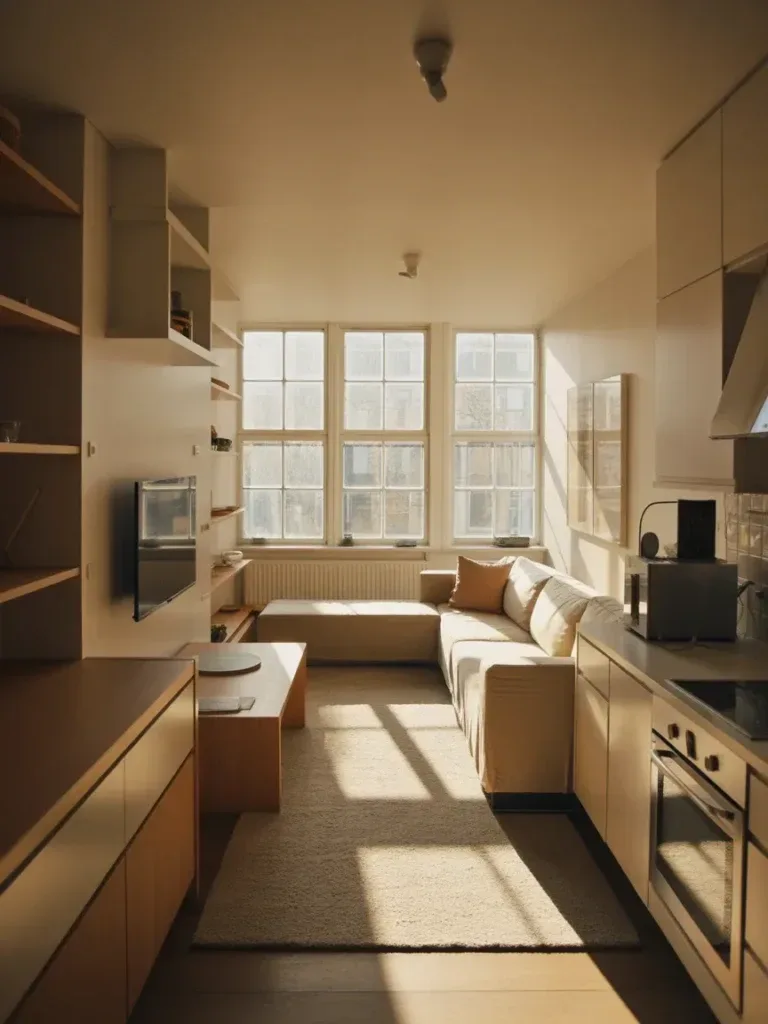
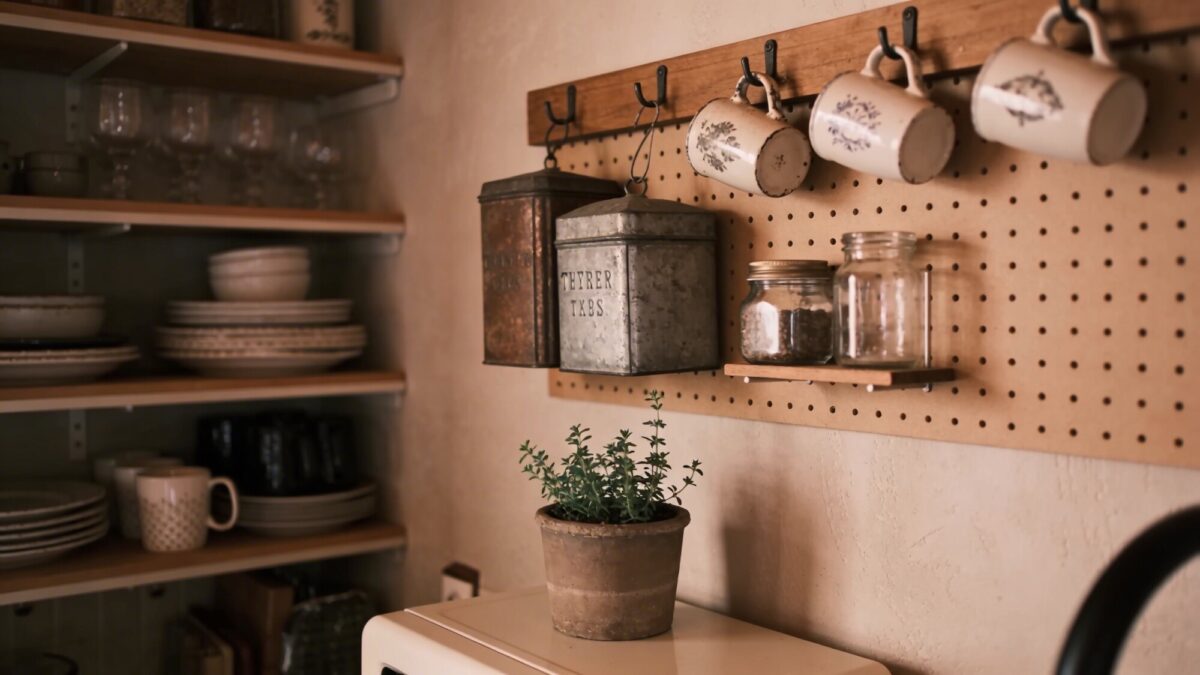
Beyond layout, most small kitchen renovation ideas come down to using vertical space you’re currently ignoring: narrow shelves between wall studs, a rail system above the backsplash for frequently used tools, or a pull-out cart that tucks under a counter overhang. For kitchen design ideas for small apartments specifically, look for anything that does double duty — a rolling island that’s also extra counter and storage, or a magnetic strip that replaces a knife block.
Containers and Cabinets That Actually Click
- Uniform containers in the pantry cut search time and make a small space read as organized rather than crammed.
- After-market drawer organizers and pull-out shelving are some of the cheapest budget kitchen cabinets upgrades you can make without replacing a single box.
- Vertical space above upper cabinets is almost always wasted — a couple of matching baskets up there solves overflow storage for less than $30.
Open Shelving vs. Closed Cabinets
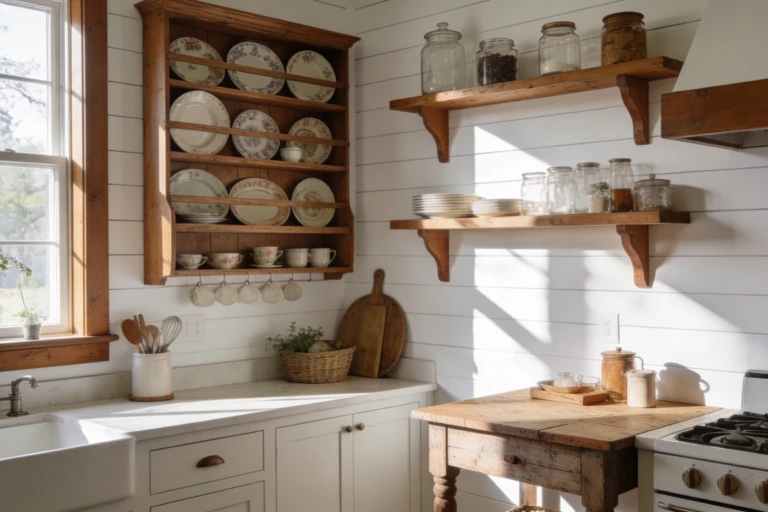
Open shelving looks great in photos and gets cluttered in real life faster than most people expect — it works best for the handful of items you actually use daily, not your full dish collection. Keep the everyday stuff open, and let closed cabinets handle the bulky, rarely used items nobody wants on display.
Appliances: Where to Splurge and Where to Save
If you cook often, put real money into a range hood that actually vents — a weak one is the single most common complaint in otherwise-good budget remodels. Everything else can wait. A dated fridge with a stylish panel or a coat of appliance paint buys you time until the rest of your budget catches up.
Energy-efficient models cost a bit more upfront but pay some of that back over years of use, so weigh the sticker price against how long you plan to stay in the kitchen, not just against the cheapest model on the shelf.
Financing Without the Regret
Watch for seasonal appliance sales and manufacturer rebates — they show up predictably around major holidays. A 0% intro APR credit card can bridge a gap if you’re paying it off over a few months on a fixed schedule, but treat it as a short bridge, not a long-term plan; the rate jump when the intro period ends is where budgets actually get hurt.
DIY Demands: What You Can Tackle Without Losing a Weekend
Reasonable Weekend Projects
- Paint walls, trim, and cabinets if you’re comfortable with proper prep (clean, sand, prime).
- Install new cabinet hardware — measure twice, since mismatched hole spacing is the most common redo.
- Swap in a water-saving faucet; most standard configurations don’t require a plumber.
- Apply a peel-and-stick backsplash over a clean, flat wall.
When to Call in a Pro
Anything involving electrical circuits, gas lines, or moving plumbing beyond a straightforward faucet swap should go to a licensed professional — not because DIY can’t handle it in theory, but because the failure modes (a leak inside a wall, a wiring fault) cost far more to fix after the fact than the pro visit would have. The same goes for any structural change, even one that looks minor, like removing a section of wall for an open layout.
Flooring and Texture: Small Details, Big Feel
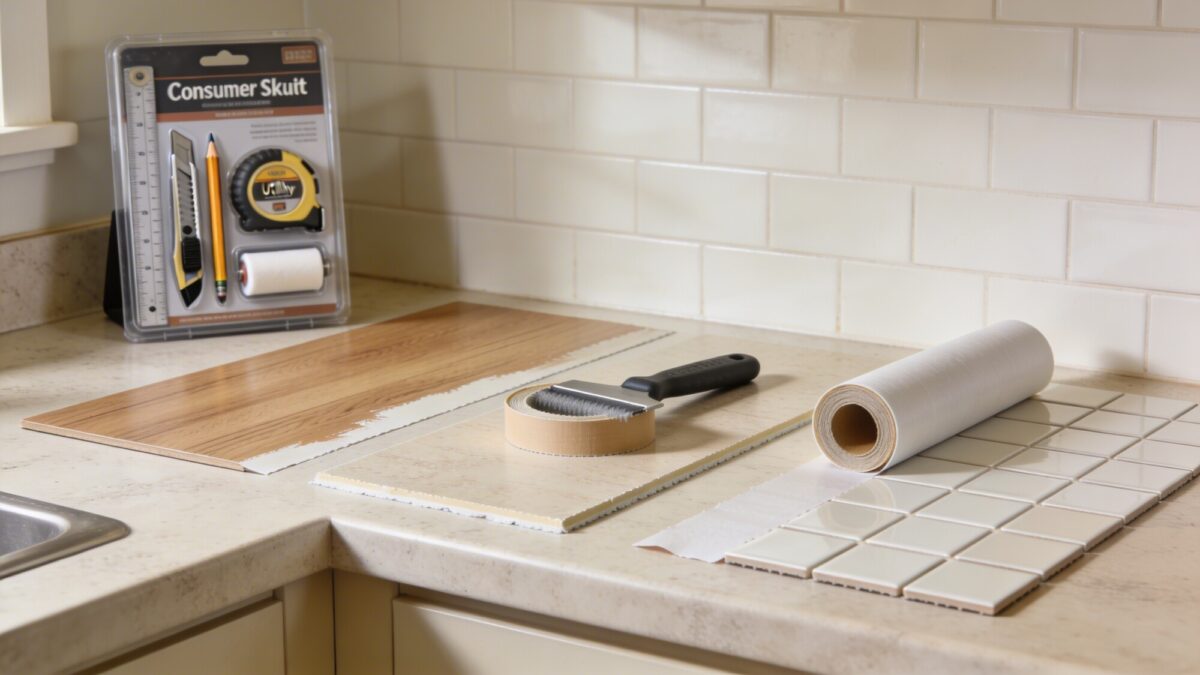
Vinyl plank flooring gets you most of the visual payoff of hardwood or tile at a fraction of the cost, and it’s forgiving enough for a first-time installer. If a full floor swap isn’t in this round of the budget, a well-placed rug in a color that ties into your cabinets or backsplash does more for the room’s cohesion than people expect.
Finishing Touches That Make It Yours
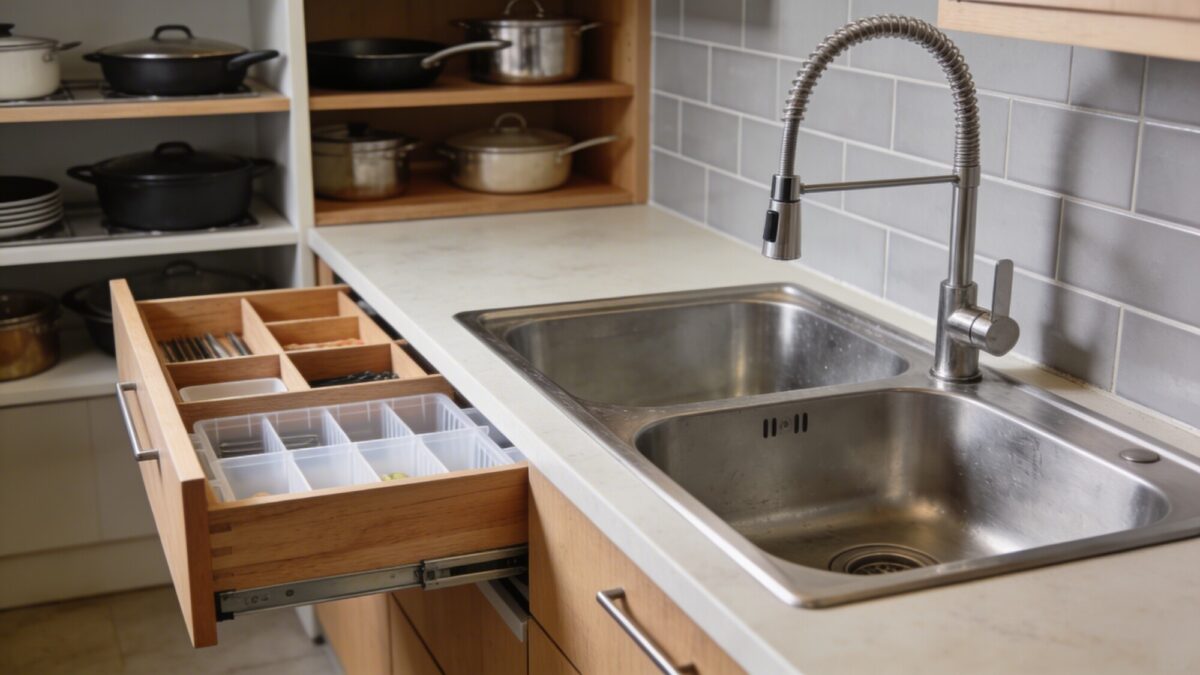
Resist the urge to fill every open surface. A small, deliberate display — a couple of plants, a bowl you actually use, two or three cookbooks you reference — reads as intentional. A counter crowded with appliances and mail reads as unfinished, no matter how good the cabinets look.
A Simple Way to Allocate a Fixed Renovation Budget
If you’re not sure how to split your total budget across categories, this is the rough allocation that tends to hold up for a cosmetic-focused, budget kitchen cabinets refresh (not a full gut renovation). Apply these percentages to whatever total number you’re working with:
| Category | Share of Total Budget | Why |
|---|---|---|
| Cabinet refresh (paint, hardware, or fronts) | 25–30% | Biggest visual impact per dollar |
| Countertops or backsplash | 20–25% | High visibility, moderate labor |
| Lighting and electrical fixtures | 10–15% | Transforms the room’s feel cheaply |
| Storage and organization | 10% | Fixes daily friction, not just looks |
| Appliances (partial or full) | 15–20% | Only if current ones are failing, not just dated |
| Contingency | 10% | Something always comes up — don’t skip this line |
For example, on a $4,000 total: cabinets get roughly $1,000–$1,200, countertops or backsplash $800–$1,000, lighting $400–$600, storage $400, appliances $600–$800, and $400 stays untouched until week three when you find out the outlet behind the fridge isn’t grounded. That last part isn’t hypothetical — it’s the kind of thing a contingency line exists for.
Maintaining Your Budget-Friendly Remodel
- Wipe surfaces weekly — grime buildup is what makes a fresh remodel start looking tired within months.
- Reuse containers and organizers rather than replacing them the moment pantry items run low.
- Do a yearly walkthrough specifically looking for gaps in storage or lighting you’ve adapted around without noticing.
Common Pitfalls to Avoid
- Overestimating DIY speed. Almost every weekend project takes one extra day — plan for it instead of being surprised by it.
- Skimping on the substrate behind a backsplash or the base material behind new hardware. It’s invisible until it fails.
- Treating ventilation as optional. A weak range hood is the complaint that shows up most often in remodels that skipped this line item.
Pros and Cons of a Cosmetic-First Approach
- Pro: Lower upfront cost and much less disruption to daily life while work is happening.
- Pro: Lower risk — mistakes on paint or hardware are cheap to fix; mistakes on plumbing or structure are not.
- Con: Layout problems (like an awkward sink placement or too little counter run) don’t get solved by cosmetics alone.
- Con: You may eventually redo some cosmetic work again once you’re ready for a bigger renovation phase.
FAQ
Is a full kitchen remodel on a budget actually realistic?
Yes, for most kitchens. The cabinet boxes underneath are usually structurally fine — it’s the finish, hardware, and lighting that make a kitchen look dated. Prioritize those and you get most of the visual transformation without touching the layout.
How do I decide which upgrades give the best return?
Start with what you interact with daily: lighting, hardware, and storage. These get used constantly, so improving them changes how the kitchen feels every single day — not just how it photographs.
What’s the fastest way to brighten a dark kitchen?
Layer your lighting: under-cabinet LEDs for task light, a brighter overhead fixture, and a lighter wall color to bounce more of it around. Doing just one of these helps; doing all three changes the room.
Are peel-and-stick backsplashes durable enough to keep long-term?
For most households, yes. Near a stovetop or in high-heat zones, seal the edges carefully and check the manufacturer’s heat rating — some are not rated for direct high heat exposure.
How do I stay on budget when I’m doing most of the work myself?
Set a hard limit per task before you start, buy materials during sales rather than at the last minute, and track every purchase in one place. Most budget overruns come from a string of small “it’s only $15 more” decisions, not one big mistake.
Is a corner sink worth the extra plumbing work?
Often, yes, if your kitchen is genuinely tight on counter space. Ask a plumber early whether your existing supply lines can reach the new location — that answer determines whether it’s a simple swap or a bigger job.
Our Recommendation
Do the cosmetic pass first — hardware, paint, lighting, and a countertop refresh — and live with the kitchen for a few weeks before deciding whether layout changes like a corner sink are worth the extra plumbing cost. Most people find the cosmetic changes solve 80% of what was bothering them. The ones who still want more after that are the ones who actually need the layout change, not just a different-looking version of the same problem.
If you’re planning your next phase, our guide to budget-smart small kitchen wins covers additional cosmetic upgrades worth sequencing in, and this roundup of kitchen remodel ideas that skip major renovation is a good next stop if you want more layout-neutral changes before committing to structural work. For the storage side specifically, see our breakdown of storage ideas that maximize every cabinet.


If you want more affordable kitchen ideas beyond this one, our post on kitchen remodel ideas that wow on a budget and this list of kitchen decor ideas on a budget both pair well with the changes covered here.